
TAIPEI (Taiwan News) — In the spring of 2026, Chef Ku Chun-kei (古俊基) of Taipei’s one Michelin-starred De Nuit unveiled a new seasonal menu shaped by recent training in elite kitchens abroad.
Ku said his cooking is shifting from the complex layering of his earlier years toward a philosophy of purity and restraint.
The change followed a sabbatical in Europe and Japan, where Ku set aside his role as head chef to work as an intern in three-Michelin-starred restaurants.
“In a three-star kitchen, they do not rely on flashy techniques,” Ku said, reflecting on 19-hour workdays. “They are in a constant search for the best timing and the truest essence of an ingredient. The simpler a dish is, the harder it is to execute.”
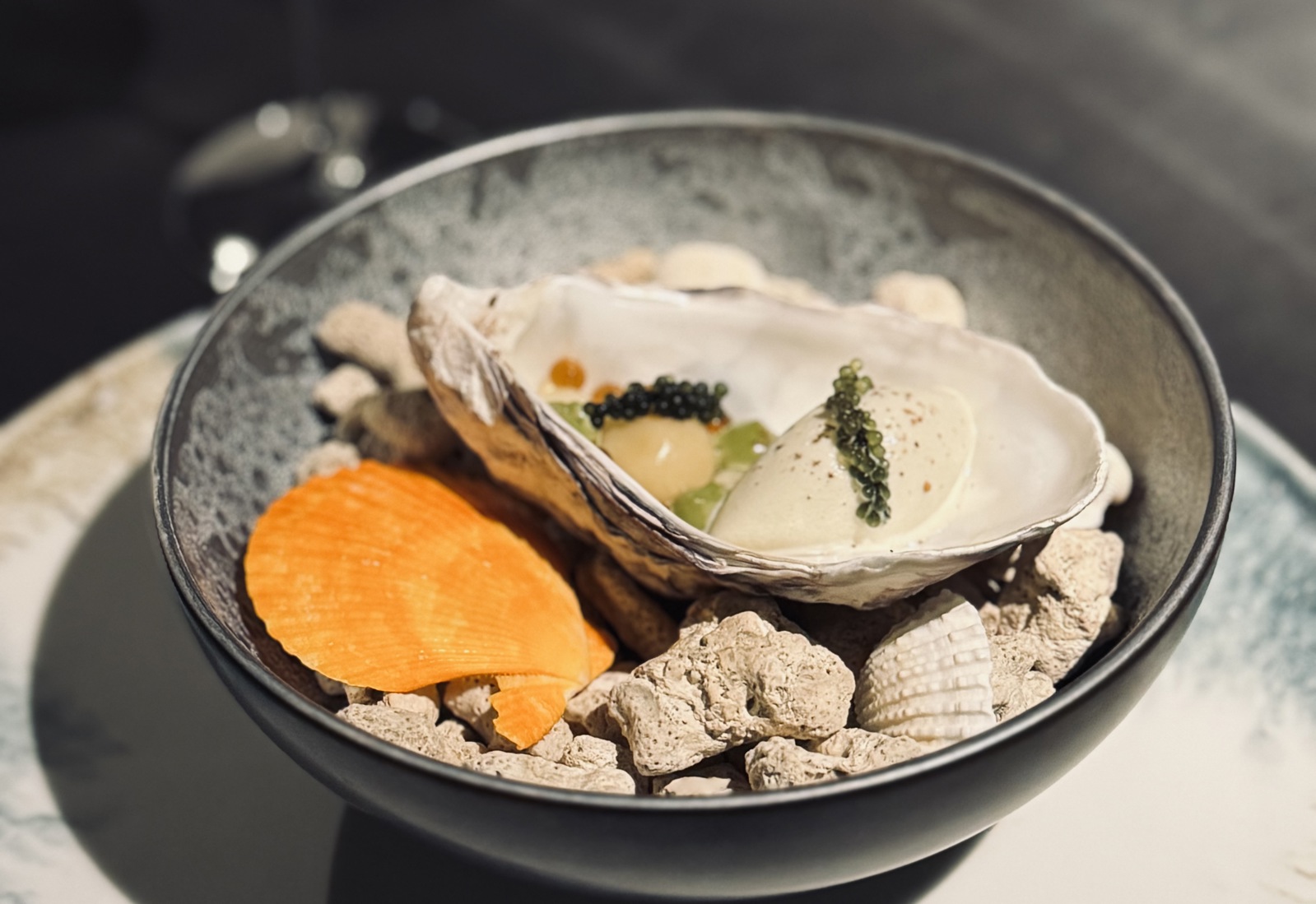
One of the most unusual additions to the menu is an oyster ice cream amuse-bouche. Ku said he noticed about 30% of diners are hesitant about the slimy or soft texture of raw oysters, so he set out to “deconstruct” the ingredient and turn the sea’s essence into a silky ice cream.
“I tested more than 20 varieties of oysters from around the world,” Ku said. He ultimately selected an oyster born in Ireland and raised in Normandy, France, saying its freshwater breeding and saltwater maturation produce a crisp, sweet flavor without a hint of fishiness.
Through precise temperature control and ratios, the ice cream releases a vivid burst of oceanic salinity as it melts on the tongue, Ku said. He layered the dish with Japanese kombu, katsuobushi (bonito) jelly and fennel puree, blending French technique with Japanese umami.
Ku said the menu is anchored by sauce as the bone and aroma as the soul, with sauces providing structure and aroma serving as an emotional bridge for diners.
A standout is Matsuba crab with Jerusalem artichoke and clam. The crab is wrapped in lotus leaves and steamed to preserve sweetness, then paired with caviar and 70% Valrhona dark chocolate.
Ku said the dish requires careful layering so the briny umami and cocoa notes transition smoothly on the palate.
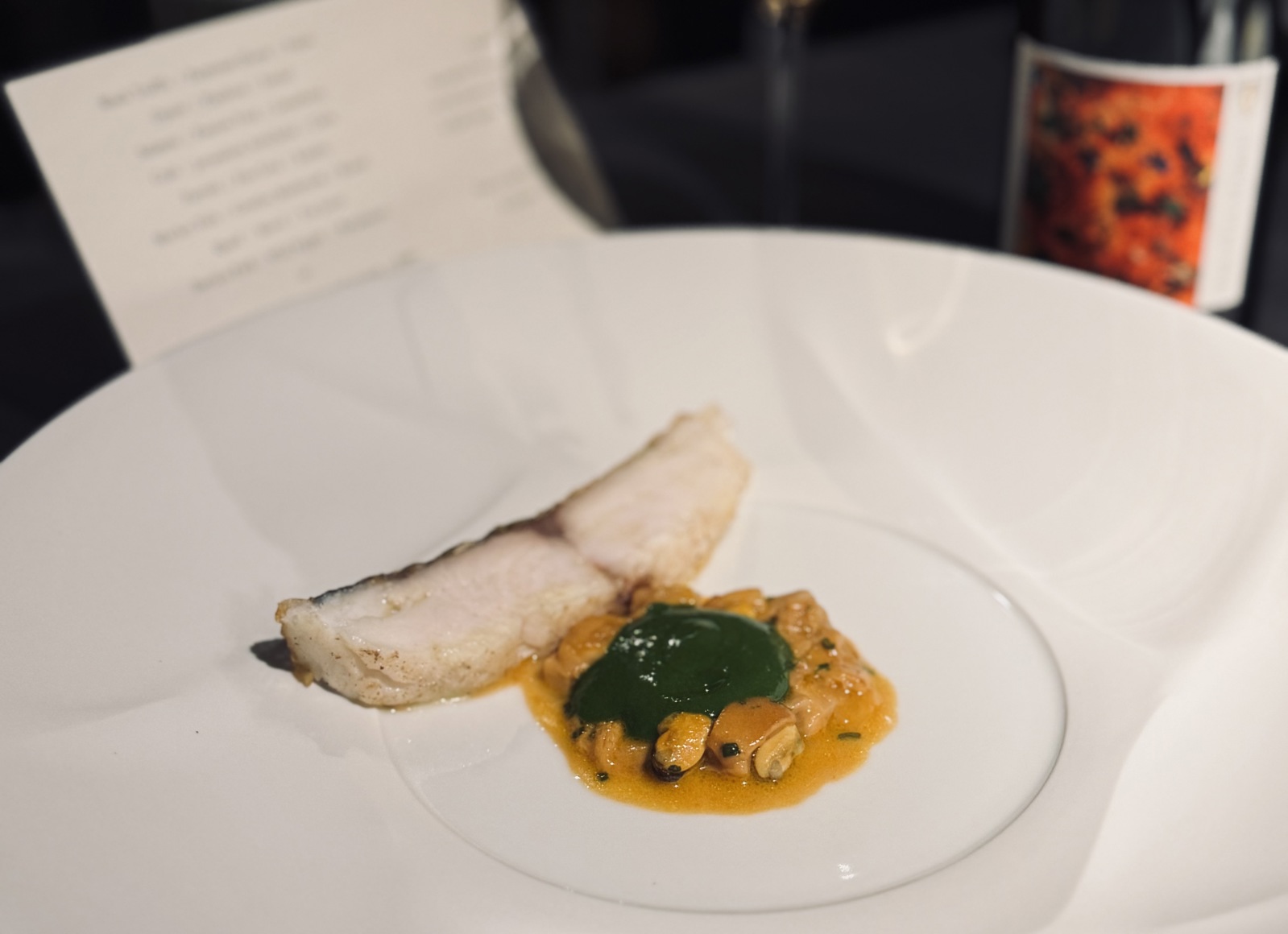 Threadfin. (Taiwan News, Lyla Liu photo)
Ku said he tested fourfinger threadfin from multiple regions before selecting wild threadfin from Kinmen.
“The fat distribution is superior,” he said. Ku said he selects fish weighing more than 10 kilograms, pairing them with a sauce made from fish bones and girolle mushrooms, finished with a bittersweet rapeseed green sauce.
His Hong Kong upbringing also influences the main courses. The salt-baked Iberico pork uses an en croute technique, with the meat marinated in green and Sichuan peppercorns before being salt-baked to retain moisture.
The sauce combines classic French peppercorn with Hong Kong-style curry spices. “I combined four peppercorn profiles with the curry notes of my memory to add a sentimental touch to the rational structure of French cooking,” Ku said.
The Chiayi quail features a leg wrapped in foie gras marinated in French vin jaune, alongside a breast stuffed with morel and chicken liver mousse.
Ku said desserts and appetizers remain experimental, including a Japanese mustard spinach ice cream inspired by a meal in Hong Kong. “Komatsuna has a unique pungent aroma that balances the sweet and tart notes of figs,” he said.
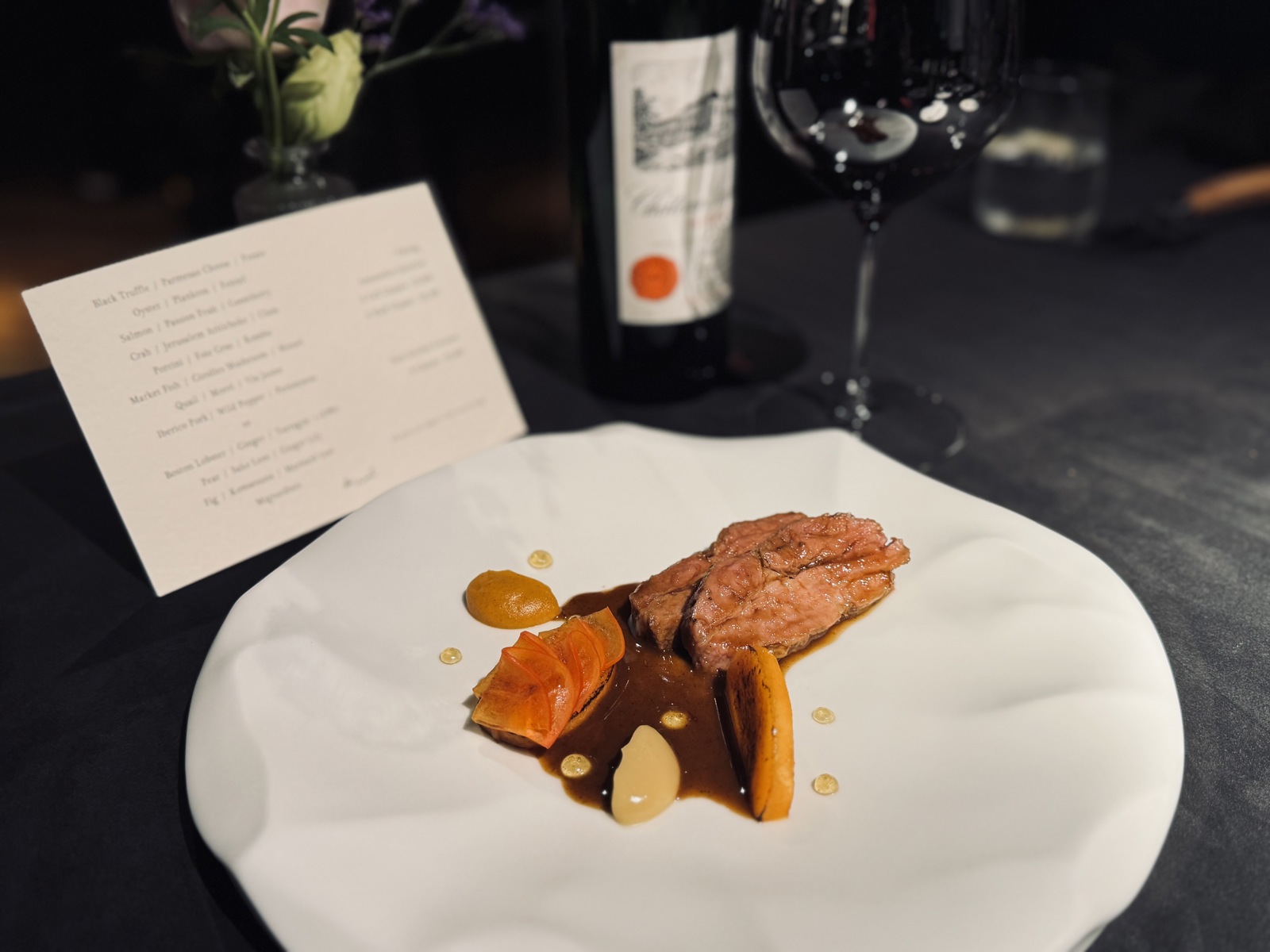 Iberico pork. (Taiwan News, Lyla Liu photo)
Dining and Cooking