
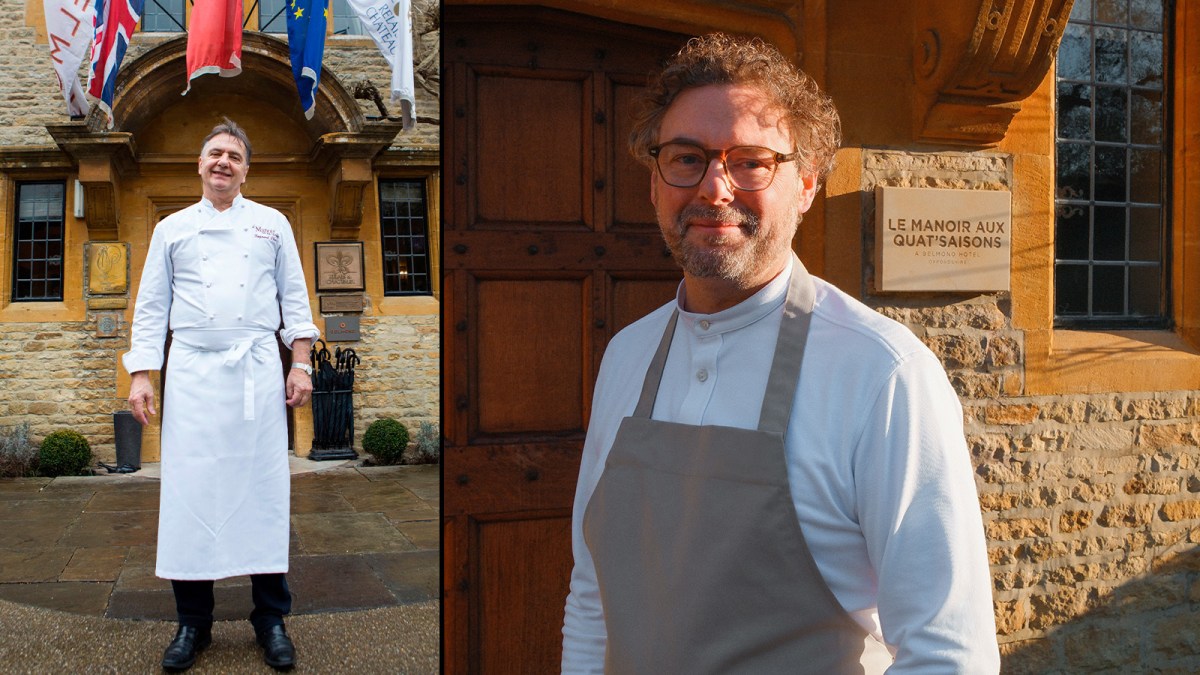
Ever since the iron gates opened and the first guest came down the drive 41 years ago, the best spot at Raymond Blanc’s Michelin-starred Oxfordshire hotel, Le Manoir aux Quat’Saisons, has been in the lounge. With its plush sofas, thick carpets and grand fireplaces, this room is where guests excitedly wait to go into dinner with a plate of tiny snacks and champagne, and where they relax afterwards.
But since the beginning of January, the lounge has been empty: no guests, no petits fours, no after-dinner buzz or charming staff — and no Raymond Blanc. In September the French chef, 76, announced his retirement from his role as the hotel’s chef-patron, alongside the temporary closure of his beautiful 15th-century country house for a much needed makeover. The new look will keep with the fabric of the hotel, but right now it is being slowly packed up and hollowed out, ready for new rooms, new restaurants and a new chef.
It will be 18 months before visitors can once again dine at the bucolic manor, which has become one of England’s finest country house hotels, holding two Michelin stars for over four decades. While Blanc will remain involved as “lifetime ambassador”, the baton has already been passed to a new culinary director.
He is neither a former protégé nor a bright young thing, and if you’re British you’ve probably never heard of him. His name is Arnaud Donckele and he is one of France’s most celebrated culinary figures.
It’s a daunting job to take on an institution like Le Manoir that has always been — and arguably will always be — associated with Britain’s favourite Frenchman. But rest assured, Donckele, 48, has the required traits. First, and perhaps most importantly, he is suitably French. So French in fact that we speak through a translator.
Second, and rather crucially, he has the silver to take on such a gilded restaurant. Donckele has two restaurants, both of which hold three Michelin stars, the highest accolade a restaurant can achieve. There is La Vague d’Or in St Tropez, a celebration of the sun-drenched food of the south of France, and Plénitude at Cheval Blanc, an haute cuisine restaurant in Paris.
• Raymond Blanc made Le Manoir his own. Now he’s stepping out of the kitchen
So how does he feel about taking on the task? “When you are a chef this is the house and restaurant that you dream of coming to work at,” he says. “It is a great honour to have been chosen to come and work at such a unique place. I love the seasonality, the gardens, the vegetables and how local everything is.”
I am assured by Belmond, which fully owns the hotel and is itself part of the luxury conglomerate LVMH, that Blanc will still very much be involved in the workings of Le Manoir. While he won’t be peering over Donckele’s shoulder telling him to add more salt (nor will he need to), the two regularly exchange WhatsApp messages and emails.
Cynics could say this sounds like a chef’s worst nightmare: to live with the ghost of their predecessor, unable to exorcise them from the kitchens. Donckele, on the other hand, sees things differently. “It’s important to remember that the choice was made with Raymond. I know that is a very heavy responsibility to take over from someone like him.”
Donckele’s vision for Le Manoir is a work in progress. Luckily he has plenty of time to be inspired. The hotel will have two restaurants: a contemporary bistro serving plates that celebrate Le Manoir’s produce — “Everything here will be about focusing on our connection with nature. It will be somewhere people want to go” — and a fine-dining restaurant with fewer covers. He will start by working closely with the garden team and farmers but his influence will stretch beyond the kitchen to the staff uniforms and even the plates, which he will also design.
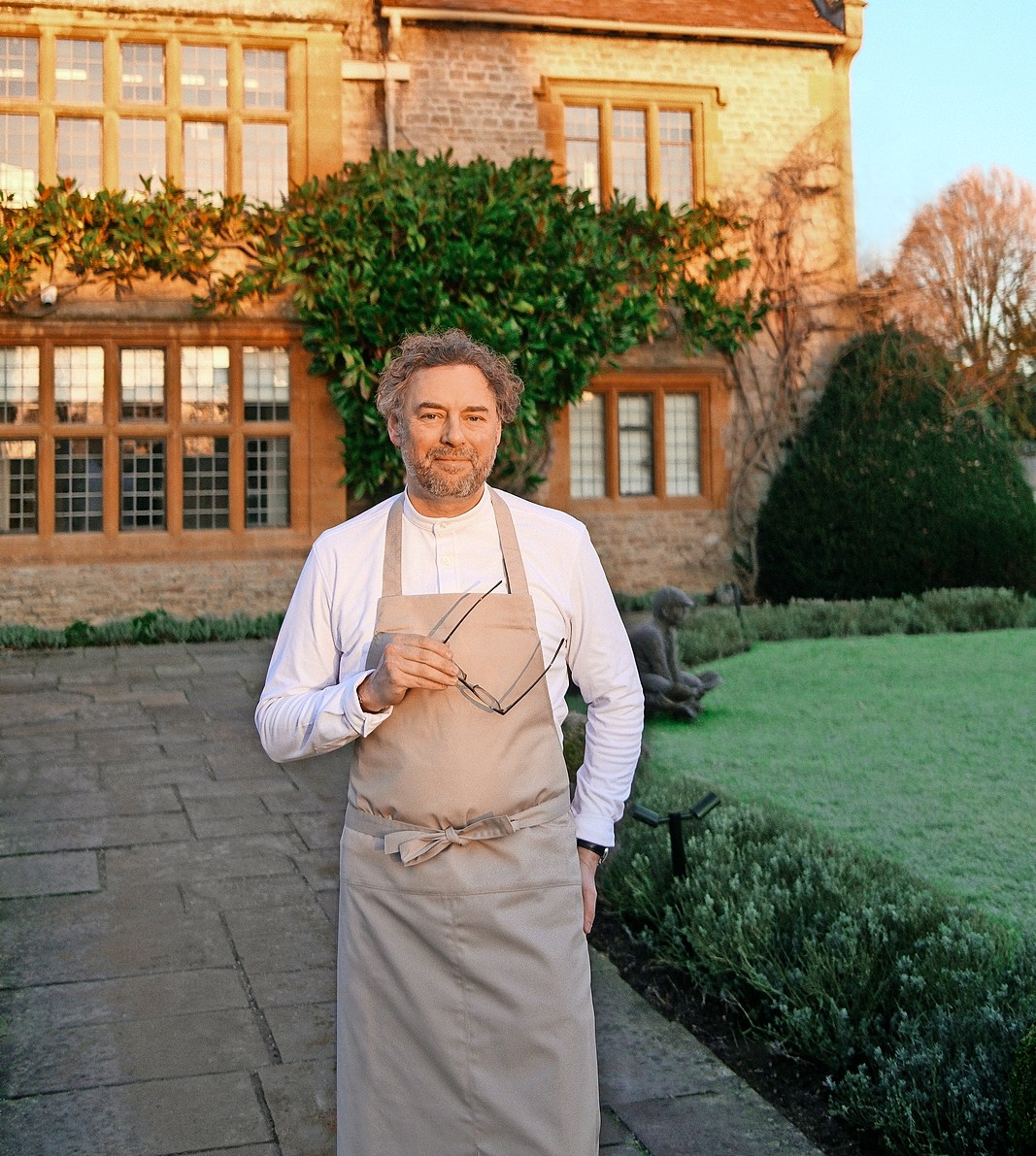
Arnaud Donckele at Le Manoir
Donckele first came to Le Manoir two years ago. He fell in love with the lavender-fringed house, the yellowstone brick, the Tudor chimneys, beautifully manicured flowerbeds and lawns, and the famous vegetable garden. “In France people talk about how beautiful it is. It is the most English house you could ever imagine but with Raymond’s French touch. My favourite place is the pond, because you’ve got this very peaceful area with the water and just behind it you can see the garden with all the vegetables.”
After his first meal at Le Manoir, Donckele was introduced to Blanc. It was their first meeting. “He has a fantastic reputation in France and is incredibly well respected,” Donckele tells me. “We say he is the most English man in France, and the most French man in England.” So who made the first move? Belmond, with Blanc’s approval, approached Donckele last year with the suggestion that he take over.
• Raymond Blanc: ‘Britain has taught me how to be a better Frenchman’
Despite the age gap — Donckele was just seven when Le Manoir opened — they have plenty in common. Donckele was born in Rouen, Normandy, and his passion for organic produce and seasonality grew from his parents, who owned a delicatessen in Mantes-la-Jolie, while his grandparents had a farm in Catenay. “I think that’s why it works so well for me to be here. My ethics and passion for farm-to-table align with those of Le Manoir. Before I wanted to be a chef, I was going to be a farmer.”
Donckele’s father, a passionate hunter and cook, was a strong influence. We might have spent the past four decades getting to know Blanc’s beloved Maman, but I suspect we will soon hear more about Donckele’s inspirational Papa. “Growing up, my dad had such admiration for chefs with three stars. The day I got my three stars, I looked back and thought, did I do this so he was proud of me?”
While Blanc was entirely self-taught, Donckele learnt from France’s top-brass chefs. At 16 he left the farm to move to Paris to study at the Ferrandi culinary school. Two years after graduating, Alain Ducasse — the most decorated living chef in the world — asked him to join his three-Michelin-star restaurant Le Louis XV in Monaco. By 33, he had earned his first two Michelin stars at La Vague d’Or in 2010. Two years later it was awarded its third, and in 2022, the same year it opened, Plénitude was awarded three stars.
• Read more restaurant reviews and recipes from our food experts
Donckele doesn’t plan on being a chef whose name just hovers about the door. He is already working out plans to commute between his three restaurants for two to three-week stints, accepting that a lot of time will be spent on the Eurostar or in Charles de Gaulle airport.
He is high achieving but prefers to keep a low profile. When I ask how he plans on winning over his English audience his answer is matter of fact. “I am not interested in being a celebrity — I am a chef. The aim is maintain the same ethics that Le Manoir has always stood for.”
When the restaurant reopens, it will be faced with a mighty task: regaining the two stars that Blanc held for so long. No doubt, with his armoury of experience, Donckele is up to the challenge. “We will just have to work very hard.”
Dining and Cooking