
Michelin stars and meticulously plated dishes turn heads, but comfort foods awaken memories and transcend what’s simply on the plate. Aromas that transport you back to your grandmother’s kitchen in an instant; flavor profiles that make you feel right at home, even if home is seemingly a world away; a bite that connects you to our culture, reminiscent of whence you came—comfort food stirs up a nostalgia and sentimentality far beyond ingredients. It’s less about pushing culinary boundaries and more about bringing joy. And, typically, comfort food is unfussy and uncomplicated. “Good food is very often, even most often, simple food,” said the late celebrated chef and author Anthony Bourdain. For local chefs, comfort food is more than just stick-to-your-ribs classics. It’s about connection.
Qué Mas, Beverly
“I grew up going to Colombia probably two, three times a year—my dad’s Colombian—and a big breakfast item would be the Arepas de Choclo, which is basically this beautiful sweet corn pancake made with fresh corn,” says Alex Pineda, who opened Qué Mas in Beverly with chef Noe Ortega in the summer of 2024.
In his father’s native Guarne, just east of Medellin, the dish is traditionally paired with fresh cow’s milk cheese from the family farm and hot chocolate. Served in the morning, its heat softens brisk mornings common in the region. “It just brings back so many memories and to such a happy place because it’s warm and, I gotta say, it’s comforting. It’s one of those dishes that appeases just so many different kinds of flavor profiles and textural profiles.”
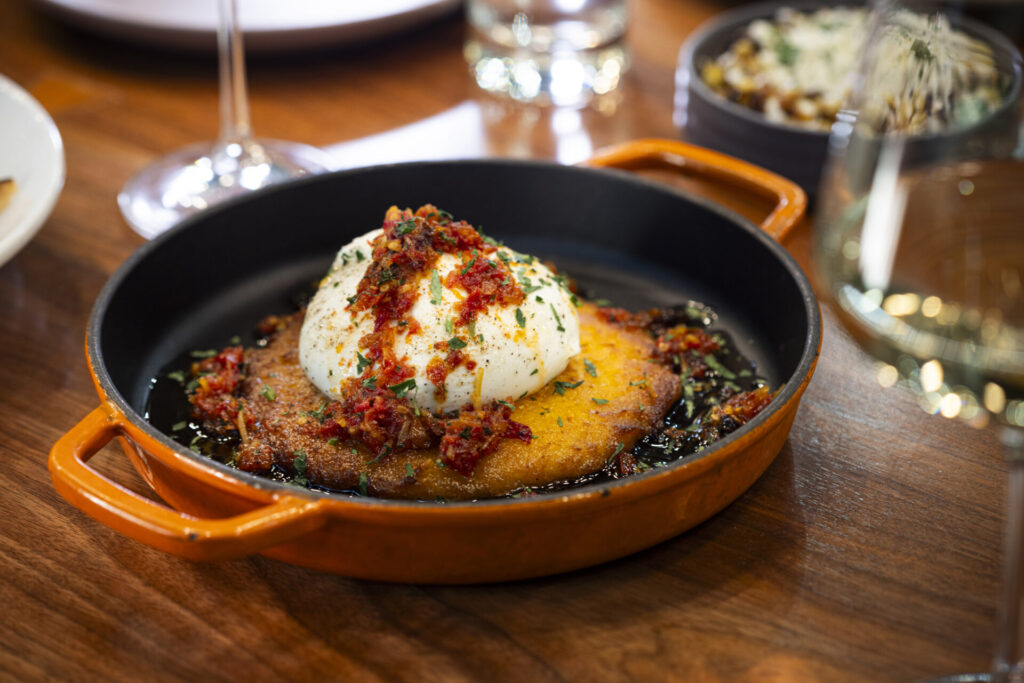
But the chef puts his own personal twist on the dish dubbed Sweet Corn Arepa on Qué Mas’s brunch menu. It’s a flavorful reflection of his crosscultural Colombian and New England upbringing, with burrata, roasted garlic, parmesan to add saltiness and depth, and a dash of Italian influence. “There’s nothing better than a really good burrata; you’ve got the sweetness from the corn, you’ve got that luscious, fatty, decadent burrata, and then you have this sun-dried tomato pesto that’s got acidity to it.”
That Italian throughline can be attributed to Pineda’s mother, Lydia Shire, the lauded James Beard award-winning chef long considered the matriarch of Boston’s culinary scene. Though Irish American, Shire leads the kitchen at Scampo on Beacon Hill, where Pineda also sharpened his technique on the line. Despite his enviable pedigree, Pineda has carved a culinary career all his own, helming kitchens around the world and gaining national acclaim as a finalist on the popular Food Network show, “Chopped.”
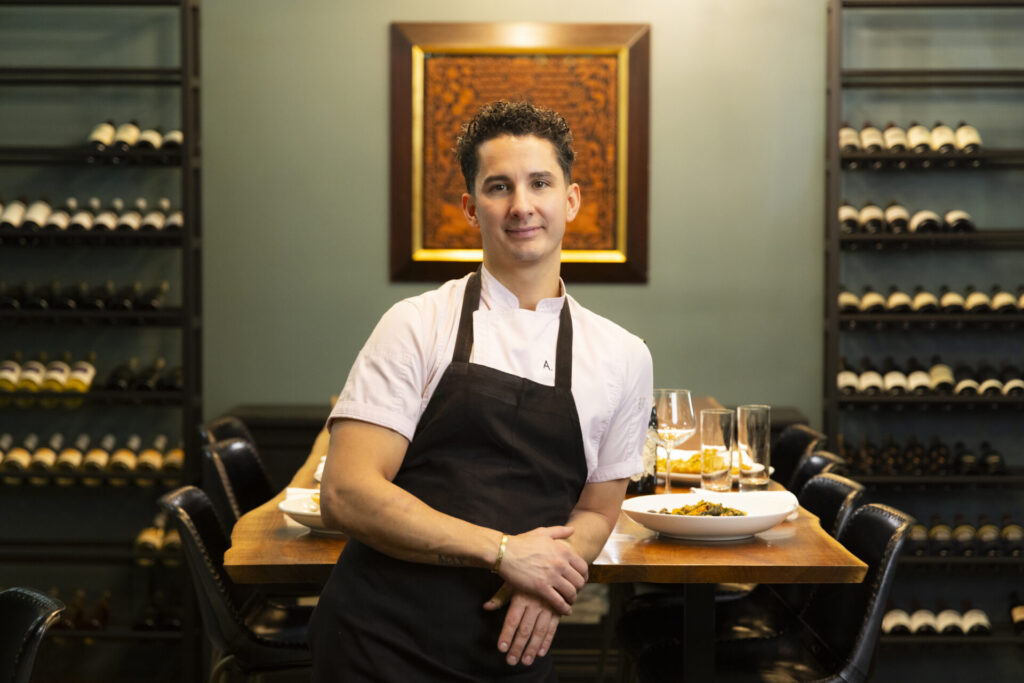 Chef Alex Pineda from Que Mas creates Colombian—inspired dishes such as fried pork chuleta
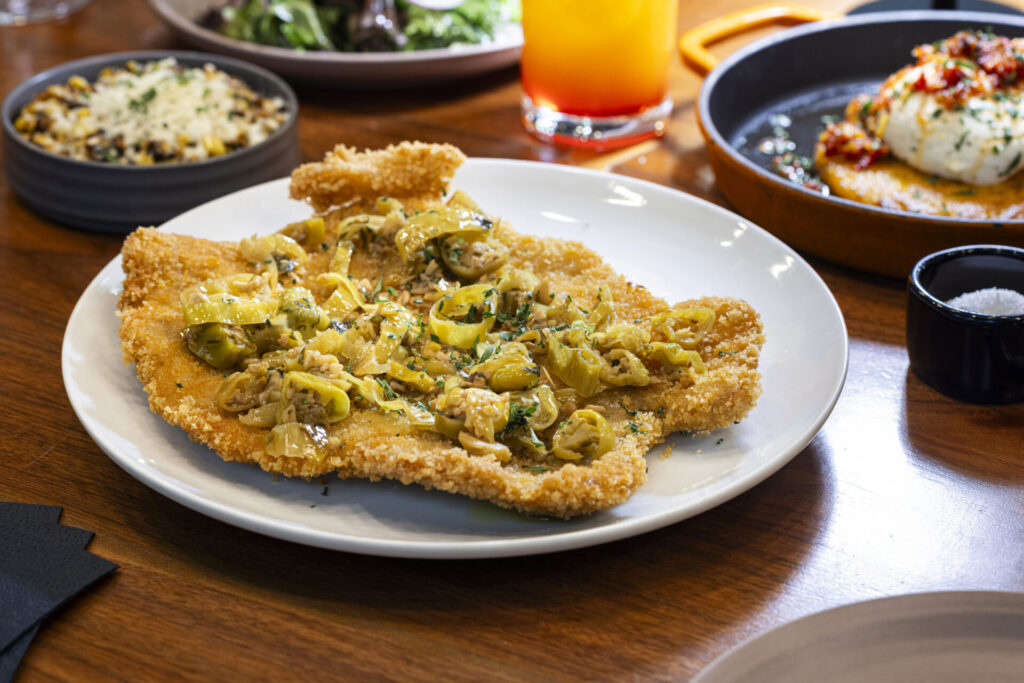
For dinner, it’s Pineda’s fried pork chuleta that’s a comforting favorite. “We take pork chops and we Milanese them, pound them out, and then we season both sides. One side gets cumin, and the other side gets Saóon Goya—every single Latin household in the world has Saóon Goya,” he laughs. “Then the secret at the very end, once you’ve pan fried it, you make this gorgeous brown butter sauce with garlic and pepper and pepperoncini peppers.” Served with white rice and salad, Pineda says he grew up eating the dish weekly, and today, though remarkably uncomplicated, it remains one of his favorites. “Every time I see it, or I eat it, or I smell it, it just brings back so many amazing memories of time I spent with my father and with my mother. It’s just one of those things that’s simple, but yet, brings it all home.”
Behind the bar, Qué Mas’s “U.P. Sunset,” a cocktail named with the initials of Pineda’s father, is made with passionfruit, grenadine, and Aguardiente, the anise-flavored national liqueur of Colombia. Like his Latin-rooted dishes, it echoes Pineda’s sentimentality. “It brings me back to my Latin culture, my Latin heritage. I am 50 percent Colombian, 50 percent Irish, but growing up, my mom was so in love with the Latin culture, so in love with my father and so in love with Colombia that we just grew up more in a so-called Latin household.” Pineda says that the cocktail encapsulates the spirit of his heritage, explaining, “It’s fun, it’s vibrant, it’s lush, it’s loud, it’s bright, it’s the Latin culture.”
Trade House, Salem
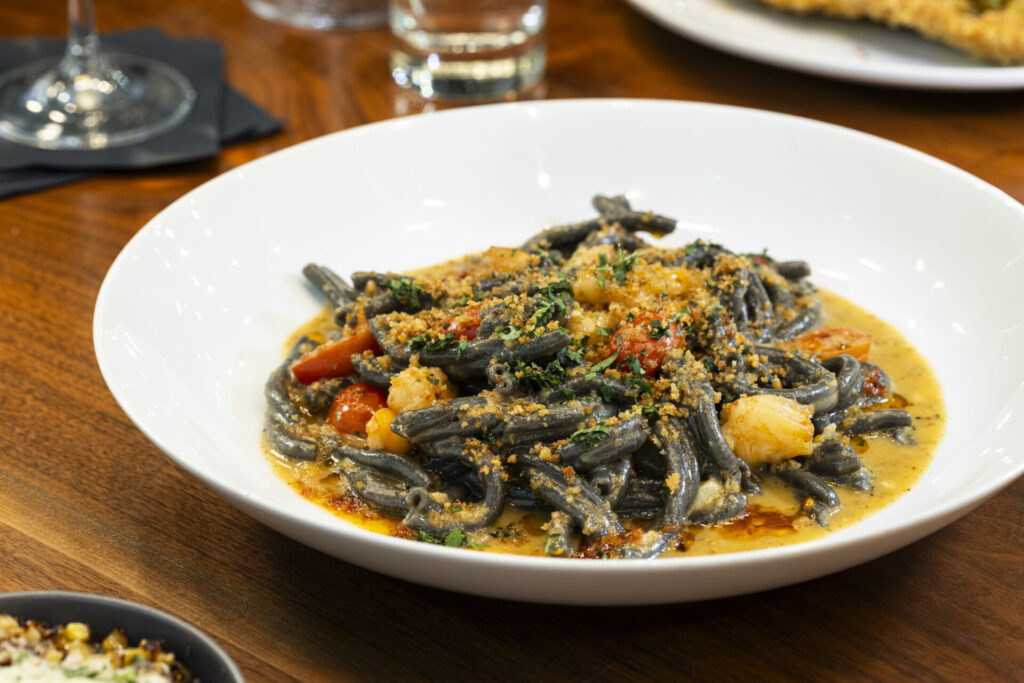
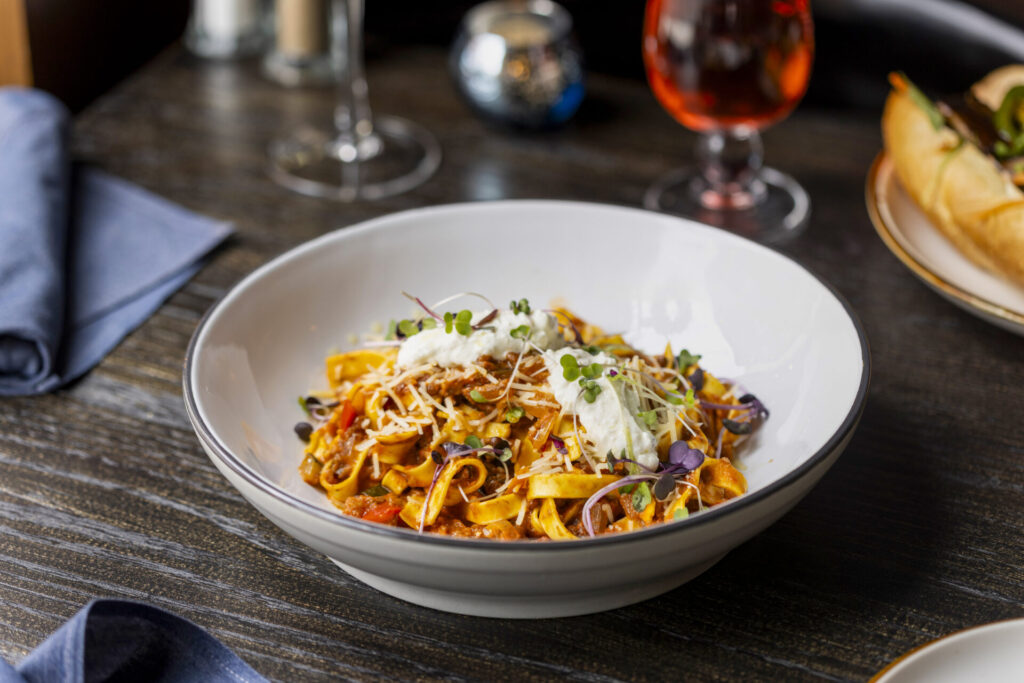
Since opening in Salem in the spring, Trade House has made an impression with its menu, peppered with pub food favorites but also globally—inspired fare. A seasoned chef, Steve Bushway knows his way around a Bolognese, but reinvents the Italian dish with a vegan rendition that’ll please even the pickiest carnivores. “We wanted to double down on that for our vegetarian friends. Being rooted in Salem, with many different walks of life and a vegetarian lifestyle becoming much more popular, we wanted them to feel like there was something on the menu that maybe they’ve never been able to have before,” he explains. With house made tagliatelle, the Bolognese sauce trades traditional beef and pork for roasted mushrooms and eggplant, crowned with a dusting of parmesan and fresh basil “We actually grind up the mushrooms in the meat grinders, and all the other vegetables are cut so, so, so tiny that it has the same mouth – feel as ground protein would.”
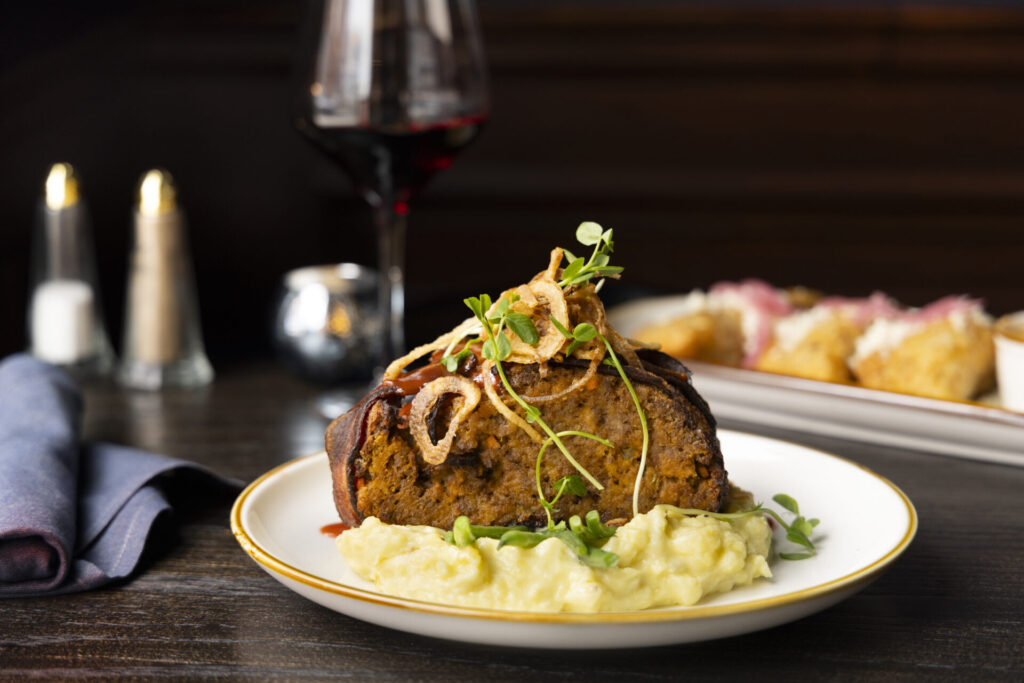
But diners who want to seek their teeth into a meaty American classic are drawn to the bacon-wrapped meatloaf. The dish started as a special, but became so popular with regulars it’s now a fixture on the dinner menu. “Being a neighborhood restaurant and a restaurant in general that wants to listen to what the guests want and for them to feel like they’re at home when they’re here, it was a no brainer,” adds Bushway. The loaf is made from ground filet and short rib then wrapped in the kitchen’s secret weapon: North Country Vermont double-smoked bacon. Its woodsy finish, paired with barbecue sauce alongside whipped potatoes and buttered green beans offers a slice of nostalgia.
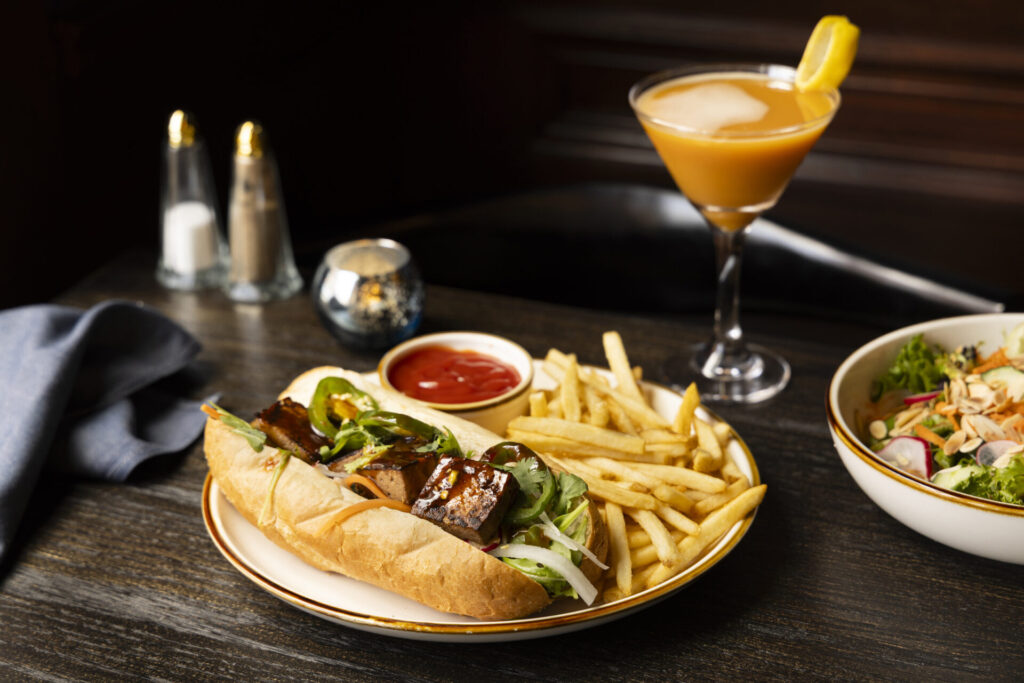 Trade House’s bacon wrapped meatloaf, Tagliatelle Bolognese, and Tofu Bahn Mi.
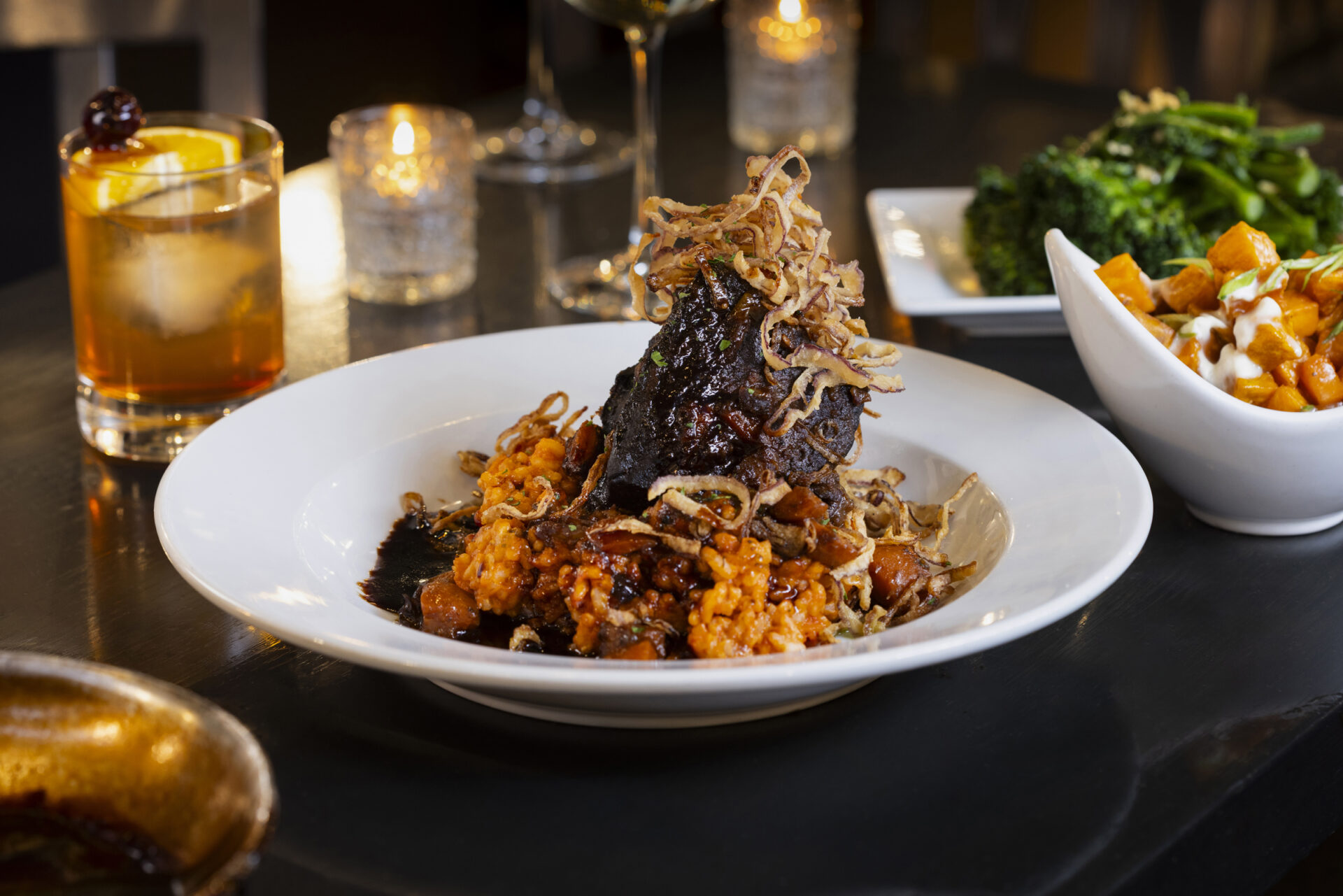
Similarly, Bushway’s short rib entrée is wrapped in warmth, comfort and, most especially this time of year, unapologetic indulgence. “It’s a nice, traditionally European braised short rib with a hearty sauce that comes at a price point where people feel like they got their money’s worth,” he says. “I’ll always want to make sure that our food program is reflective of value and comfort and tradition.”
Bushway’s dishes may read as approachable, but they’re not solely demonstrative of the depth of his talent nor the scope of this technique. The chef, who has cooked coast to coast, has pivoted throughout this part of his career, leaning into comfort and clarity over flashy, award-chasing haute cuisine.
 The Franklin Cape Ann in Gloucester
“In the past 10 years, I’ve really changed the way I approach food, from being a tweezer chef in the beginning part of my career working in more fine dining style restaurants to really wanting to make sure that people shouldn’t feel like they want to go to McDonald’s when they leave a restaurant,” he explains.
Bushway works with his culinary team to make the restaurant’s much loved empanadas of the day, with flavors ranging from Mexican-influenced chicken tinga and refried beans and cheese to out of the box steak and cheese or a steak bomb. “We’re constantly prepping them. They’re difficult to keep up with, which just goes to show you how comforting and popular they are,” he adds.
 The Franklin owner, Maria Seniti-Figurido.
The Franklin Cape Ann, Gloucester
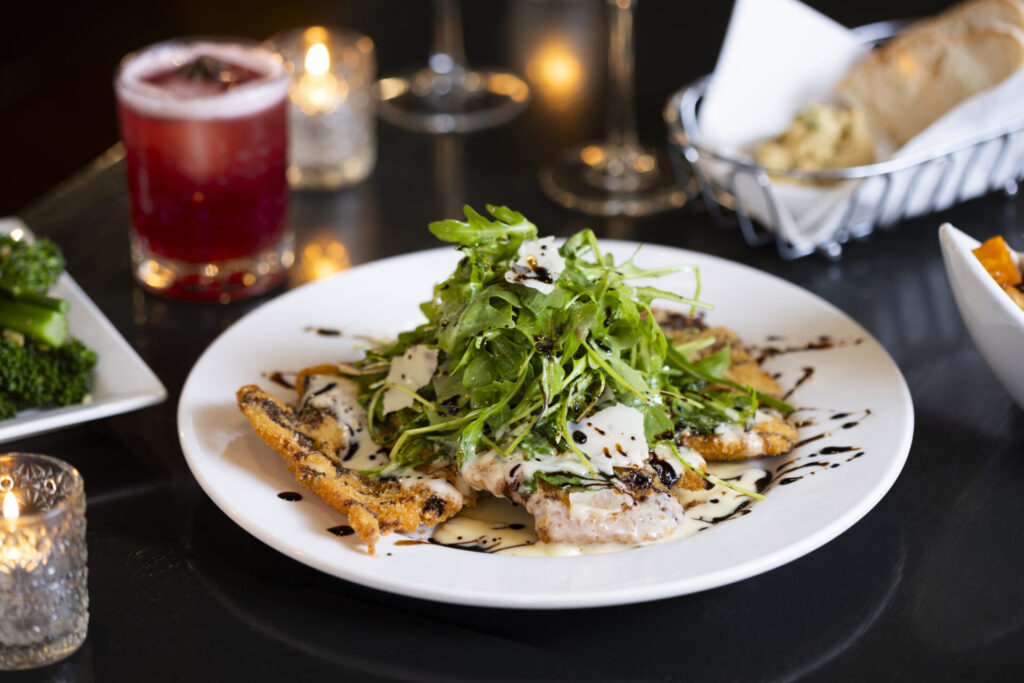
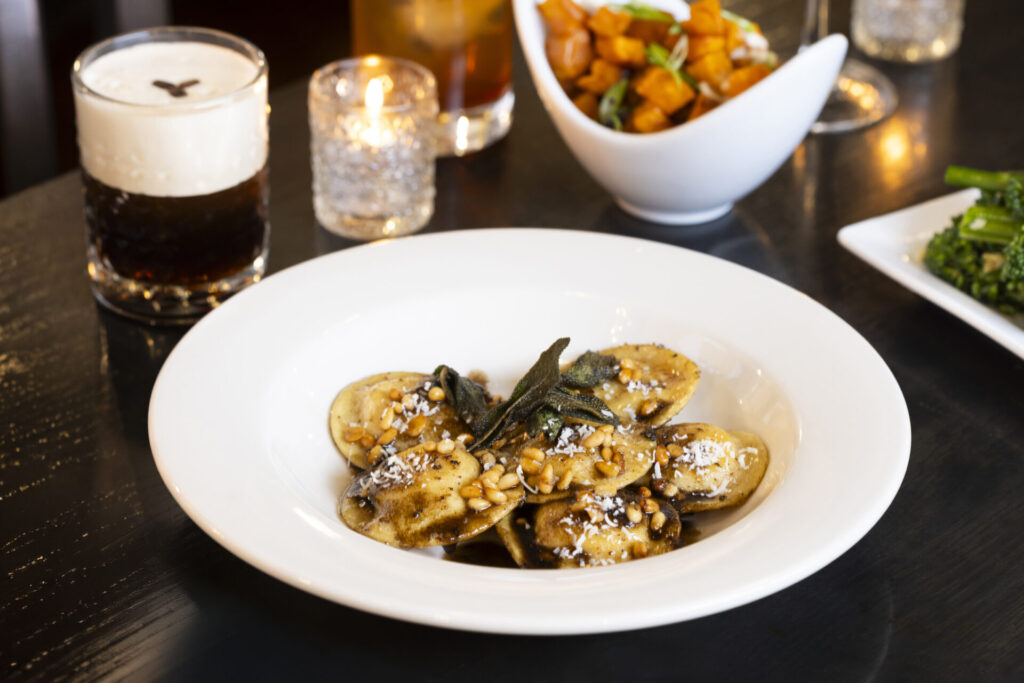
At The Franklin Cape Ann, owner Maria Seniti-Figurido says the restaurant’s butternut squash ravioli is a comfort food favorite. “It’s one of our signature winter dishes here that keeps everyone coming back,” she says. A staple of their seasonal menu, the scratch-made ravioli is a celebration of seasonal flavors, with pine nuts, pecorino cheese and a rich brown butter sage sauce. Equally, the chicken Milanese, an appetizer at the restaurant, is pounded thin, breaded and pan-fried and served with peppery arugula, lemon, shaved parmesan and a drizzle of extra virgin olive oil. The two dishes win both hearts and palates as everything at the Gloucester restaurant, open since 1999, is made from scratch.
Most especially when the temperature drops, comfort food has a way of wrapping warmth and a sense of familiarity other dishes simply can’t measure up to. “It’s almost not even so much what the ingredients are or how it’s prepared. It’s what it brings to you, you know? What it makes you go through, emotionally and spiritually. To me, that’s what’s real,” says Pineda. “I think that’s the beauty behind what we do as chefs and as restaurateurs. We create an experience. We create something that reminds people of things that, to me, money can’t buy because cooking is done with love.”
franklincapeann.com
quemasrestaurant.com
tradehousesalem.com
Dining and Cooking