
With a last name like Bologna, I suppose I shouldn’t be surprised that I am one of many Italian Americans who love traveling to “Il Bel Paese.” Italy is by far my most-visited destination outside the United States, and I’ve been fortunate to spend time in eight of the country’s 20 regions.
Although delicious foods are available in abundance across Italy, I recently explored an area that should probably be high up on cheese lovers’ travel bucket lists: Parma.
As you might’ve deduced, Parma ― along with its neighbor Reggio Emilia ― is the namesake of the beloved hard cheese Parmigiano Reggiano. The so-called “king of cheeses” can, in fact, only be legally produced under that name in those two provinces, plus Modena, Mantova and Bologna.
The Parmigiano Reggiano Moment
It’s no secret that Parmigiano Reggiano is having a moment, finding its way into headlines (and bellies) around the world. This past November, news broke that United Talent Agency had signed the Parmigiano Reggiano Consortium to help place the cheese in movies and shows and raise awareness about these official products.
That came just two months after the governing body for the Italian cheese announced a strategic partnership with the New York Jets football team ― an initiative that included stadium concession offerings, video segments and more.
Around the 2024 Paris Olympics, Parmigiano Reggiano also made waves as fans of Italian gymnast Giorgia Villa discovered her previous sponsorship deal with the consortium ― complete with amazing photos of the athlete posing with big wheels of cheese. (Whether we’ll be seeing more cheese-y sponsorships at the upcoming Milan-Cortina Olympics remains to be seen, but given the host location and the consortium’s PR push, the synergy feels almost inevitable.)
Caroline Bologna/HuffPost
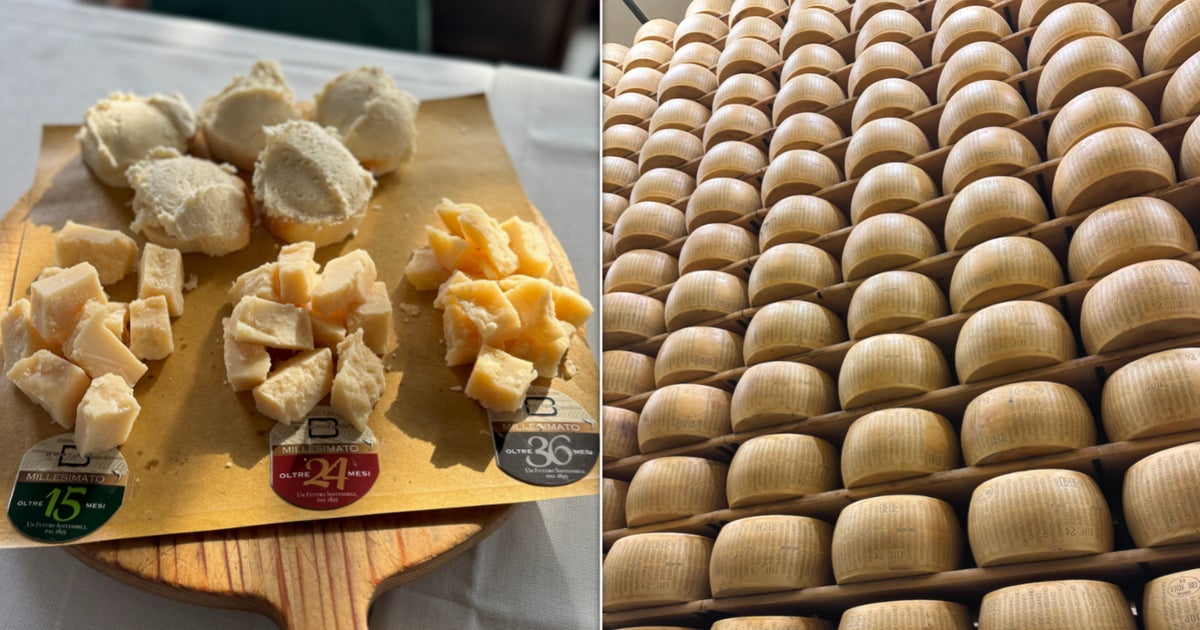
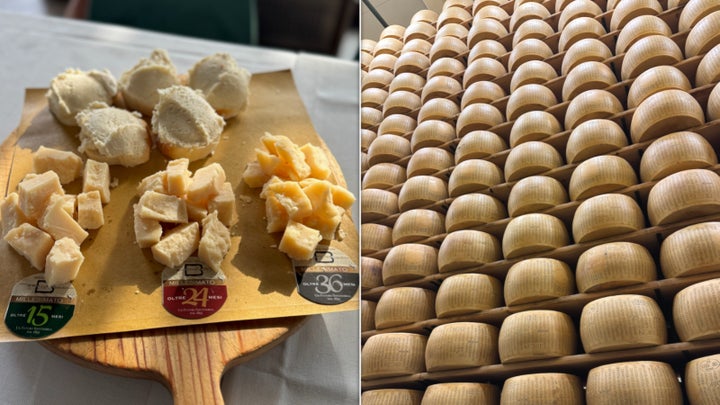
My visit to Parma included a stop at Azienda Agricola Bertinelli, a family-owned dairy that offers Parmigiano Reggiano tastings and tours to educate visitors about the production process behind this highly regulated cheese.
With protein’s dominance in our culture, the cheese is getting extra attention for its naturally high protein content. Italian scientists have published studies highlighting the health benefits of authentic Parmigiano Reggiano.
And then there are the seemingly endless social media videos of mouthwatering pasta prepared in hollowed-out wheels of Parmigiano Reggiano tableside at restaurants and in home kitchens. The Italian brainrot trend naturally featured a “Parmigiano” character as well.
I was pumped to visit the home of the king of cheeses in Parma, a lovely province and city in Italy’s Emilia-Romagna region. Despite its world-famous food exports, Parma still flies under the radar compared to flashier Italian destinations that dominate most itineraries, like Florence, Rome and Venice. And as it turns out, there’s plenty to do there beyond stuffing your face with dairy goodness.
What To Eat In Parma
Reaching Parma is fairly easy. You can drive from Milan in less than two hours or take the train from many destinations around Italy, including Milan, Bologna, Florence, Venice and more. The train station was a breezy stroll to the center of the action and the whole city felt very walkable.
As the first Italian destination to earn UNESCO’s “City of Gastronomy” title, Parma is unsurprisingly filled with excellent eateries. I had great multi-course meals at Cortex and Croce di Malta, wine and snacks at Tra L’uss e L’asa and Tabarro, and sandwiches at Pepen and Bel Grano Focaccia. Other restaurants recommended by locals in town included Osteria del 36, Ombre Rosse, Ristorante Cocchi, Trattoria Corrieri and Trattoria del Tribunale.
Caroline Bologna/HuffPost
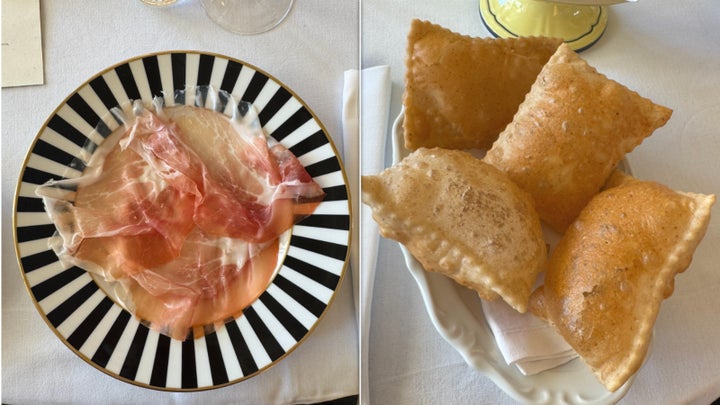
Cured meat and torta fritta are local staples.
In the broader province of Parma, I dined at Trattoria Antichi Sapori, Al Vedel and Trattoria Ai Due Platani. But the most exciting stop was Azienda Agricola Bertinelli, a family-owned dairy that offers Parmigiano Reggiano tastings and tours to educate visitors about the production process behind this highly regulated cheese.
Indeed, authentic Parmigiano Reggiano can only be made using three ingredients: raw cow’s milk, salt and rennet. Each wheel is aged for a minimum of 12 months, with most varieties on the market aged between 24 and 36 months.
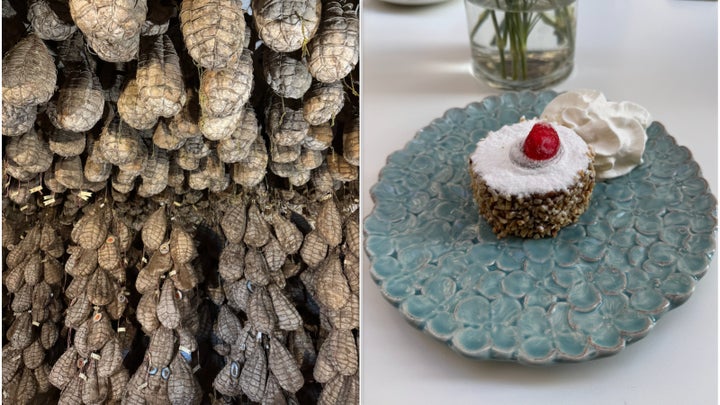
Beyond the cheese, Parma’s rich food culture also centers on the iconic Prosciutto di Parma and highly-prized Culatello di Zibello, aka the “king of salumi” ― a rare cured meat that’s aged in a pig’s bladder. Cold cuts in the province are often served with torta fritta, a puffy fried dough.
Caroline Bologna/HuffPost
I had the chance to try Culatello di Zibello and “Duchess of Parma” cake.
Local restaurants tend to offer tortelli d’erbetta (pasta stuffed with cheese and greens), anolini in brodo (beef-filled pasta in broth) and a minced horse meat delicacy known as caval pist.
Other Highlights Of A Parma Trip
Although my Parma visit understandably centered around food, I also took some time to explore the history of the city and province in between meals.
The Palazzo della Pilotta complex houses multiple interesting museums and sites, including the National Gallery of Parma, the National Archaeological Museum and the Bodoni Museum. The Palatina Library is particularly stunning, as is the wooden Farnese Theater, one of the largest baroque theaters in Europe.
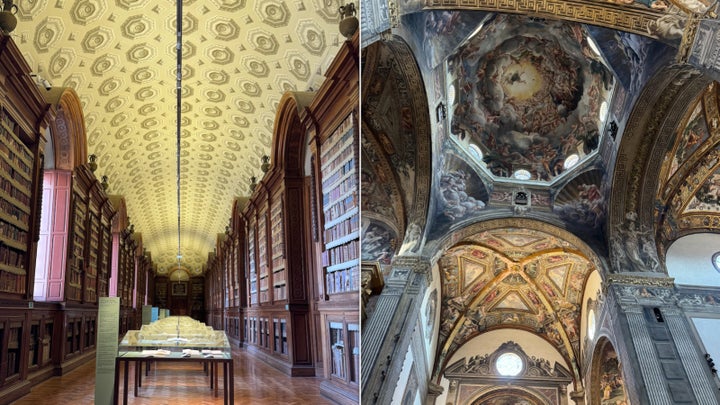
Caroline Bologna/HuffPost
Beyond food, visitors to Parma can check out sites like the Palatina Library and Parma Cathedral.
Just across the street is the Glauco Lombardi Museum, a unique museum featuring personal belongings and items related to the life and times of Napoleon’s second wife, Marie Louise, Duchess of Parma. I fittingly followed my visit with a mini “Duchess of Parma” cake at a nearby cafe called San Biagio.
The impressive Parma Cathedral and octagonal baptistery next door were also worthwhile stops on my trip. The same goes for the Correggio frescoes in the former Monastery of San Paolo.
And I enjoyed strolling the Piazza Giuseppe Garibaldi and Parco Ducale in the afternoons, embracing the “slow travel” ethos and getting a real feel for the city.
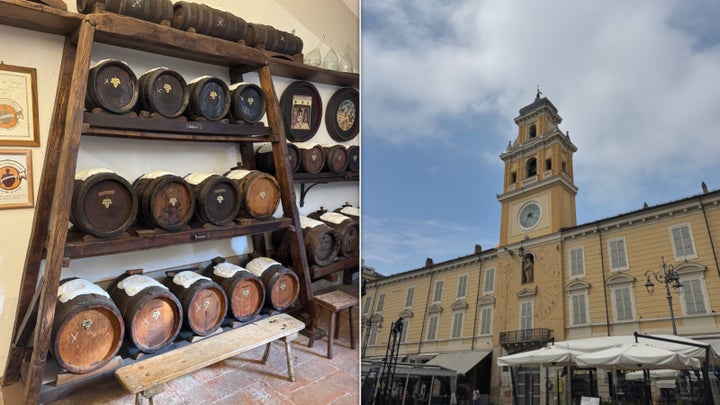
Caroline Bologna/HuffPost
I ventured to Modena to try some authentic balsamic vinegar and then strolled around Piazza Giuseppe Garibaldi back in Parma.
Visitors to Parma can also add stops in other parts of the Emilia-Romagna region or plan a few easy half-day jaunts. I visited a small balsamic vinegar producer, Acetaia di Giorgio, in Modena and had lunch at the Michelin-starred Osteria del Viandante in Reggio Emilia. Many people also add in the Ferrari and Lamborghini museum experiences as well.
At a time when overtourism is straining destinations like Florence, Rome, Venice and the Amalfi Coast, travelers craving a relaxing and authentic Italian experience might want to consider adding Parma to their itineraries. And if travel budgets are tight, a taste of real Parmigiano Reggiano at home may also help scratch the itch in the meantime.
Dining and Cooking