

 (Credit: Intelligent Living)
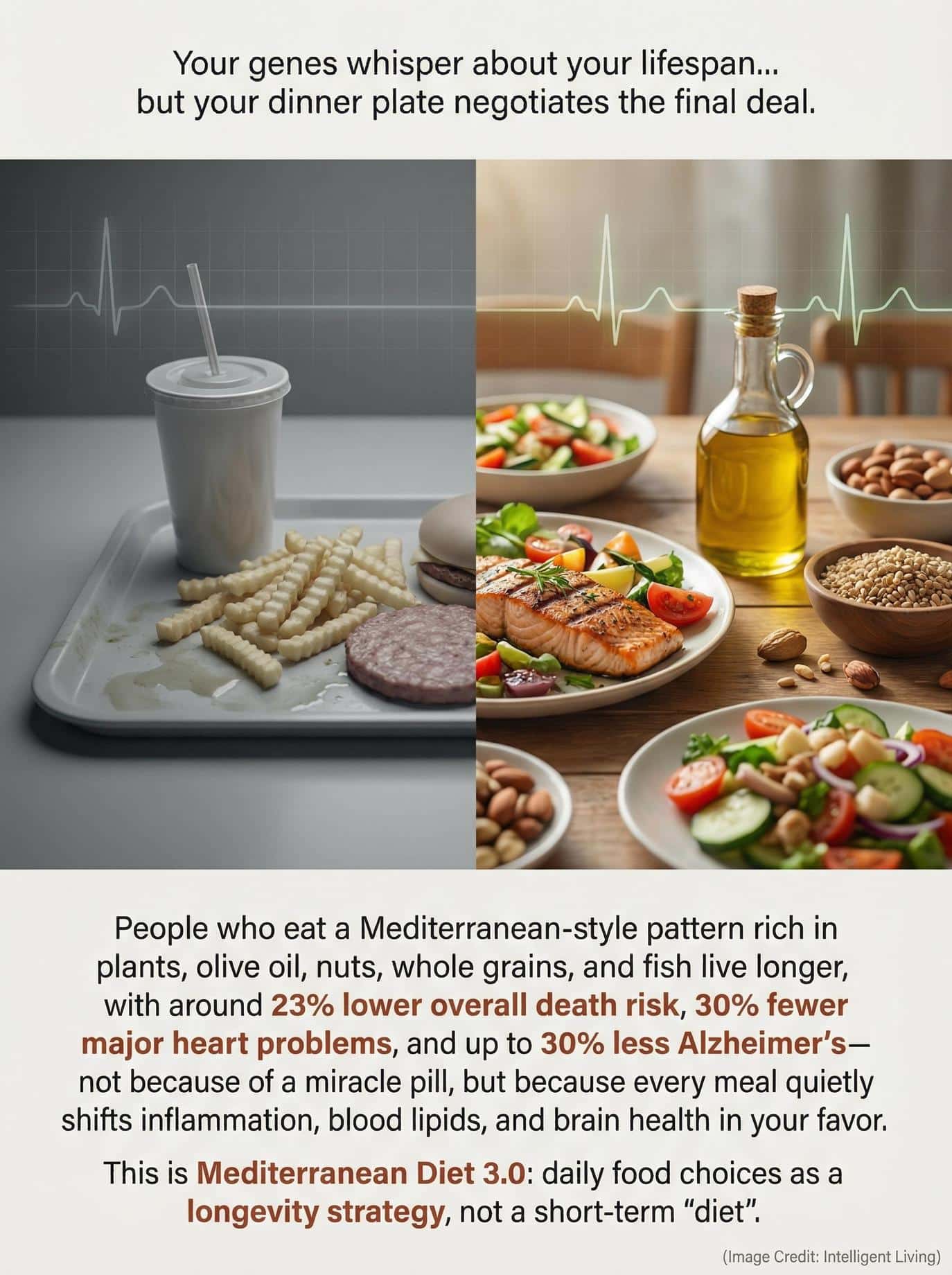
Modern longevity science recently reached a turning point where traditional dietary wisdom meets high-resolution biological data. This shift defines Mediterranean Diet 3.0: an evolved, data-driven model that connects the dots between daily habits, food quality, and measurable longevity outcomes.
By merging large-scale biobank insights with inflammatory biomarker tracking, researchers have transitioned from recommending a simple food list to advocating for a systemic, data-validated lifestyle.
Relying on hard data instead of cultural tropes provides a clearer path for those seeking to maximize their healthspan. Success in this new era depends on synchronizing daily habits with measurable biomarkers, transforming every meal into a strategic investment in long-term metabolic health and cognitive vitality. These outcomes demonstrate that longevity is less about geographic luck and more about the predictably beneficial defaults found in Mediterranean-style eating.
 (Credit: Intelligent Living)
Modern Science and the Longevity Signal
Quick Facts: Mediterranean Diet Longevity and Health Benefits
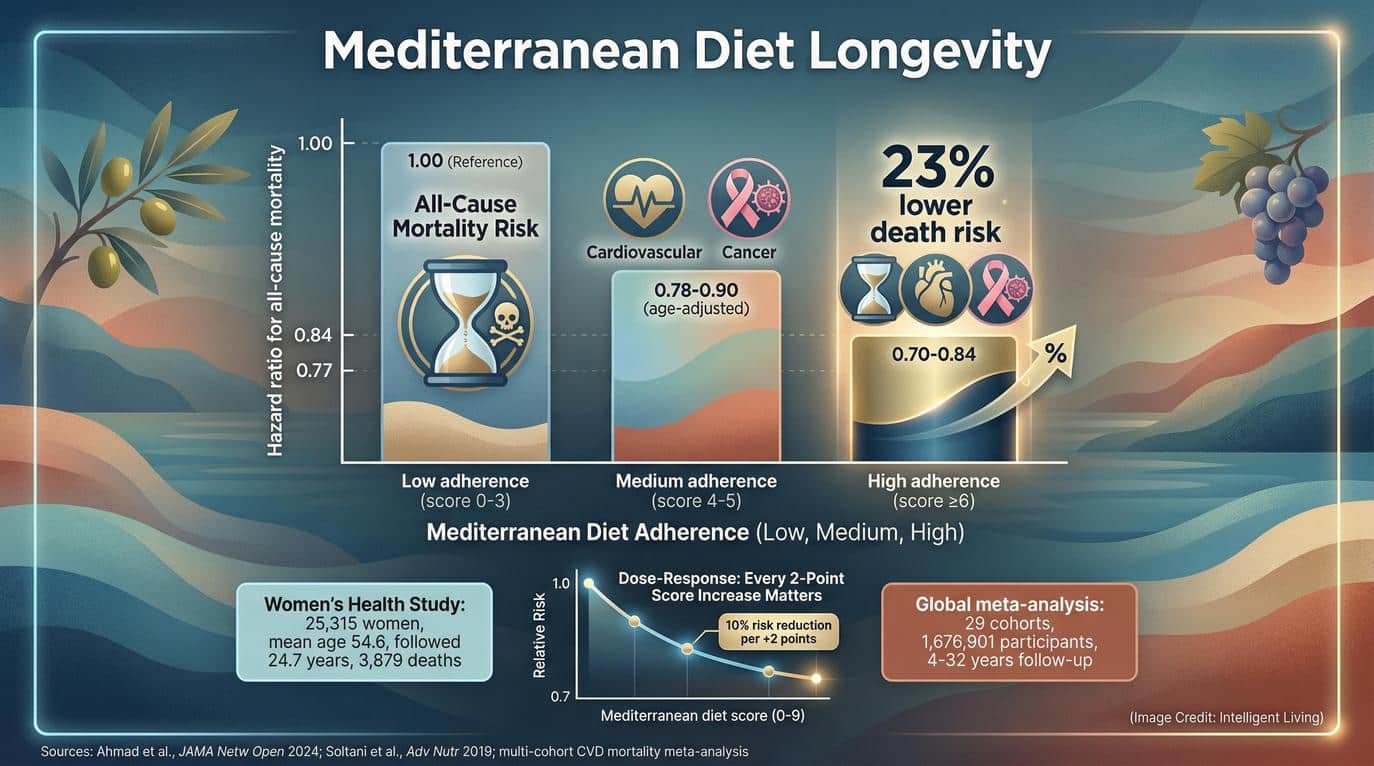
Longevity Boost: Long-term adherence to a Mediterranean diet correlates with a 23% lower all-cause mortality risk, according to data tracking the intersection of dietary habits and survival over a 25-year follow-up period.
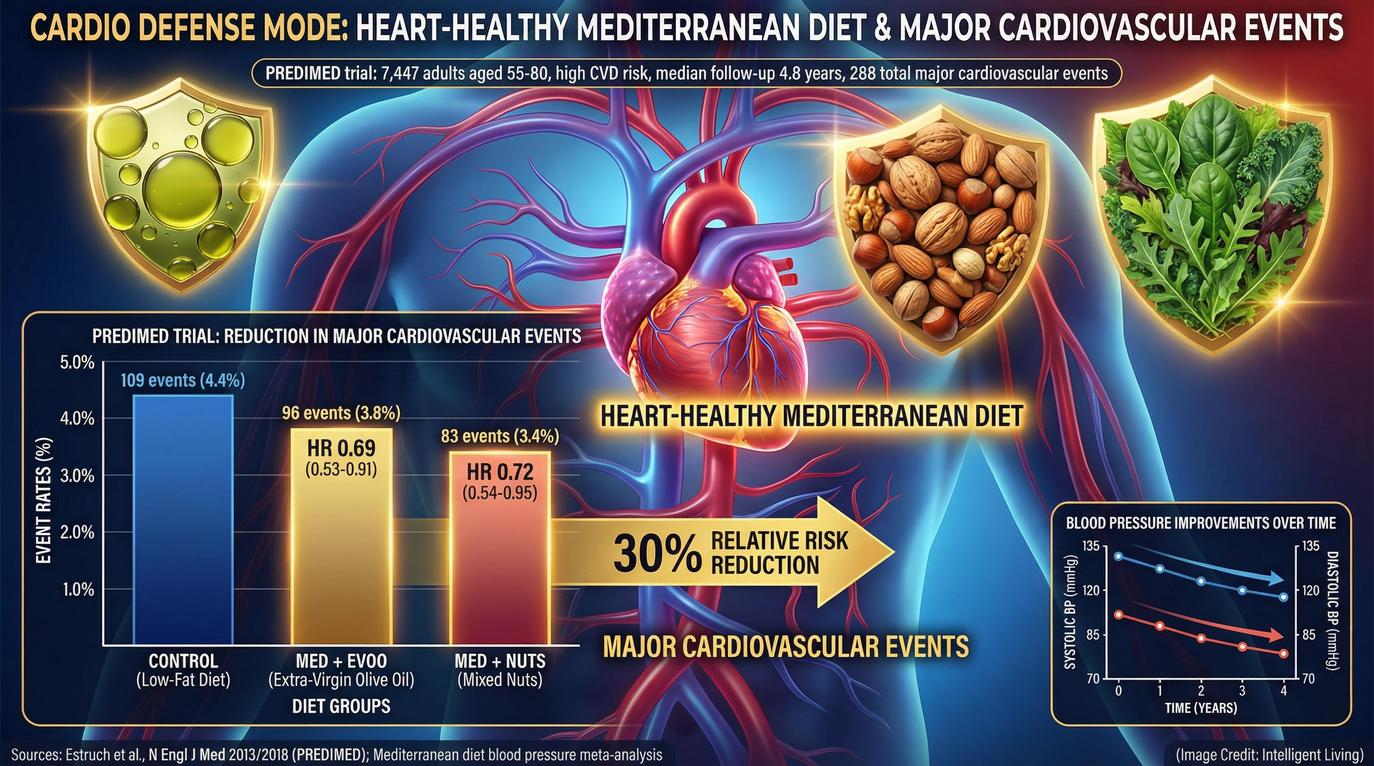
Heart Health: Results from randomized clinical trials reveal that participants eating a Mediterranean diet with extra virgin olive oil or nuts experienced a 30% reduction in major cardiovascular events compared to those on a low-fat diet.
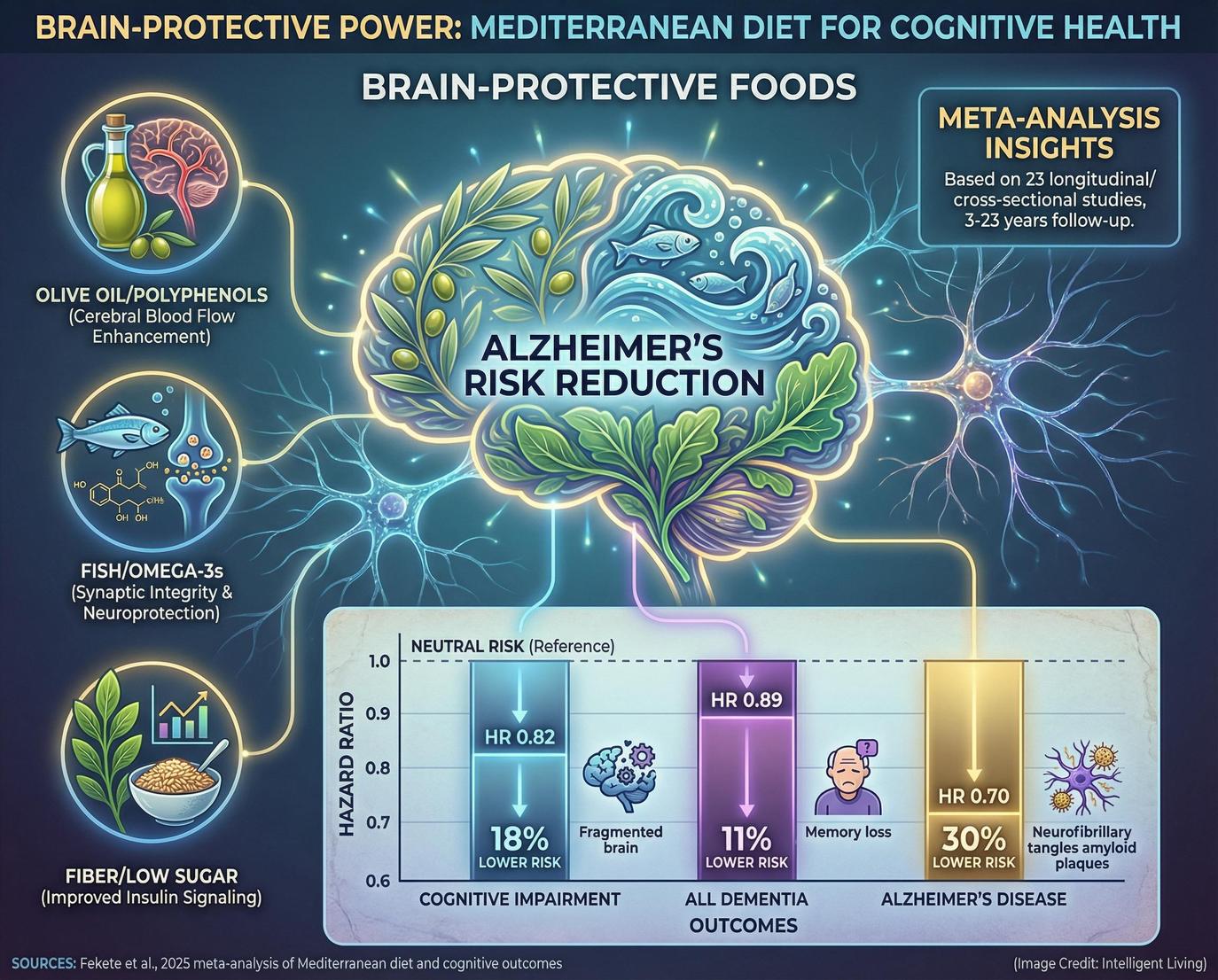
Cognitive Protection: Long-term observational data shows up to a 30% lower risk of Alzheimer’s disease among high-adherence groups.
Short-Term Wins: Within just 12 weeks, participants following a structured plant-forward nutritional plan and moderate exercise saw measurable decreases in waist circumference, triglycerides, and visceral fat.
Beyond Food: The diet’s protective effects extend to lifestyle factors—movement, social meals, and stress reduction amplify its benefits.
The “3.0” Upgrade: Why the Mediterranean Diet Story Is Sharper Now
What makes Mediterranean Diet 3.0 different from the advice your grandmother might have heard? The answer lies in scale and precision.
The first wave of Mediterranean research in the 1960s and 1970s introduced the concept of heart-protective eating. The second wave, from the 1990s to 2010s, confirmed these benefits through randomized controlled trials. Now, the third wave takes a data-driven turn, merging large-scale biobank data with metabolomic and inflammatory biomarker tracking.
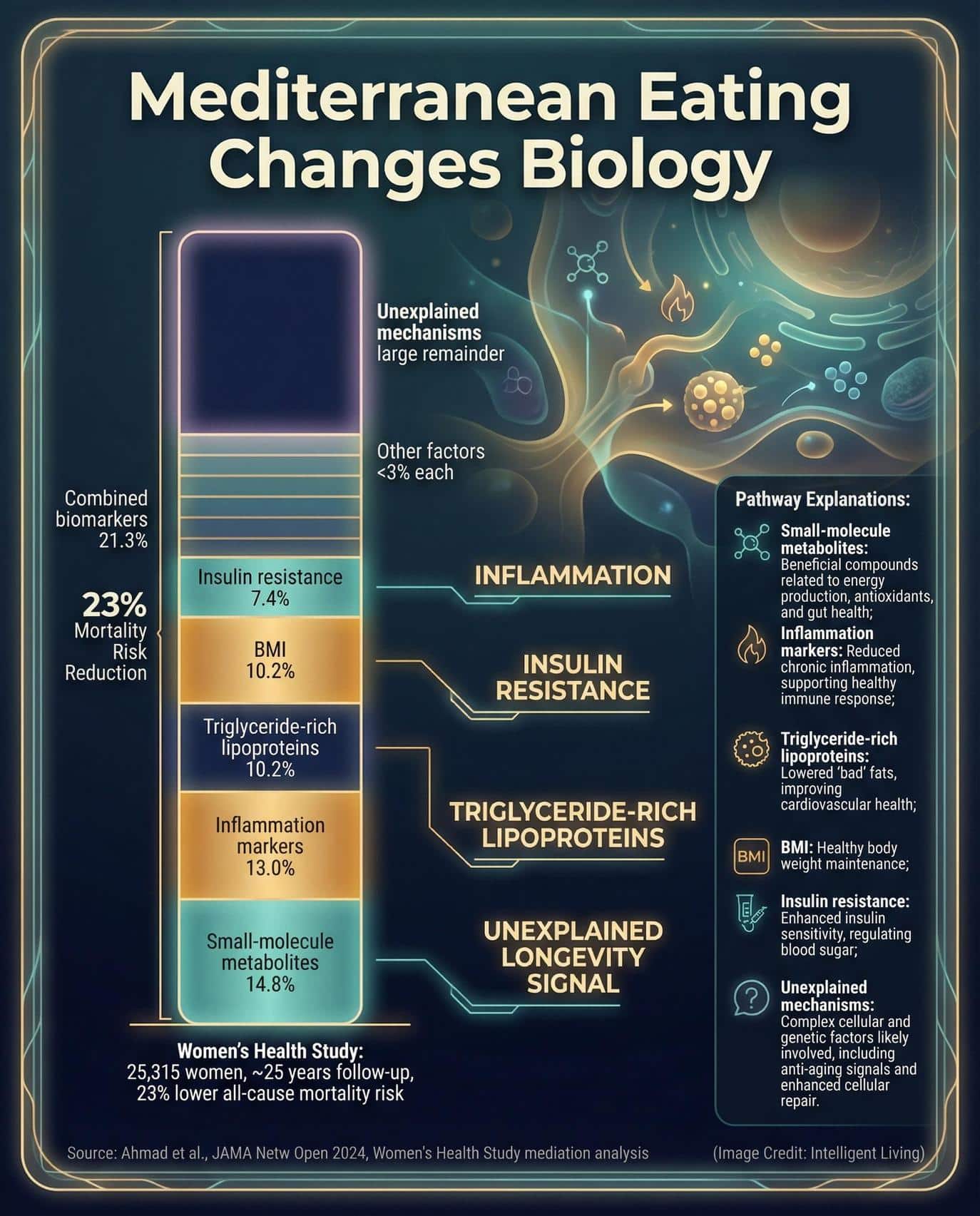
In the Women’s Health Study, scientists discovered that a quarter of the Mediterranean diet’s longevity benefit stems from improvements in small-molecule metabolites, body weight, and inflammation markers. This level of biological precision represents a leap beyond traditional diet questionnaires and self-reports.
Analyzing Lifestyle Context and Biobank Insights
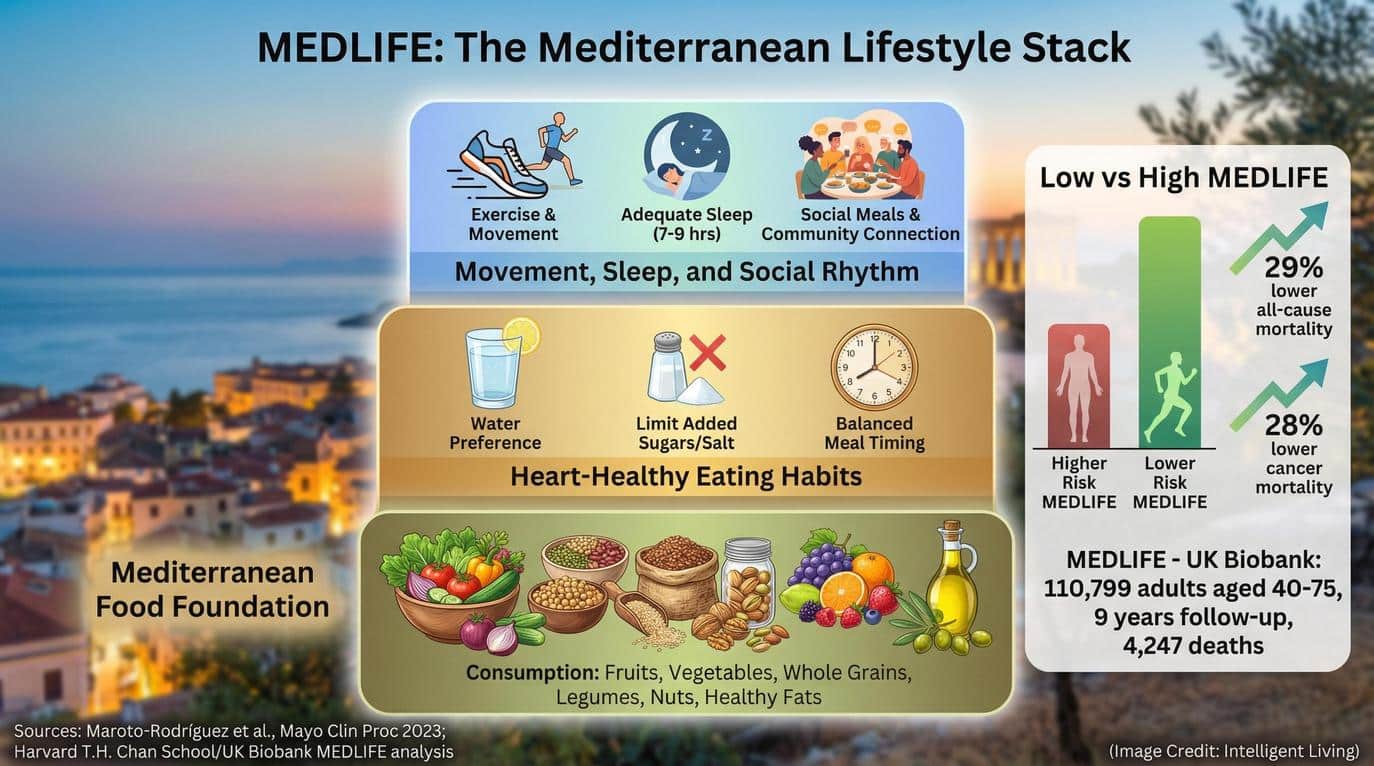
Another major study from the UK Biobank study emphasized lifestyle context: how a Mediterranean diet interacts with daily habits like sleep, physical activity, and even social engagement.
Together, these studies recast Mediterranean living as a systemic lifestyle rather than a single set of ingredients.
The Mediterranean model has evolved into a global blueprint adaptable for different cultures, budgets, and culinary preferences. Whether you live in New York or Nairobi, it’s now clear that you don’t have to live on the Aegean coast to live longer, just to eat and move with a similar rhythm.
 (Credit: Intelligent Living)
Deciphering the Longevity Signal: Metabolic Resilience and Synergy
The longevity signal represents measurable statistical patterns indicating longer survival among groups adhering to specific dietary habits. Across more than 25 years of follow-up, women who adhered most closely to Mediterranean eating habits lived significantly longer. These results remained consistent even after adjusting for factors like smoking and exercise.
But what explains the difference? The new generation of studies shows it’s not any one food group that makes the magic happen. It’s the synergy of small, daily habits that add up over time. When olive oil replaces butter, or legumes replace processed meats, your body experiences steady reductions in inflammation and oxidative stress. This combination strengthens metabolic resilience (the body’s ability to maintain balance under stress).
Regional Consistency and Universal Benefits
The Mediterranean diet demonstrates efficacy even outside its native region, proving longevity is independent of geography. The UK Biobank study demonstrated similar protective effects in non-Mediterranean populations, proving that longevity isn’t about geography but consistency. It’s a pattern of predictably beneficial defaults rather than an exotic cuisine.
To put it simply, Mediterranean Diet 3.0 is less about perfection and more about pattern. Small, repeatable choices, such as using extra virgin olive oil as your default cooking fat or eating beans three times per week, create a compounding effect on health outcomes over decades.
 (Credit: Intelligent Living)
Cardio Defense Mode: Where the Most Rigorous Proof Lives
Heart disease remains the number one cause of death worldwide, making cardiovascular prevention a top research priority. Fortunately, this is also where the Mediterranean diet’s evidence is strongest.
The landmark PREDIMED trial, published in The New England Journal of Medicine, followed over 7,000 participants at high cardiovascular risk.
Participants who followed a Mediterranean diet enriched with extra virgin olive oil or nuts saw roughly a 30% reduction in major heart attacks, strokes, and cardiovascular deaths compared to those on a low-fat control diet. This wasn’t a minor statistical footnote; it was a real-world reduction in life-threatening events. These outcomes align with a heart-healthy Mediterranean-style eating pattern advocated by major global health organizations.
Biological Mechanisms and Arterial Resilience
Biological mechanisms explain how these benefits manifest within the body. The combination of monounsaturated fats from heart-healthy olives and olive oil, omega-3 fatty acids from fish, and polyphenols from plant foods reduces LDL oxidation and improves vascular function. This dietary pattern maintains arterial flexibility and reduces the risk of plaque buildup.
Even short-term studies mirror these findings. In as little as three months, people who switched to a Mediterranean-style plan combined with moderate exercise saw lower triglyceride levels and decreased waist measurements, which are two of the strongest predictors of heart disease risk.
For anyone looking to start small, the most effective swaps are surprisingly simple: replace butter with olive oil, choose whole grains over refined carbs, eat fish twice per week, and add a handful of nuts each day. These four habits alone replicate much of what researchers have found to be cardioprotective in clinical trials.
This heart-centered foundation also connects to the broader lifestyle principles of Mediterranean living. Social meals, unhurried eating, and moderate daily movement reinforce metabolic balance. The science shows that it’s not just what you eat, but how you live that keeps your heart younger for longer.
 (Credit: Intelligent Living)
Cognitive Resilience: Neuroprotective Benefits of Mediterranean Nutrition
The brain benefits of the Mediterranean diet are becoming one of its most compelling selling points. Meta-analyses covering more than two decades of data show that people who closely follow this diet have significantly lower risks of developing Alzheimer’s disease and other forms of dementia, echoing the broader link between nutrition and cognitive performance observed across modern neuroscience. The numbers are impressive: around a 30% lower risk for Alzheimer’s and nearly 20% for cognitive impairment overall.
Mechanistic Insights into Neuroprotection
Neuroprotective benefits extend beyond healthy fats to include diverse phytonutrients. Phytonutrients, including polyphenols from olive oil, antioxidants in berries, prebiotic fibers that support memory formation, and omega-3s from fish, fortify the brain by improving blood flow, reducing neuroinflammation, and promoting healthy synapse function. This translates to better memory performance and cognitive resilience over time.
Strategic changes produce measurable results. Swapping processed snacks for a small handful of walnuts, adding leafy greens to daily meals, and cooking with olive oil instead of vegetable oil all strengthen the foundation for brain health. For added benefit, limit added sugars that disrupt brain health and ultra-processed foods that increase inflammation, both of which are linked to higher dementia risk.
As with heart health, the brain benefits appear to compound with consistency. Every Mediterranean-style meal serves as a strategic investment in long-term cognitive clarity.
 (Credit: Intelligent Living)
Strategic Nutrient Density: The Minimum-Viable Mediterranean Plan
If the idea of overhauling your entire diet feels overwhelming, the Minimum-Viable Mediterranean plan offers an approachable starting point. The concept is simple: small, sustainable adjustments are far more powerful than drastic short-term changes. These habits steadily build a nutrient-dense routine.
Specific science-backed shifts produce measurable results:
Make Olive Oil the Default: Use extra virgin olive oil as your main fat for cooking, salad dressing, and roasting.
Eat Plants at Every Meal: Aim for vegetables or fruit to fill at least half your plate.
Add Legumes Weekly: Include beans, lentils, or chickpeas three times per week to boost fiber and protein.
Nuts as Snacks: Replace processed snacks with almonds, walnuts, or pistachios to tap into selenium-rich nuts that support longevity and cancer prevention while boosting heart and brain benefits.
Whole Grains, Not White: Choose oats, barley, or quinoa over refined grains.
Research shows that even modest adherence to these habits can reduce cardiovascular and metabolic risk factors within months. Over years, those patterns become the longevity signal found in large cohort studies.
The goal emphasizes repetition rather than perfection.
The Mediterranean Lifestyle Stack: Integrating Movement and Holistic Habits
Mediterranean living encompasses a broader spectrum of habits than dietary choices alone. Research shows that physical activity, rest, and community engagement amplify the diet’s effects on longevity and well-being. These lifestyle layers also interact with the gut microbiome, ensuring that precision gut health with fermented foods and seaweed remains synchronized.
Move Naturally: Walk after meals, take stairs instead of elevators, and find enjoyable ways to stay active daily. Even short, consistent bursts of movement improve circulation and insulin sensitivity.
Rest and Recover: Prioritize quality sleep and regular downtime. Chronic stress and sleep deprivation disrupt hormonal balance, increasing inflammation, a known risk factor for both heart disease and cognitive decline, while modern research on sleep for longevity shows that consistent, high-quality rest is one of the most powerful lifestyle levers for long-term health.
Eat Socially: Shared meals enhance digestion and mental health. Taking time to enjoy food with family or friends can lower stress hormones and improve portion control.
The Mediterranean way isn’t about rules but about rhythm. Balanced movement, meaningful connections, and mindful eating work together to support holistic health.
 (Credit: Intelligent Living)
Weekly Mediterranean Template: Adaptable Patterns for Daily Life
A Mediterranean week isn’t about rigid menus; it focuses on flexible patterns that fit your lifestyle. Below is a seven-day template designed for real-world living. Adjust portions or ingredients based on your dietary needs and local availability.
Developing a sustainable weekly routine starts with selecting nutrient-dense ingredients that support metabolic resilience. These breakfast, lunch, and dinner options focus on lean proteins and healthy fats.
Early-Week Nutritional Foundations
These selections emphasize the importance of consistent, high-quality nourishment to protect heart and brain health.
Tuesday: Whole-grain toast with avocado and eggs; lentil soup with olive oil drizzle; chickpea pasta with tomato-basil sauce.
Mid-Week Strategic Selections
Wednesday: Yogurt with walnuts and fruit; quinoa salad with beans and mixed greens; roasted chicken with herbs and olive oil.
Mid-week meals prioritize fiber and plant-based proteins to maintain energy levels and support the gut microbiome. Consider these balanced options for Thursday:
Thursday Breakfast: Smoothie with spinach, banana, and oat milk.
Thursday Lunch: Vegetable stir-fry with tofu and brown rice.
Thursday Dinner: Shrimp sautéed in olive oil and garlic.
Consistent use of whole grains and healthy fats reinforces the metabolic benefits of the Mediterranean pattern.
Late-Week Consistency and Variety
Friday: Oat pancakes topped with berries, Mediterranean tuna salad, and whole-grain couscous with roasted vegetables.
Saturday: Fresh fruit bowl; hummus with pita and olives; grilled fish or pescetarian-leaning Mediterranean options for variety.
Sunday: Vegetable omelet, lentil salad, and family-style pasta with olive oil, basil, and seasonal veggies.
Every meal builds on the Mediterranean principles, including colorful plants, healthy fats, lean proteins, and mindful portions. Many people find that pescetarian-leaning Mediterranean options make those habits easier to maintain. Maintaining the established rhythm provides more value than pursuing rigid perfection.
 (Credit: Intelligent Living)
Advancing Longevity Through the Mediterranean Rhythm
Synchronizing personal health with planetary well-being creates a powerful feedback loop that extends beyond individual longevity. This data-driven lifestyle naturally favors sustainable choices, proving that the most effective path to a longer life also protects the environment we inhabit.
When food choices align with ecological sustainability and dietary health, the resulting metabolic resilience serves as a defense against chronic stressors. Embracing these habits requires a shift from rigid calorie counting to a steady, rhythmic pattern of movement and nourishment.
Scientific evidence continues to confirm that a lifestyle anchored in Mediterranean principles offers the most resilient defense against the challenges of aging, particularly when following strategies to protect cellular integrity. Small, repeatable choices create a compounding effect that secures both a vibrant healthspan and a flourishing planet for future generations.
Initiating a single swap, such as olive oil for butter or beans for beef, provides a foundation for further progression. Small decisions compound into a lifestyle validated by decades of global longevity traditions.
Common Longevity Queries and Modern Dietary Insights
How quickly does Mediterranean Diet 3.0 impact health?
Inflammation markers often improve within weeks, while major heart and brain benefits accumulate over months of consistency.
Can the diet work without eating fish?
Yes, plant sources like walnuts and flaxseeds provide essential omega-3s that support heart health and cognitive function.
Is moderate wine consumption still recommended?
Optional wine intake remains a traditional element, though prioritizing hydration with water or herbal tea is equally effective.
Does this lifestyle fit a limited budget?
Focusing on bulk grains, seasonal produce, and dried legumes ensures the plan remains affordable without sacrificing quality.
Which single habit provides the most value?
Replacing butter with extra virgin olive oil offers the most immediate improvement to lipid profiles and metabolic resilience, often proving more effective than fish oil supplements and heart health.
Dining and Cooking