
The Winter Olympic Games begin in Milan and Cortina D’Ampezzo on Feb. 6. Visit these Northern Italian restaurants to taste the region’s fare.


Nancy Kerrigan on Team USA women’s figure skaters
Nancy Kerrigan praises Team USA women’s figure skating depth and camaraderie ahead of Milan-Cortina Olympics.
Sports Seriously
The Winter Olympic Games kick off on Feb. 6, 2026 in Milan and Cortina D’Ampezzo, Italy. I figure the abundant, wanderlust-inspiring shots of the Italian alps and quaint trattoria are going to stoke some interest in Northern Italian cuisine. And, two weeks of watching people throw their bodies down and across ice and snow will surely whet many an appetite here in the U.S.
Fortunately, there are plenty of places to eat food from the Northern Italian regions featured in the Olympics here in North Jersey. But be forewarned: You can’t just go to any red sauce joint or restaurant with a name that ends in a vowel to dine on Northern Italian dumplings, risotto and cured meats.
We have plenty of Italian eateries in the Garden State because, well… we have a lot of Italian people. About 15% of New Jerseyans claim some Italian heritage, and yet their roots largely snake back to Southern Italy and Sicily — as many as three out of every four people. As such, many of our Italian-American culinary traditions, including our Italian restaurants, primarily come from the southern half of the boot.
But how different could Northern Italian food really be? Well, you might be surprised; in fact, you’ll see more similarities to German cuisine than to Southern Italian fare in some situations.
So if you’re curious and hungry, check the handful of North Jersey restaurants specializing in Northern Italian cuisine and spot the differences for yourself.
What is Northern Italian cuisine?
First, Northern Italian food is not a monolith. There are too many variables, influences and regional differences within Northern Italy culinary tradition to say anything too definitive in a few paragraphs. It’s like saying a rainbow is colorful, or all New Jersey pizza places make flatbreads with sauce and cheese on it: true, but useless.
Compared to Southern Italian cuisine, however, there are some distinctions. Northern Italian fare borrows more heavily from continental European cuisine. It borders France, Switzerland, Austria and Slovenia and so you’ll see the influences and ingredients from those countries and those in Eastern Europe in Northern Italian dishes.
That means fewer tomatoes, olives and peppers and more butter and cream sauces, potatoes, risottos, sausages and stews. Even pastas might resemble dumplings and späzle more than what you’d find in the Barilla section of your local grocer.
Focusing in on Milan (in the northwest corner of the country) and Cortina D’Ampezzo (in the Dolomites, on the eastern edge of Italy), where the 2026 Winter Olympics will take place, each region has unique foods to offer.
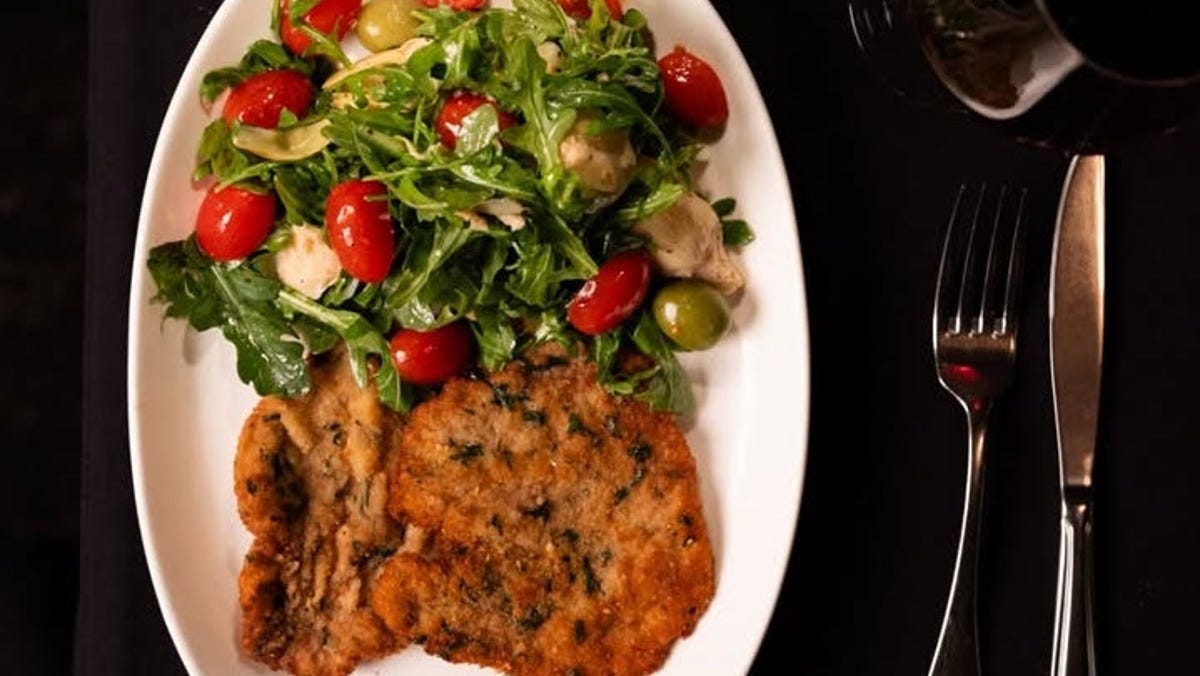
Typical Milanese dishes include risotto alla Milanese (saffron rice with butter, beef broth, onion and cheese), cassouela (a pork and cabbage stew) and mondeghili (meatballs with pancetta, fried in butter). You’ve certainly come across other Milanese staples like the flat, crispy, plate-sized veal or pork Milanese, minestrone soup and panettone, that sweet, dense Christmas staple.
Across the country in Cortina D’Ampezzo and the surrounding area, you’ll find a more Alpine cuisine influenced by Austria, Slovenia and nearby Italian regions. Typical dishes include späzle, casunziei (beet-filled ravioli) and canederli (bread dumplings stuffed with cheese, greens or the regional specialty speck, which is like a smoky prosciutto.
And we better not forget the wine of the Piedmont, Trentino-Alto Adige and Veneto, as they’re both fantastic and readily available at your local wine shop. Look for wines from Lombardy (like the sparkling Franciacorta and Valtellina) or expand out of Milan a bit and pick Piedmontese reds like Barolo and Barbaresco.
Across the country near Cortina D’Ampezzo, there’s prosecco, and unique wines with grapes like Schiava, Teroldego and Lagrein in Trentino-Alto Adige. And dip into Friuli and find some Friulano. Most good wine shops will have plenty of options and price points from which to choose.
Northern Italian restaurants in North Jersey
If taking in the scenery of the Winter Olympics stirs your appetite for North Italian cuisine, check out these spots in North Jersey. And if you can’t get to one of these spots, many Italian restaurants borrow from all regions of the country to populate their menu, so keep an eye out for veal Milanese, risotto, and Northern Italian wines wherever you dine.
La Pergola, Millburn. Husband-and-wife team Agron and Driola Kaloshi run this Northern Italian spot, bringing back the tastes of the region from frequent trips to the area. Stop by for chicken Milanese, mezzaluna ravioli and more. 1601, 120 Essex St, Millburn; 973-376-6838, lapergolanj.com.Il Mondo Vecchio, Madison. Michael Cetrulo opened Il Mondo Vecchio in 1991. Here you’ll find plenty of Northern Italian (and those from beyond the region), including a terrific thin-pounded veal cutlet. 72 Main St. #1, Madison; 973-301-0024, ilmondovecchio.com.Amarone, Teaneck. This spot has been serving Northern Italian fare since 1998. Though there’s plenty to like on the menu, the pastas are home-made and highly esteemed. 63 Cedar Lane, Teaneck; 201-833-1897, amroneristorante.net.D’Oro, Chatham. The appeal is in the name: oro means gold in Italian, and the name reflects the golden hue of its Northern Italian dishes. Go for pasta, meats and plenty of seafood. 219 Main St, Chatham; 973-701-6990, dororistorante.com. Cafe Azzurro. This spot steeps itself in new Northern Italian cuisine but stop by for risotto with porcini mushrooms and veal Milanese. 141 Main St, Peapack; 908-470-1470, cafeazzurronj.com.
Matt Cortina is a food reporter for NorthJersey.com/The Record. Reach him at mcortina@gannett.com.
Dining and Cooking