
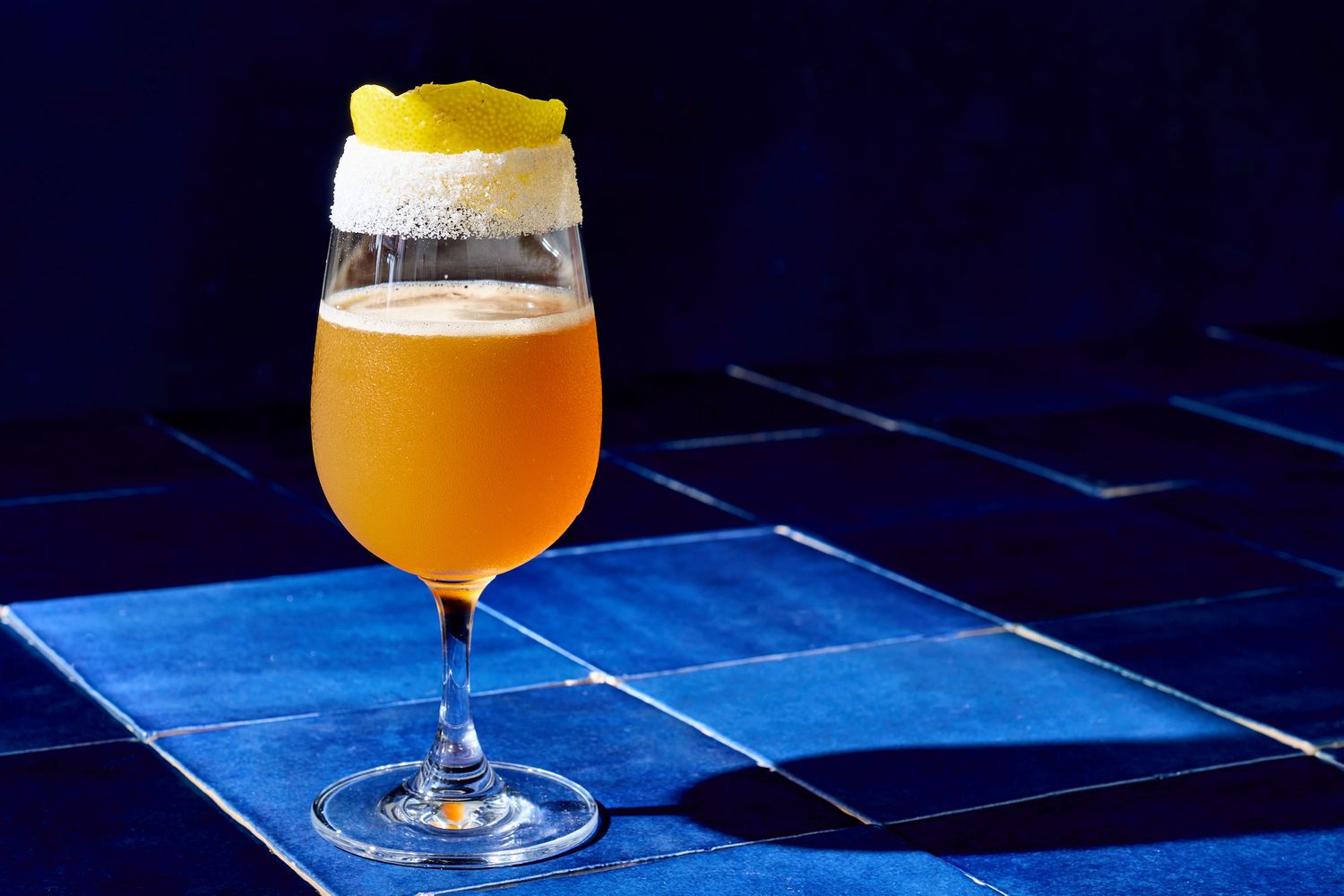
Cognac, dry orange curaçao, maraschino liqueur, fresh lemon juice, simple syrup, and Angostura bitters come together in the Brandy Crusta, one of New Orleans’ earliest and most influential cocktails. Invented in the 1850s by Italian bartender Joseph Santini, the drink predates the Sazerac and appears as one of the first illustrated recipes in Jerry Thomas’s 1862 Bar-Tender’s Guide, securing its place in cocktail history as a direct ancestor of the Sidecar.
Despite its pedigree, the Crusta slipped into obscurity for much of the 20th century, surviving only as a footnote. Its modern revival began in the early 2000s, when New Orleans bartender Chris Hannah reintroduced the drink to a city that had largely forgotten it, subtly rebalancing the recipe for contemporary palates while preserving its spirit-forward core. Today, the Brandy Crusta is once again a calling card of classic New Orleans bartending, defined by its ornate presentation, aromatic profile, and unapologetically old-school character.
Why the Brandy Crusta Works
At its heart, the Brandy Crusta relies on deliberate proportions. Cognac provides warmth and depth, while lemon juice cuts cleanly through the richness with bright acidity. Dry curaçao adds a bitter orange backbone that bridges citrus and spirit, and a measure of maraschino liqueur contributes floral sweetness. Angostura bitters knit everything together with spice, while the sugar rim softens each sip, ensuring the drink’s pronounced tartness lands as refreshing rather than sharp.
Dining and Cooking