
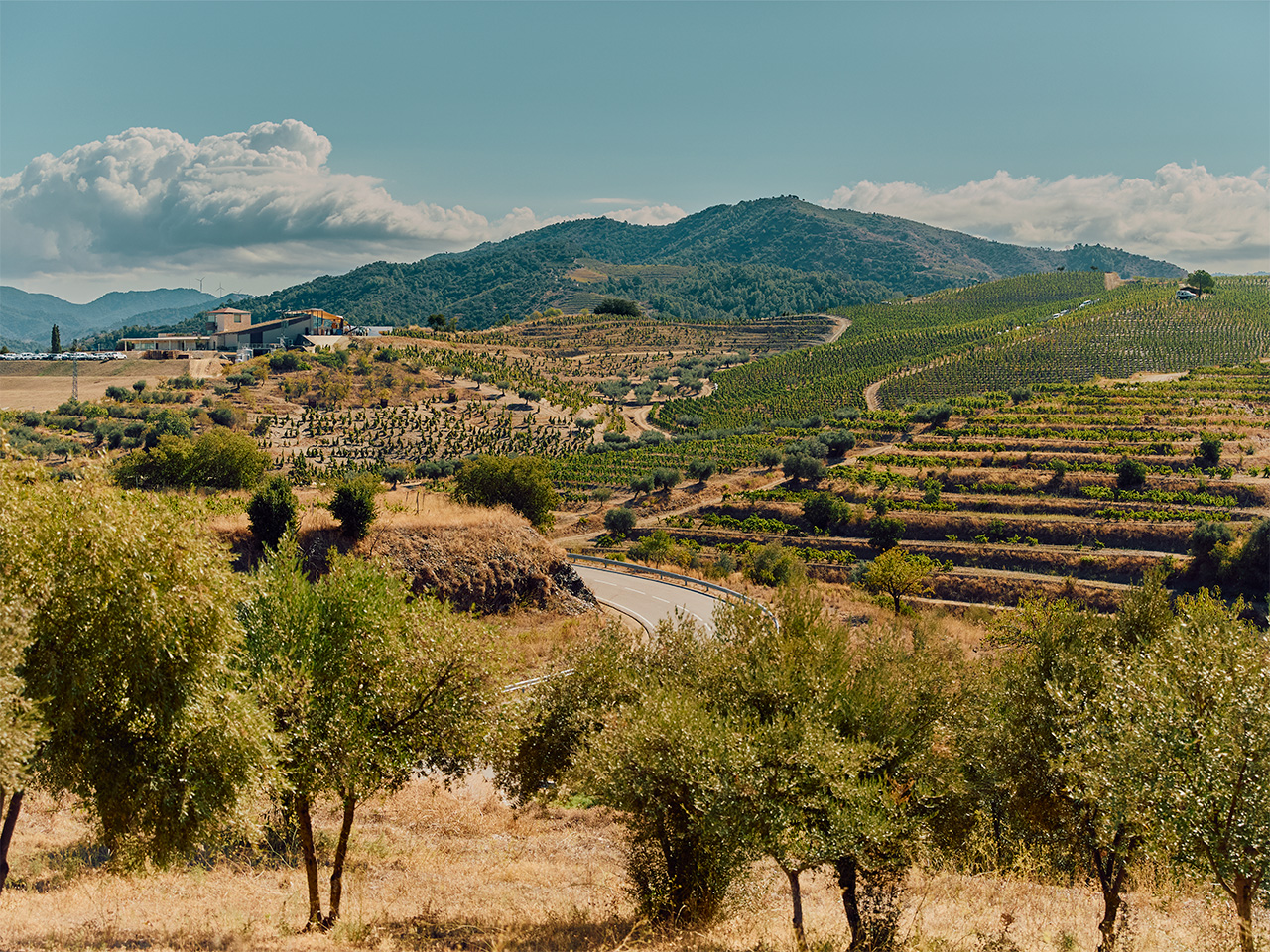
In the 1970s a group of winemakers took an interest in a rugged, forgotten corner of Catalonia: the steeply terraced hills of Priorat. Once tended by Carthusian monks and long considered inhospitable, its slate soils, known as licorella, held the potential to produce powerful, earthy wines. Today, Priorat is one of just two Spanish wine regions with the coveted Denominación de Origen Calificada status, the country’s highest classification.
Views of Priorat’s terraced hills
An hour from Tarragona, it has become a destination for visitors drawn by world-class wines, winding cycling routes and mountain scenery. “Priorat is now in a period of consolidation,” says Guillem Pastrana, whose parents, Carles Pastrana and Mariona Jarque, founded the Clos de l’Obac winery in 1987. “We need to take care of the people from all over the world who come to visit us.”
Hence the creation of the five-star Gran Hotel Mas d’en Bruno, a farmhouse amid Clos de l’Obac’s vineyards that was transformed by the Pastrana-Jarque family and Mallorca-based hotelier David Stein. “The enclave in which it is located is unique but it was also a big bet,” says its general manager, Jordi Compte, sitting on the terrace of Tarraco, one of the hotel’s two restaurants. “Catalonia has important inland regions, which help to make tourism less seasonal,” he says. “And wine plays an important role in this.”
Entrance of Gran Hotel Mas d’en Bruno
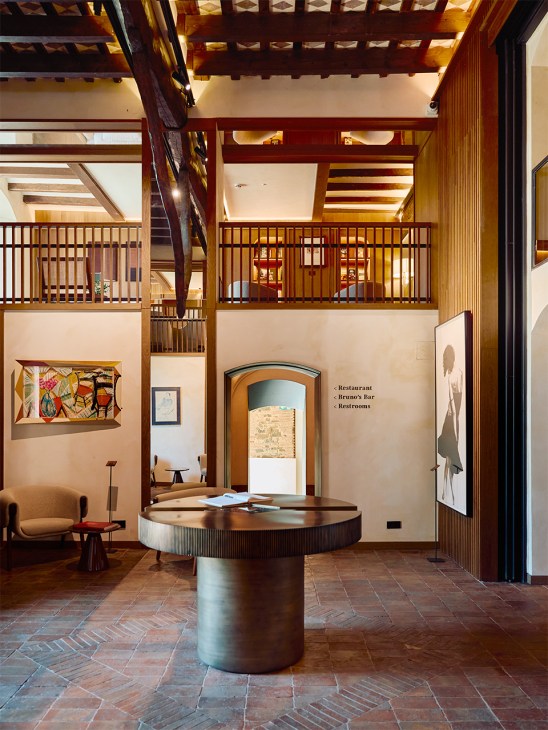
Entrance of Gran Hotel Mas d’en Bruno
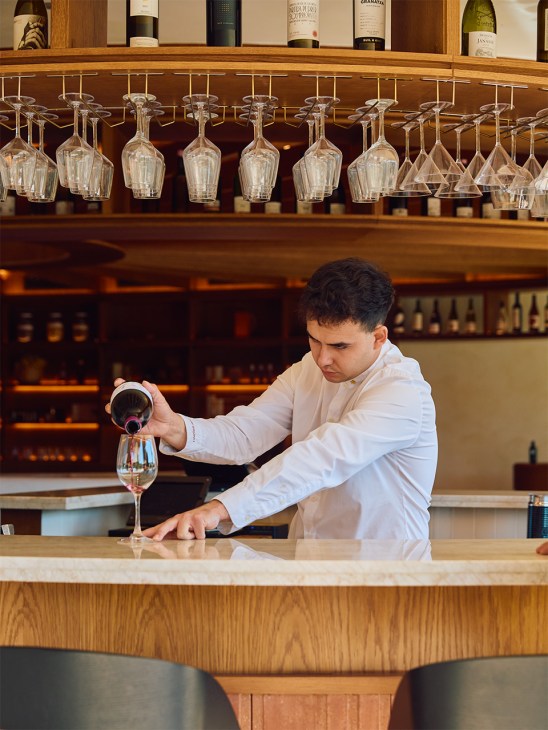
Art of the pour at Tarraco restaurant
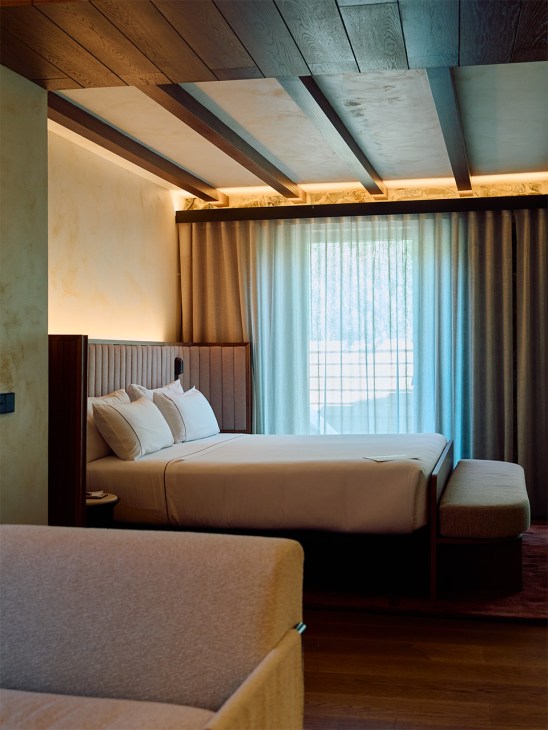
Vineyard views from one of 24 suites
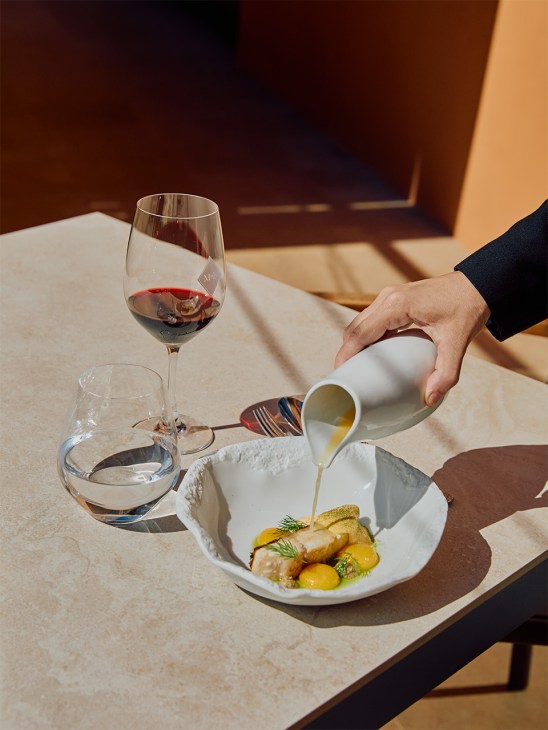
Dinner is served at Tarraco
Many of the hotel’s 24 suites have private terraces that open onto the vineyards. Barcelona-based Astet Studio was in charge of reviving the old masía and drawing on its heritage to design the rest of the resort. Inside, a blown-glass light display in the stairwell evokes a bundle of grapes and the theme continues in the spa (which offers wine therapy), located inside an olive-oil mill discovered during excavations.
From the boutique by the poolside terrace, a white spiral staircase leads to the cellar, which stocks a selection of the region’s wines and hosts tastings and masterclasses. With 116 wineries at its doorstep, Mas d’en Bruno is perfect for exploring Priorat’s robust, mineral reds.
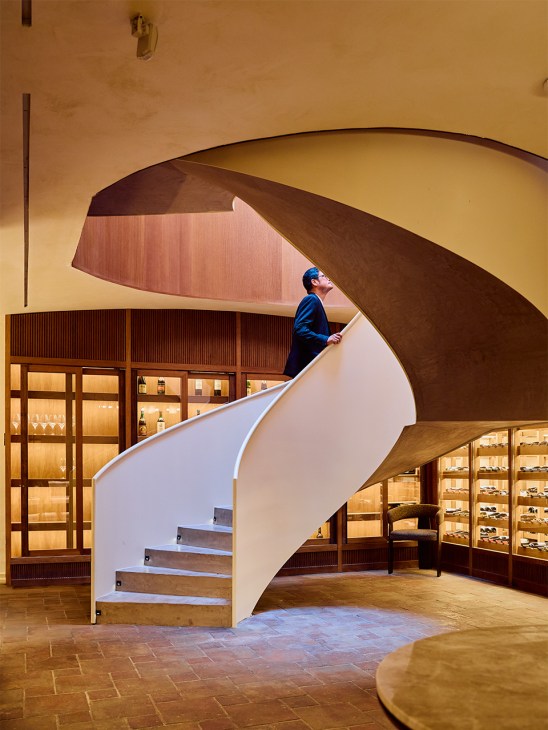 Staircase leading down to the hotel’s cellar and tasting room
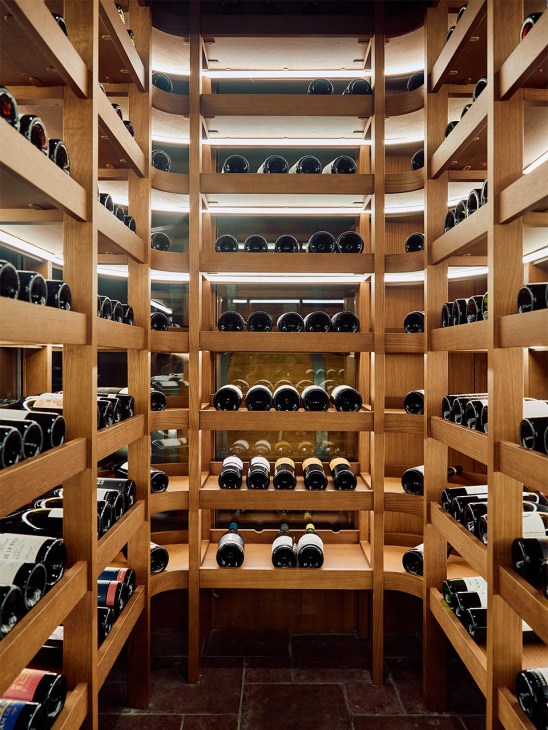 Racks of wine in the hotel’s cellar
The best place to start is the hotel’s restaurant, Vinum, in the hands of its chief sommelier, Madrid-born Susana Gámez Segovia. Its head chef, Josep Queralt, is from the area, and his cooking is best experienced as a tasting menu. “We have the responsibility to love this land,” says Queralt. “We want every diner to leave feeling imbued with the essence of Priorat, its produce and its customs.”
masdenbruno.com; obac.es
What to visit
Cartoixa d’Escaladei
The town of Escaladei (“stairway to heaven”) houses a Carthusian monastery founded by monks from France who began planting vines in the 12th century. The region took its name from the Prior, the title for the head of the monastery.
Brots Restaurant
Belgian chef Pieter Truyts cooks traditional Catalan cuisine with a modern touch at this restaurant in the small town of Poboleda.
Balcó de Siurana
A popular hiking trail through forests and rocky paths leads to the Siurana “Balcony” with stunning views, including of the Siurana Reservoir and Prades Mountains.
Clos de l’Obac winery
Harvesting its first grapes in 1989, Clos de l’Obac was founded by former journalist Carles Pastrana and artist and current winemaker Mariona Jarque, a couple who are part of the Priorat wine renaissance.
Álvaro Palacios winery
A leading figure of Spanish wine, Álvaro Palacios was among the 1980s pioneers who rediscovered Priorat. His top wine, L’Ermita, comes from a plot planted with vines more than 100 years ago.
Dining and Cooking