
Summary
Re:Source Cleveland is filling in part of the gap left by the removal of SNAP benefits for Cuyahoga County’s immigrant population.
MetroHealth and Birthing Beautiful Communities are working with the Cuyahoga County Jail to bring support and dignity to pregnant mothers who are incarcerated.
The collaboration with MetroHealth and Birthing Beautiful Communities is improving birth outcomes for women in jail.
Follow up questions
Are incarcerated mothers allowed visitation with their infants in the months after birth to promote healthy attachment bonding?
What kind of consent is given by women being tested for pregnancy while being processed into the jail system?
Health, Human Services & Aging Committee
This was a committee meeting of the Health, Human Services & Aging Committee of the Cuyahoga County Council.
The agenda attachment includes the meeting agenda, minutes of the previous meeting, details of Resolution No. R2025-0348, and an American Rescue Plan Act application (ARPA) for Re:Source Cleveland, which details the proposed project and its impact.
Scene setting: This was an in-person meeting open to the public with the option to view live online. A recording of this meeting is available. Past meeting recordings can be found here.
Meeting start: The meeting started at 1:08 p.m. with a call to order and roll call.
Committee members present:
Yvonne Conwell, Chair (District 7)
Martin Sweeney, Vice Chair (District 3)
Mark Casselberry (District 4)
Michael Houser Sr. (District 10)
Robert Schleper Jr. (District 6)
Public Comment: Loh, a community activist, referenced comments given to the Cuyahoga County Council’s Committee of the Whole at its Jan. 13 meeting and to the YWCA regarding conditions at a shelter facility. Loh said YWCA has not responded. Loh said that the building conditions were pre-existing and that there is harassment and retaliation. Loh called for justice for people staying in the building, adding that Loh is unsheltered.
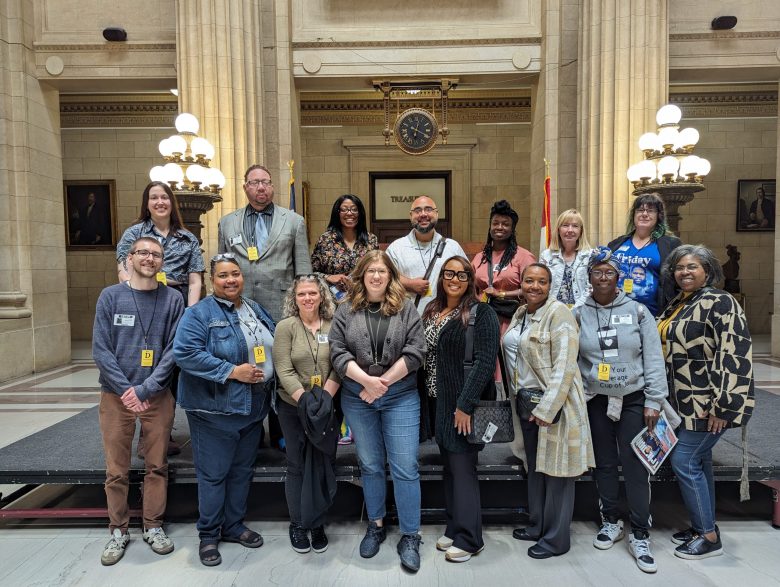
Join the movement for transparency
Civic power can start with you! We train and pay Documenters to take notes at local government meetings and share them here. Learn more about becoming a Documenter.
Re:Source Cleveland’s ‘measurably important’ food relief program
Matter referred to committee:
R2025-0348: A Resolution awarding a total sum, not to exceed $10,000 to Re:Source Cleveland for the purpose of funding a new component of the Newcomer Navigators Program from the District 3 ARPA Community Grant Fund; and declaring the necessity that this resolution become immediately effective.
Patrick Kearns, executive director, Re:Source Cleveland, presented. Conwell noted that every ARPA application goes through three readings by full council before the body takes a vote.
Re:Source Cleveland serves 4,000 legally documented immigrants across the county annually, Kearns said. On Nov. 1, 2025, 4,200 members of the immigrant population in Cuyahoga County were removed from the Supplemental Nutrition Assistance Program (SNAP). Re:Source worked with the county to re-do some applications, but the number of people permanently removed in Cuyahoga County is between 2,200 to 2,500.
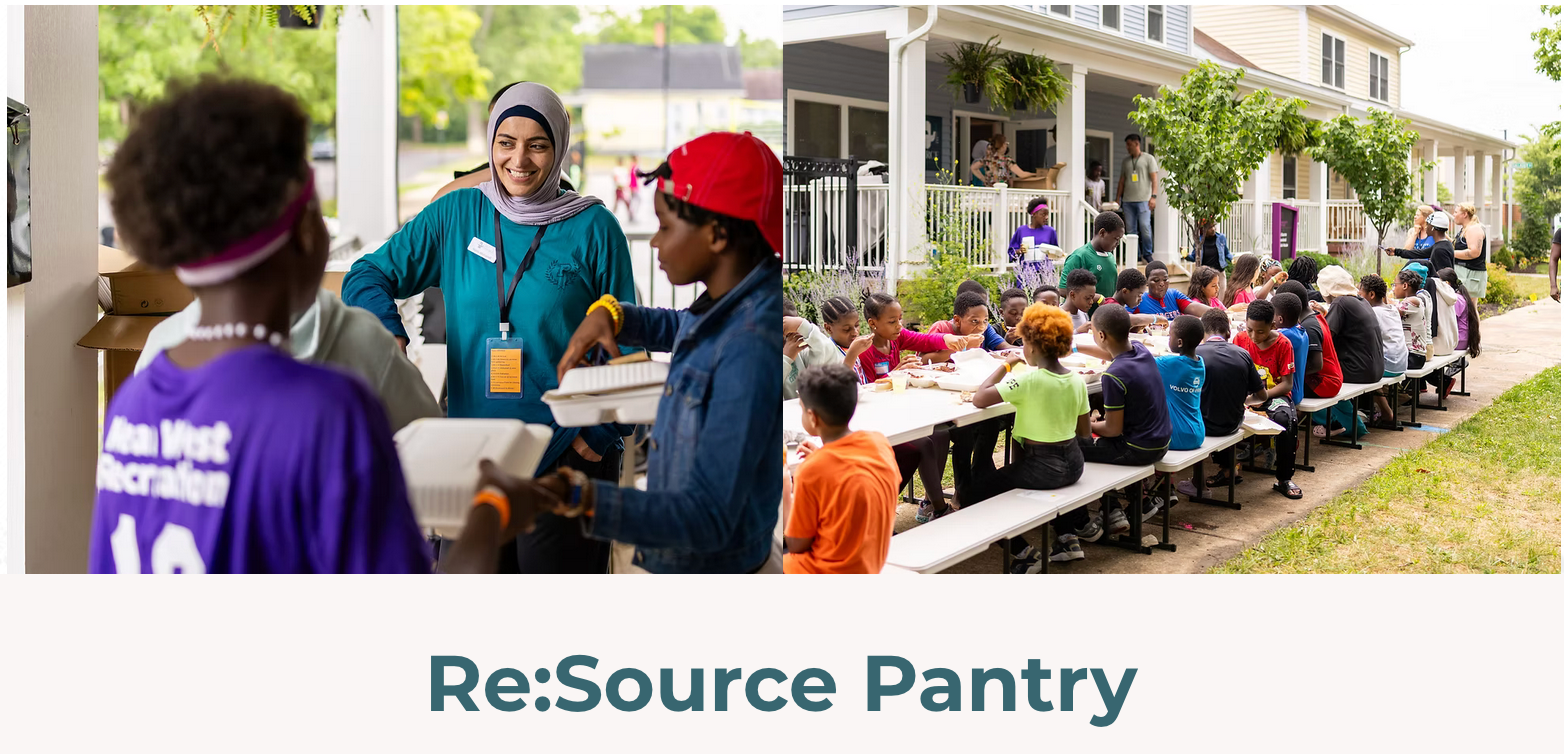
Re:Source Cleveland began partnering with the Greater Cleveland Food Bank and delivers at least 10 days’ to two weeks’ worth of food to 80 families. It is not a one-to-one fix for the loss of SNAP benefits, Kearns said, but he added that it is “measurably important” to these families. They budgeted for six months of emergency relief but are now looking at an eight-month trajectory.
Green card applications have been permanently paused by the federal government, so these families are not able to have their SNAP benefits reinstated. The ARPA request to council will allow Re:Source Cleveland to build cabinetry and storage facilities as the program continues delivering food weekly to families.
Sweeney expressed his thanks and happiness to council for being a part of the work done by Re:Source Cleveland and recommended council give another $5,000 due to the severity of what has happened. [Editor’s note: The committee did not hold a vote on increasing the amount in this meeting.]
Houser asked for more details about the work done in East Cleveland. Kearns said that they opened an office in East Cleveland three months ago due to a growing population of secondary migrants. Secondary migrants are those who have moved from other places across the country after initially immigrating to the country. Re:Source Cleveland is supporting 23 families in East Cleveland with deliveries.
Conwell asked how the organization will continue to fund itself as ARPA is a one-time funding. Kearns said this is a one-time purchase to make the facilities serve as more of a distribution hub to load vehicles and store bulk supplies.
The committee voted to move forward on the resolution, and it is set to go to full council for a second reading on Jan. 27. [Editor’s note: Council increased the maximum amount of the grant to $15,000 at the Jan. 27 meeting. The legislation is set for a third reading on Feb. 10.]

Pregnancy care in the Cuyahoga County jail
Katie Davis Bellamy, a registered nurse and chief operating officer of MetroHealth Community Health Centers, and Jazmin Long, chief executive officer and president of Birthing Beautiful Communities, presented.
The presentation highlighted the efforts of these two organizations in providing pregnancy care to individuals in the correctional system. MetroHealth provides onsite and consultative services, including gynecological care, prenatal and pregnancy care, therapeutic counseling, mental health care, and telemedicine consultations. Their approach aims to be collaborative and compassionate, Bellamy said.
MetroHealth conducts pregnancy tests for all women of reproductive age entering Cuyahoga County Jail (CCJ), gives prenatal care (including orders for prenatal vitamins and pregnancy diets), and postpartum support. The Community Health Worker program supports the women and their families. Since 2019, 56 pregnant women have delivered while incarcerated in CCJ, Bellamy said.
One initiative, Centering Pregnancy, offers group prenatal care where participants can meet with other pregnant women, a doctor and support staff to discuss their pregnancy, ask questions and support other group members. Bellamy said the benefits of this group include increased use of post-partum contraception, decreased rates of low-birthweight babies, decreased preterm births and an increased rate of breastfeeding initiation.
Long said Birthing Beautiful Communities provides a certified perinatal support doula for the birth and provides comfort measures such as emotional encouragement.
When the partnership was first started, it was still legal to shackle mothers while they were giving birth, Long said. In collaboration with the warden, MetroHealth, and MomsFirst, the jail has agreed to not chain moms during birth and also not have a guard in the room, which would give them some dignity in their experience.
Birthing Beautiful Communities also provides support — such as diapers, wipes, strollers and carseats — for up to a year after birth, as well as supporting moms after their release from jail. The organization also helps facilitate transporting breast milk from the mothers for up to a year to help get it to their baby.
Conwell asked how long moms stay with the baby after birth. Bellamy said it depends on the delivery and the discharge plan, so it varies from mom to mom.
Schleper asked at what point mothers were being shackled. Long said the law changed in 2021, but, through this program, Cuyahoga County stopped in 2019. Schleper asked about other components such as guards in the room. Through monthly collaborative meetings, Long has found that parties are willing to work together to make sure the moms have what they need. Long said the example of the guard no longer being in the room has come through that collaboration.
Schleper asked if there is a policy in place that supports a relaxing of restrictions for pregnant women. Bellamy said there are policies related to health care, and other practices can be updated on an annual or as-needed basis.
Casselberry asked how many pregnancies are there a year. Bellamy said in 2025, 129 pregnant women came through the system, two of whom delivered. Casselberry said he appreciates the focus on dignity in these situations.
Sweeney gave kudos for the partnership and cooperation between MetroHealth, Birthing Beautiful Communities and CCJ. Sweeney asked if everyone is tested for pregnancy when entering jail. Bellamy said all women of birthing age are tested at intake. Some may already be pregnant, and others may find out at that point.
Sweeney also asked about mental health services. MetroHealth provides one-on-one and group setting services. Long illustrated a scenario of entering jail not knowing one is pregnant and going through the process of getting help navigating the news, determining who will take care of the baby, their emotions, and being incarcerated without one’s child.
Conwell asked if women are re-handcuffed after the birth. Nestor Rivera, chief of Corrections, stepped to the podium to respond. Rivera said they would follow Ohio Code Section 2901.10, but also said 99.9% of the time they would do what the doctor requests and gave examples of waiting in the hallway or removing cuffs.
Conwell asked on average how long women remain hospitalized at MetroHealth after giving birth. Bellamy said it’s anywhere from two to three days depending on vaginal birth or cesarean section. Conwell asked how they deal with the psychological part of separating from the baby. Long said they provide services postpartum if the moms are remaining incarcerated and also if they’re returning to their home.
Conwell asked what resources the mom receives if the baby doesn’t make it. Bellamy said they have counseling and screening to make sure the women are supported and collaborate with Corrections. Conwell asked if they could join a grief group virtually. Bellamy appreciated the suggestion and will bring it to the stakeholders’ meeting.
[Editor’s note: Learn more about this issue by reading “Uncounted: Ohio’s failure to track lost pregnancies in jails spurs questions over care”].
Meeting end
There was no miscellaneous business, and the meeting adjourned at 2 p.m.
Coming up: The council meeting calendar can be found here.
There was no miscellaneous business, and the meeting adjourned at 2 p.m.
Coming up: The council meeting calendar can be found here.
These notes are by Documenter Jamie Harman.
If you believe anything in these notes is inaccurate, please email us at documenters@signalcleveland.org with “Correction Request” in the subject line.
Dining and Cooking