
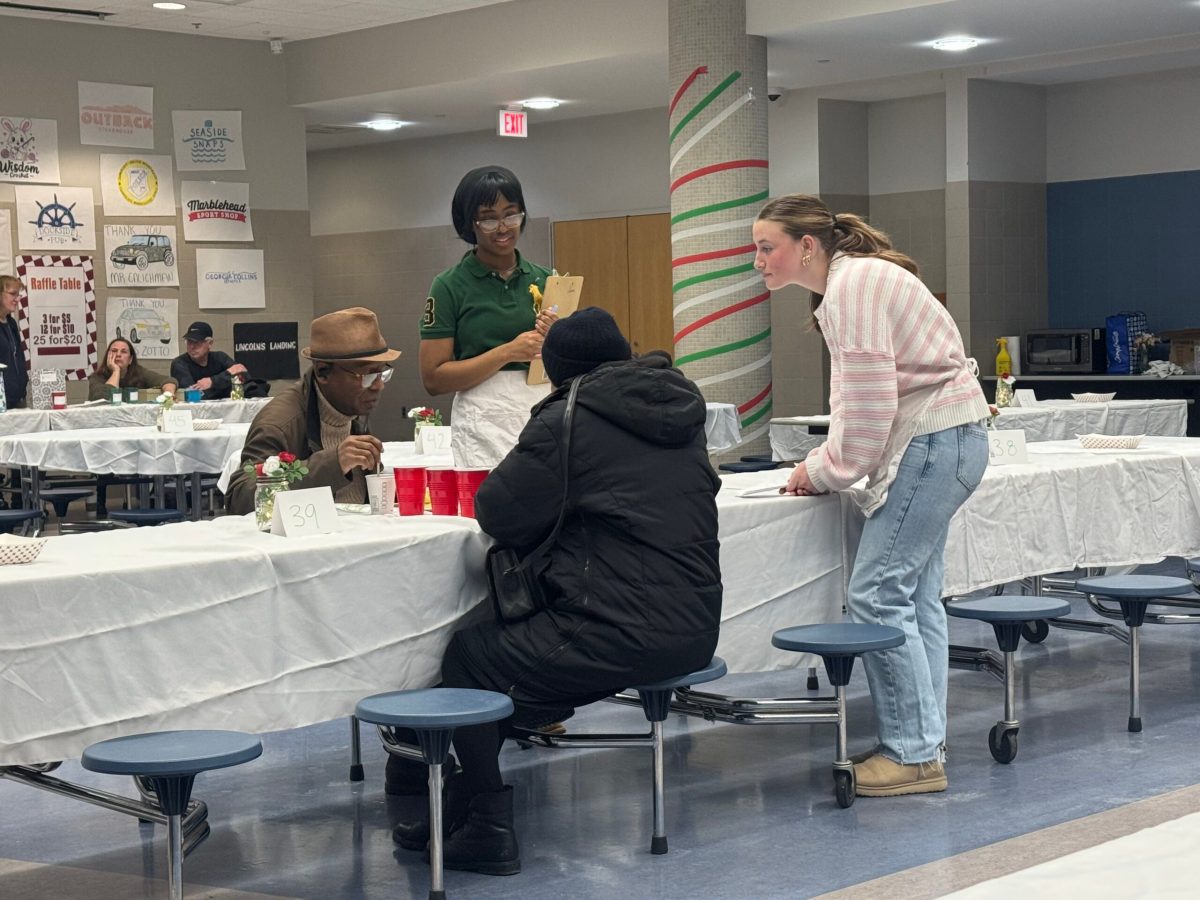
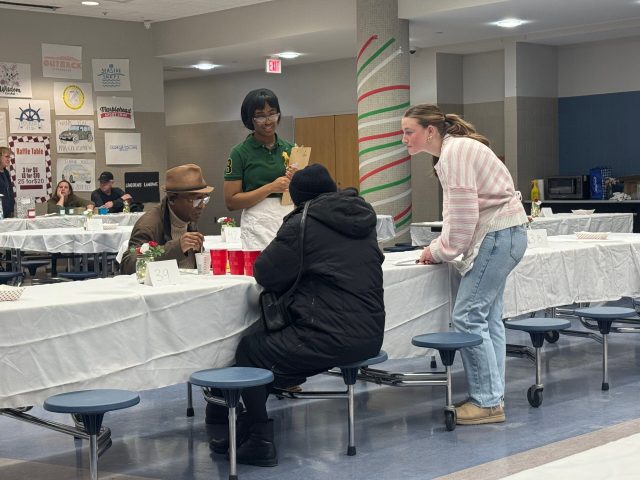
 Students serve on a couple at their Italian restaurant || Monica Sager
Swampscott High School transformed into an Italian restaurant Wednesday night, as students served guests pasta and meatballs, salads, and desserts as part of a class project to raise awareness and funds for My Brother’s Table.
English teacher Brandon Lewis’ communications classes hosted the Italian night at the high school cafeteria, working on everything from the menu and centerpieces to seating arrangements and raffle items. The 47 communications and student council students served nearly 50 tables a three-course meal over two and a half hours. More than 100 guests arrived during the first half of the evening.
“They’re so happy,” Lewis said. “They did a great job.”
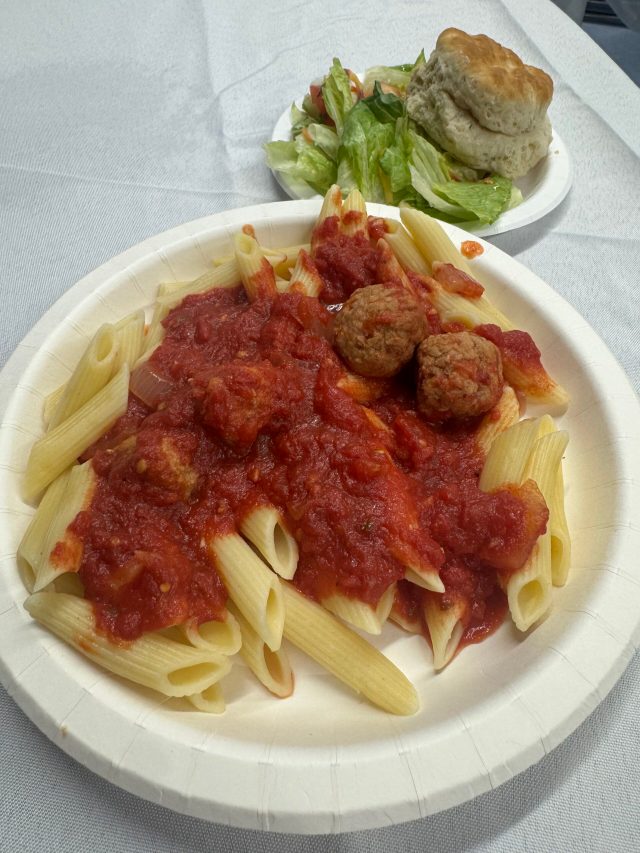 Pasta and salad was served || Monica Sager
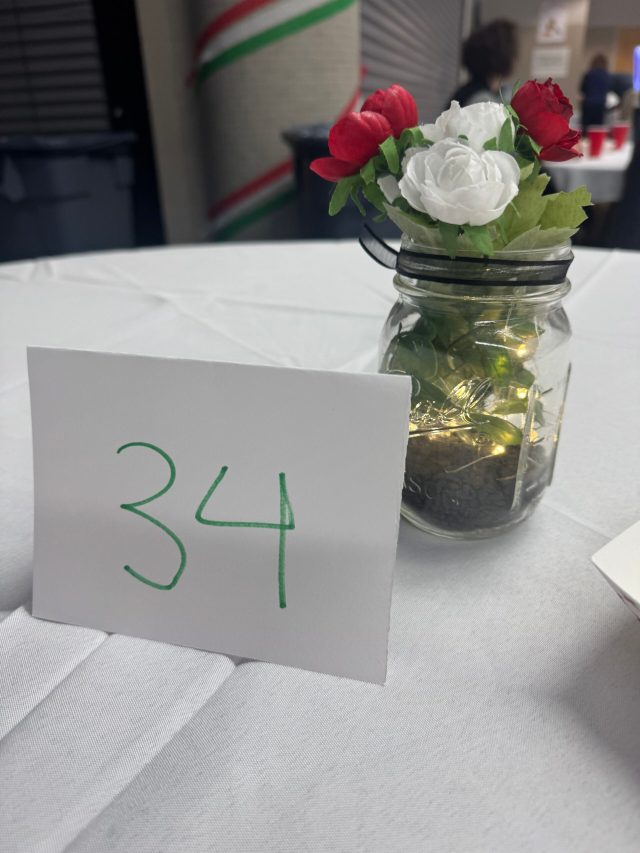 Students made the center pieces || Monica Sager
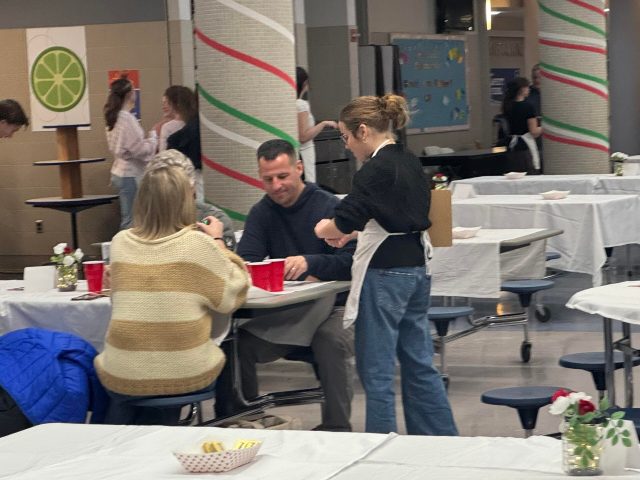 Students served their guests. || Monica Sager
While families and friends enjoyed the meal, the focus of the night centered on food insecurity. The students’ work was to raise money for My Brother’s Table, which has provided over 9 million hot, free meals in almost 45 years of existence.
Last fall, the U.S. Department of Agriculture froze payments to the nation’s largest food aid program, the Supplemental Nutrition Assistance Program (SNAP), on November 1. However, two federal judges ruled that day that President Donald Trump’s administration must continue to fund SNAP using contingency funds during the ongoing government shutdown. On Thursday, November 6, a federal judge ordered Trump to release full benefits for the month, finding that “irreparable harm would occur if millions of people were forced to go without funds for food.”
Full funding for November SNAP benefits was shortly after restored, along with subsequent legislation to reopen the government. Most states resumed loading full benefits onto EBT cards within 24 hours.
Yet the effects were still felt. Most SNAP recipients have incomes below the poverty line, roughly $32,000 for a family of four. Most participants are families with children, and more than one in three include older adults or someone with a disability. Nearly two in five recipients are households with someone employed.
According to Project Bread, more than one in three households in Massachusetts experienced food insecurity in 2024, which equates to around 2 million adults affected by food insecurity at some point within the year. Black and Hispanic households have faced the highest rates of food insecurity in the state, at 46% and 62% respectively. Since 2019, rates among Asian and White households have doubled.
Statewide food insecurity has climbed steadily, from 19% in 2019 to 37% in 2024. Project Bread notes that living at or below 200% of the federal poverty level strongly predicts food insecurity.
In Swampscott, the poverty rate rose to 7% in 2023, a 4.7% increase in just one year, according to Data USA. Over 1,000 families in the Swampscott area were impacted by the loss of SNAP benefits, according to Anchor Food Pantry.
“I love teaching them about the real face of hunger…They get to understand food insecurity at a very tumultuous time,” Lewis said. “It’s a cancer diagnosis. It’s a job layoff at a bad time. For some kids it’s just what family they are born into.”
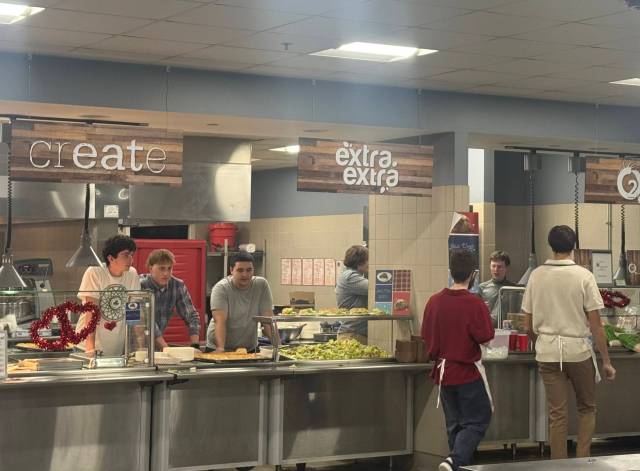 Students worked in the kitchen of their restaurant || Monica Sager
Lewis said that My Brother’s Table “means the world to me,” so being able to support them with a project like the Italian night makes a difference. His previous sixth grade classes raised nearly $50,000 for the cause.
“There’s no better time than now to bring it back,” wrote student Aidan Brown in an invitation to the event. “My Brother’s Table has been there for the North Shore at its most vulnerable times since 1982. Now more than ever, there is an urgent need for someone to step up and bridge the gap of food insecurity with the jeopardization of COVID-era emergency SNAP benefits (which boosted every recipient’s benefit to the maximum allowed for their household size) and newly tightened work requirements. This has created an increased need for food assistance among families in the area, with this dinner serving as a crucial response to the immediate local crisis.”
My Brother’s Table’s Executive Director Dianne Kuzia Hills spoke with Lewis’ class about food insecurity and the impact the students are able to make. She was also at the event, manning the raffle table.
“For us, it’s really encouraging to see the new generation coming up and caring so much about hunger in their community,” Kuzia Hills said.
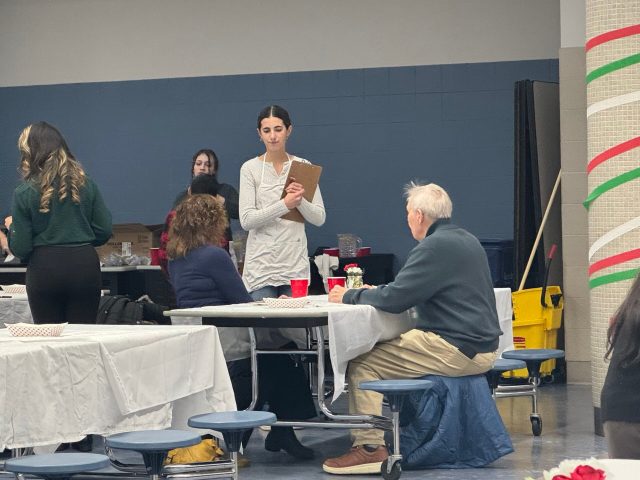 The high school turned into a restaurant || Monica Sager
The raffle, which also raised money for My Brother’s Table, included items such as taking over High School Principal Emily Zotto or Superintendent Jason Calichman’s parking spots; gift cards to Dockside, Sam Walker’s American Tavern, the local massage spa and bakeries; season passes for the boys and girls basketball teams with swag; chocolates; Red Sox tickets; and even a chance to ride to school in Officer Brian Wilson’s patrol car.
Lewis started the project while working at the Swampscott Middle School. He taught sixth grade English and instilled the belief of teaching the “whole child.” For over a decade, the 70-plus sixth grade students would host over 300 of their loved ones to a pasta dinner, with all of the donations going to hunger relief.
“It was a right of passage,” Lewis joked.
During the COVID-19 pandemic, Lewis’ project had to take a hiatus, and a few sixth grade classes never had the chance to host their restaurants. So when Lewis switched the high school and took over the communications class and had to create a curriculum, the students who missed out immediately asked to have the Italian experience be part of the course.
“I said, ‘If you’re game, but it’s a big undertaking,’” Lewis said.
Wednesday’s restaurant was the first iteration at the high school. The students donned aprons, had notepads for orders, walked around with water pitchers and continually checked in on their patrons.
“It makes it worth it to see them grow up,” Lewis said.
And Italian restaurant may not be a one-time event.
“If it goes well, I can see it keep going,” Lewis said.
Dining and Cooking