
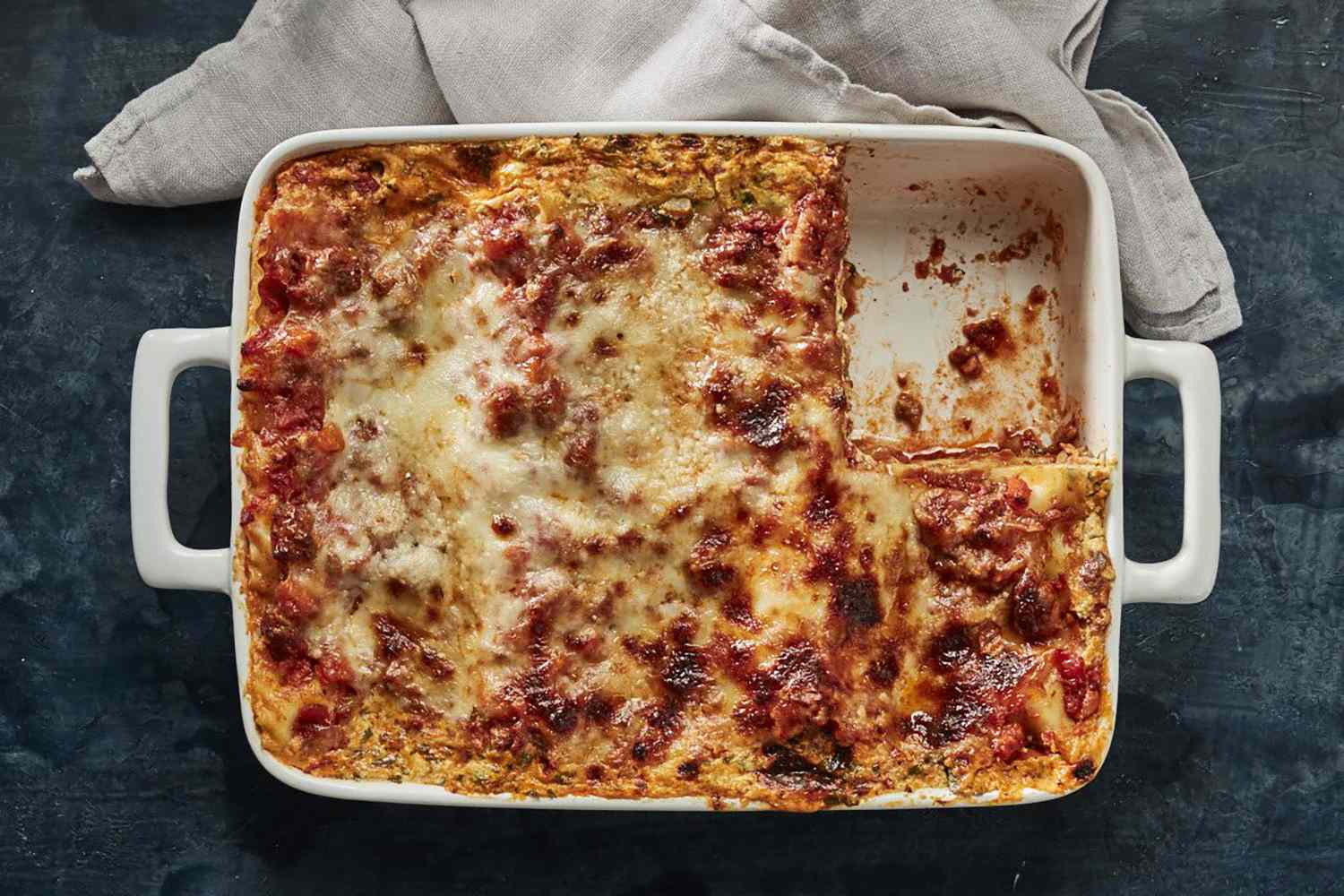
Making lasagna is a labor of love. There are so many steps involved in making the filling, sauce, and pasta, layering them, baking them, achieving a bubbly cheese topping, and, of course, slicing and serving. Even if you’re taking a few shortcuts (hello, jarred sauce and no-cook noodles), lasagna isn’t necessarily quick, but it’s so worth it. Once you reach the assembly stage, one key question remains: which pan is best for baking lasagna? The answer depends on a few key factors. Here’s what experts say bakes it best.
The Best Bakeware for Lasagna
The best bakeware for lasagna hinges on how many people you’re serving. Aluminum pans work best for feeding a crowd, while ceramic baking dishes are ideal for small groups or when presentation matters. Ahead, experts explain why they favor ceramic and aluminum bakeware for this timeless comfort meal.
Ceramic
“Ceramic cooks lasagna the best and most evenly, and gives you those delicious crispy edges,” says Esperanza Guzman, Executive Chef at Skaneateles Fields Resort & Spa in New York.
While rectangular pans are traditional for baking lasagna, Guzman goes for an oval. “I use my quart-size Le Creuset oval ceramic dish for making lasagna,” she says. “I love the shape. It’s a little different than what you’d expect, and the smaller size makes for lots of crispy edges and flavor.”
Social media culinary personality Arash Hashemi is also a fan of ceramic-baked lasagnas. “I’ve tested all kinds of pans over the years, and ceramic consistently gives me the most reliable results at home. It also works beautifully for oven-to-table serving,” he says. “It heats more gently and evenly, which helps the layers cook through without drying out the edges. It also holds heat well after coming out of the oven, so the lasagna stays hot when you serve it, and it looks great on the table.”
Ceramic baking dishes also work well for storage in the fridge or freezer, and can easily be reheated in the microwave or oven. “Always store the lasagna in the baking dish. It’s where all the flavor is and where it all developed from the start,” says Guzman. “I never serve lasagna on the same day. I always let it rest in the cookware so the ingredients can integrate.”
Aluminum
While ceramic baking dishes are generally preferred by chefs and home cooks, aluminum baking dishes also have their benefits.
“For me, it depends on the size of the group I’m feeding,” says Chef Glenn Rolnick of Carmine’s. “When I’m cooking at home for the family, I love using CorningWare. It doesn’t have a lot of surface area or depth and cooks very evenly at any temperature,” he says. “When I’m cooking for a small army of guests, I go for metal for a more even cook and some crispiness on the perimeters.”
Anthony Costella, founder of Antonio Carlo Gourmet Sauces, is also a fan of aluminum and ceramic for their even baking temperatures and durability.
“Nothing makes a better lasagna than a simple aluminum pan,” Costella says. “The material allows the lasagna to cook evenly from edge to center, giving you perfectly baked layers without overcooking the top. If you’re preparing lasagna for a family gathering and want something more presentable for the table, a ceramic casserole dish will retain heat well on the dining table and still conduct even baking through the layers, but will take a little longer to bake.”
If you choose to make lasagna in an aluminum pan, don’t use it for storing the leftovers. “Move the leftover lasagna to your usual storage containers as the acids in the sauce can react with the aluminum,” Costella advises.
Glass
Glass bakeware has its benefits, as it lets you see each lasagna layer as you assemble it. While it bakes similarly to ceramic, experts prefer ceramic bakeware for achieving the crispy edges and gooey layers that make lasagna so comforting.
Dining and Cooking