
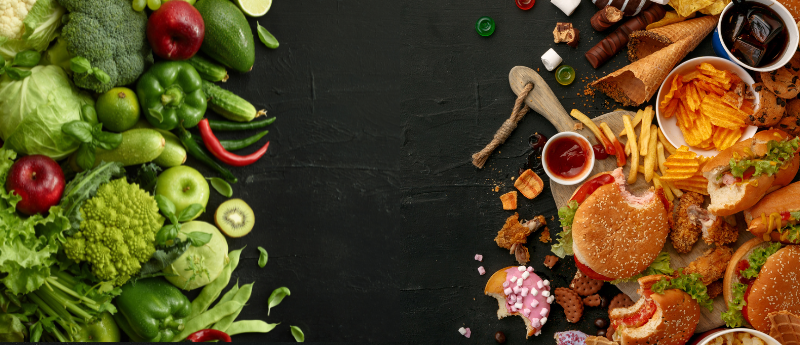
A recent study has revealed that Black women who consume high amounts of ultra-processed foods before a breast cancer diagnosis face higher mortality risks. In this interview, we speak with lead author Tengteng Wang (Rutgers Cancer Institute, NJ, USA) to explore the research findings, examine the biological mechanisms driving this association and how these results could impact cancer nutrition guidance for underserved communities.
Could you provide an overview of the key findings from your study?
In this study, we followed a large group of 1,733 Black women in New Jersey who were diagnosed with breast cancer between 2005 and 2019. All participants were part of long-running epidemiological studies that allowed us to carefully track their diet and health outcomes over time.
We found that women who ate the highest amounts of ultra-processed foods before their breast cancer diagnosis had a 36% to 40% higher risk of dying, either from breast cancer specifically or from any cause, compared with women who ate the least amount of these foods.
Importantly, we did not see a simple “more is worse” pattern. Instead, women who ate fewer than ~four servings per day of ultra-processed foods were not at risk, while risk started to increase at higher levels of consumption above 4 servings/day. This suggests there may be a threshold beyond which these foods become more harmful. When we accounted for overall calorie intake, the associations became weaker, suggesting that excess calories may partly explain the link. However, other direct effects (further detail provided in the subsequent answer) of ultra-processed foods on health may also play a role.
…women who ate the highest amounts of ultra-processed foods before their breast cancer diagnosis had a 36% to 40% higher risk of dying.
Overall, from a public health perspective, our findings suggest that high consumption of ultra-processed foods may reduce survival following breast cancer diagnosis among Black women with breast cancer. Reducing intake of these foods could be a meaningful and achievable way to support long-term health and survival for breast cancer survivors, particularly in Black women communities, who are facing the highest rate of breast cancer mortality in the US.
What biological mechanisms could be driving the association between ultra-processed foods and breast cancer mortality?
There are several possible, and likely overlapping, biological reasons why eating more ultra-processed foods may be linked to poorer survival after breast cancer.
First, ultra-processed foods tend to be high in calories but low in nutritional value. Regularly eating these foods can contribute to weight gain and problems with how the body processes sugar and fats, such as insulin resistance and abnormal cholesterol levels. These metabolic changes are known to worsen cancer outcomes. In our study, the link between ultra-processed food intake and mortality became weaker after we accounted for total calorie intake. This suggests that excess calories may explain part of the association, or that increased calorie intake may be one pathway through which ultra-processed foods negatively affect survival.
Second, many ultra-processed foods are high in added sugars, refined carbohydrates and unhealthy fats, which can promote chronic inflammation and oxidative stress in the body. These processes can create an environment that allows cancer to grow or progress more easily.
Third, some ultra-processed foods contain additives or packaging-related chemicals, such as certain artificial sweeteners and hormone-disrupting substances, that may interfere with hormonal balance, immune function, or the gut microbiome. All of these systems play important roles in cancer progression and recovery.
Finally, diets high in ultra-processed foods often crowd out healthier options, such as fruits, vegetables, whole grains and legumes. These whole foods provide vitamins, minerals, fiber and plant compounds that may help protect against cancer progression and support the body during recovery.
Taken together, these pathways suggest that ultra-processed foods may affect breast cancer survival both directly, through biological effects, and indirectly, by contributing to excess calorie intake and poorer overall diet quality.
Are similar associations seen in different cancer types and with patients from different racial groups?
Research on ultra-processed foods and cancer survival across different cancer types and racial groups is still emerging, and results have been mixed. Overall, there are relatively few studies that have examined whether eating more ultra-processed foods affects survival after a cancer diagnosis, especially for breast cancer [1–3]. Some large studies, including one based on the UK Biobank, have found that higher consumption of ultra-processed foods before diagnosis was linked to a higher risk of dying from cancer, including breast cancer, colorectal cancer, and other cancers. Similar findings have been reported for colorectal and prostate cancer in the study based on the PLCO Cancer Screening Trial. However, not all studies have found this association, and at least one study did not observe a link between ultra-processed food intake and survival among colorectal cancer survivors in the Nurses’ Health Study and Health Professionals’ Follow-up Study.
Our study helps address this gap by focusing on Black women with breast cancer, a group that has historically been underrepresented in research and disproportionately experiences poorer breast cancer outcomes.
Importantly, the majority of previous work has been conducted in predominantly White women. As a result, there has been very limited information on how ultra-processed foods may affect cancer survival in racial and ethnic minority groups, including Black cancer survivors. Our study helps address this gap by focusing on Black women with breast cancer, a group that has historically been underrepresented in research and disproportionately experiences poorer breast cancer outcomes. While our findings suggest a potential link between high ultra-processed food intake and lower survival in this population, additional studies in other cancer types and in more diverse populations are needed to better understand how broadly our findings apply.
What are the next steps for your study?
There are several important next steps for this line of research.
From a scientific perspective, we need to confirm these findings in other groups of breast cancer survivors and in people who have survived other types of cancer. A longer follow-up will also be important to better understand the causes of death and whether there are specific periods after diagnosis when diet may be especially important for survival.
We also have several ongoing or planned studies that incorporate objective biomarkers—including circulating inflammatory markers, tumor markers and microbiome or metabolomics measures—to investigate underlying mechanisms. For example, one forthcoming study will analyze breast cancer tissue from the same women to assess whether ultra-processed food consumption is associated with activation of the mammalian target of rapamycin (mTOR) signaling pathway, a key regulator of tumor growth. Another study will evaluate blood-based inflammatory markers such as C-reactive protein and interleukin-6.
Beyond observational research, there is a strong need for intervention studies. These could include real-world dietary trials or community-based programs that test whether reducing ultra-processed food intake after a cancer diagnosis can improve weight, metabolic health, inflammation, and, ultimately, survival.

The oncologist’s communication toolkit for language-equitable cancer care
Discover practical steps oncologists can take to improve language concordance with the aim of providing more equitable care, in this article.
Finally, it is critical to work closely with communities. Community-engaged research can help develop dietary guidance that is culturally appropriate, practical and realistic, while also addressing barriers such as food access, affordability and time constraints. These efforts are essential for translating research findings into meaningful improvements in health, especially in communities that have been historically underserved.
How would you like to see the findings of this study impact guidance around nutrition and cancer?
I hope these findings help encourage changes at both the clinical and public health levels.
At the clinical level, survivorship care should include clear and practical nutrition guidance that focuses on food quality, not just calories. This means encouraging diets built around whole, minimally processed foods and offering realistic strategies to reduce ultra-processed food intake. Importantly, this guidance should be tailored to the cultural preferences, economic realities, and food environments of Black breast cancer survivors, rather than relying on one-size-fits-all recommendations.
At the public health and policy level, these findings highlight the need for broader, upstream changes that make healthy choices easier and more affordable. This includes improving access to grocery stores that carry fresh foods, supporting subsidies for fruits and vegetables, and limiting the targeted marketing of ultra-processed foods in communities that are already disproportionately affected by cancer and diet-related diseases.
Taken together, I hope this research helps shift nutrition guidance around cancer toward approaches that are both evidence-based and equitable, supporting survivors not only through individual choices but also through healthier food environments.
 Interviewee profile: Dr. Tengteng Wang is an Assistant Professor of Medicine at the Rutgers Cancer Institute and Rutgers Robert Wood Johnson Medical School. Before joining Rutgers in 2024, she was an Instructor at Harvard Medical School and an Associate Epidemiologist at Brigham and Women’s Hospital (MA, USA). She received her Ph.D. degree in Epidemiology from the University of North Carolina at Chapel Hill (NC, USA) in 2019. As an epidemiologist with medical training, Dr. Wang’s research is centered on identifying dietary/lifestyle exposures and molecular biomarkers that influence the etiology and progression of cancer (primarily breast cancer) and disentangling the underlying biological mechanisms using pathological data and emerging omics technologies, particularly in the fields of human microbiome. The overarching goal of her research is to refine precision risk reduction strategies to reduce cancer burdens across the cancer control continuum among diverse populations. Her current research is supported by the NCI Early K99/R00 Award and other pilot grants to investigate the role of the human microbiome, reproductive and dietary factors, in the etiology of benign breast disease and breast cancer.
The opinions expressed in this interview are those of the author and do not necessarily reflect the views of Oncology Central or Taylor & Francis Group.
No potential competing interest were reported by the contributors to this feature.
Click here to sign up to our dedicated breast cancer news round-up
Dining and Cooking