
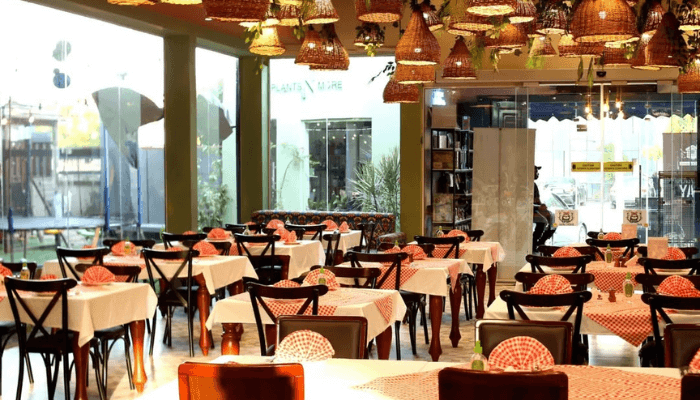
Despite easing inflation in Nigeria, eating out has emerged as one of the earliest casualties of strained household budgets, with restaurant and fast-food visits falling 28 percent as more Nigerians turn to home cooking.
This was revealed in the 2025 invisible economy report by Shoppoint Rewards, a Nigerian cashback and receipt-based rewards platform, which offers a granular view of how households are adjusting to prolonged cost-of-living pressures.
Released on Tuesday, the report analysed three million verified shopping receipts, representing an estimated N45 billion to N52 billion in consumer spending from more than 85,000 shoppers across 10 states in 2025.
The dataset, drawn from even monthly sampling throughout the year, provides a ground-level snapshot of everyday consumer behaviour that traditional surveys and banking transaction data often miss.
“Restaurant and fast-food visits declined by 28 percent, indicating that discretionary spending is under pressure as households shift toward home cooking,” the report said.
While prices rose by an average of 23 percent, grocery purchases remained resilient, accounting for 36 percent of all receipts, or approximately N18.7 billion in spending. Food essentials, the report noted, continue to be prioritised above all other categories, underscoring how households are protecting core consumption even as they cut back elsewhere.
Shoppoint Rewards added that receipt-level data reveals behavioural shifts that transaction data alone cannot capture. Unlike bank records that show where money was spent, receipts show exactly what was purchased, highlighting substitutions, trade-offs and changing consumption patterns as budgets tighten.
“Receipts tell a different story from account balances,” the company said. “They show the real choices families make when money is tight — what they protect, what they cut back on, and how they adapt. That is the economy most Nigerians actually live in.”
The report added that all figures are presented as conservative ranges to account for monthly and regional sampling variations, ensuring methodological rigour.
Official data supports the broader easing trend. Figures from the National Bureau of Statistics show that food inflation slowed for a fifth consecutive month in December, easing to 10.84 percent from 29.6 percent in January.
Further insights from the report show rising price sensitivity. Between 67 and 72 percent of grocery shoppers compared prices before purchasing, while 45 percent switched household brands once prices crossed the N5,000 threshold.
Shopping patterns also reflect tighter planning. Weekend shopping dominates, with 58 percent of grocery receipts recorded on Saturdays and Sundays, while bakery purchases peaked on Friday evenings as households prepared for weekend consumption.
Shoppers also increasingly consolidated trips, buying from an average of 3.2 to 3.8 categories per visit, with groceries and drinks appearing together in 72 percent of combined purchases.
For restaurant and fast-food operators in Africa’s most populous nation, the data underscores a challenging consumer environment, where recovery may lag broader inflation easing as households continue to prioritise value, home cooking and essential spending.
Bunmi Bailey
Bunmi holds a degree in Economics from the University of Lagos and has over eight years of experience in content writing and journalism.
Her career spans roles as a financial and business journalist at BusinessDay Media and TechCabal, and as Head of Research at SBM Intelligence, an Africa-focused market intelligence and strategic consulting firm.
She also served as Editor at Finance in Africa, a subsidiary of Businessfront and is currently Assistant Editor, Finance (Africa), at BusinessDay.

Dining and Cooking