
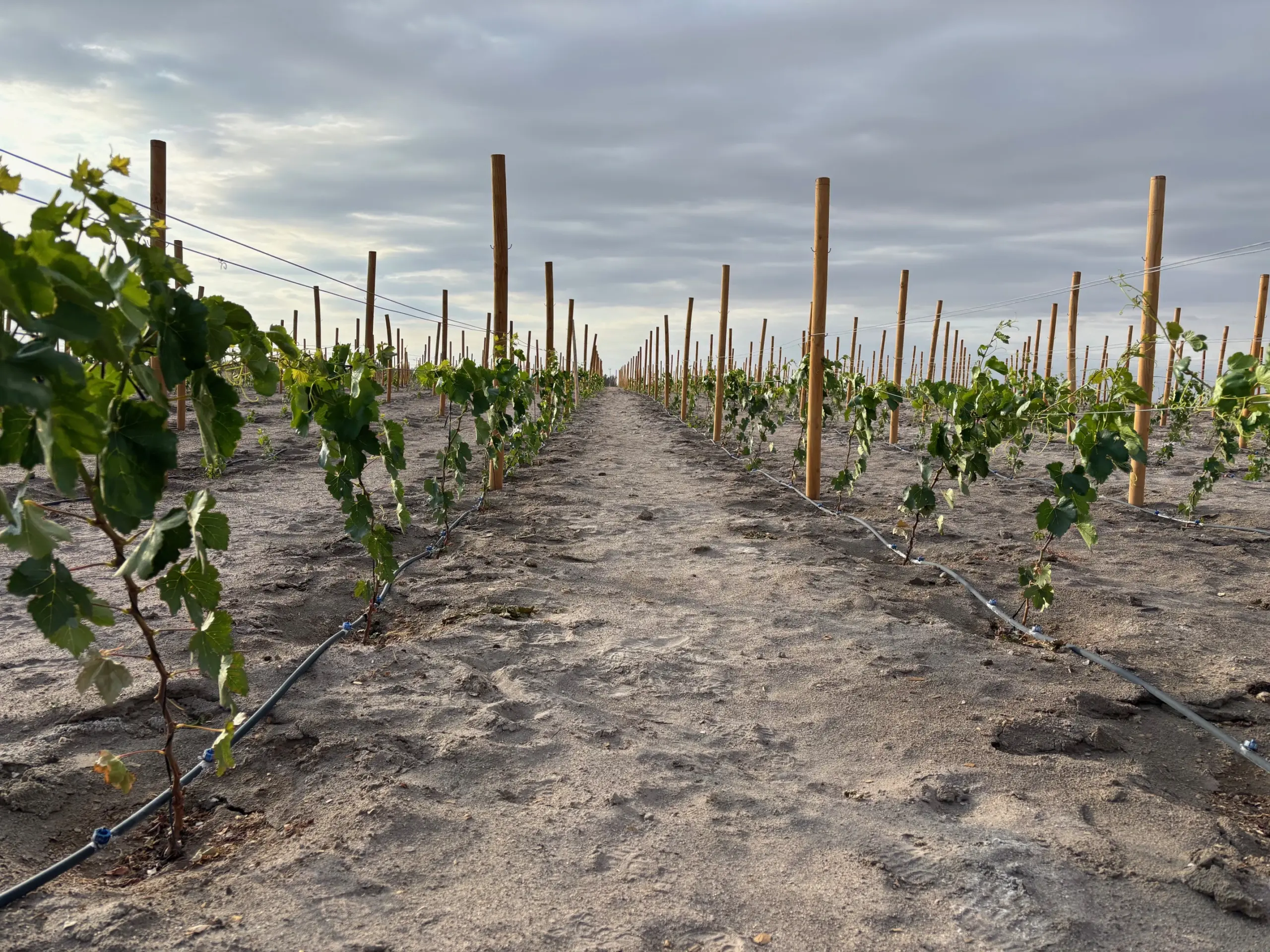
In the heart of the driest desert on the planet, where for decades viticulture seemed impossible, Chile is writing one of the most surprising stories in contemporary wine. In the Tarapacá Region, a scientific project led by researchers from Arturo Prat University (UNAP) managed to rescue century-old vines that survived for more than 100 years in extreme conditions, giving rise to the first registered Chilean wine grape variety: Tamarugal.
The story began in 2003, when the UNAP team began rescuing old isolated vines that had managed to survive for decades in saline soils, with an absolute shortage of water and exposed to extreme temperatures.
The development of viticulture in Tarapacá has a history spanning almost 500 years, but this activity came to an end in approximately the 1940s. Isolated plants survived for almost 80 years in the world’s driest desert, which indicated to us that this was genetic material worth rescuing, because they had adapted to such extreme conditions as high temperatures during the winter and soil containing salts and boron, which is toxic to plants,” explains Ingrid Poblete, the researcher in charge of the project. Wine from the Desert project at UNAP.
Based on this finding, the team identified that it was possible to resume this productive activity in an environment completely different from that of traditional viticulture. In this extremely arid area, average rainfall is 0.6 millimeters per year, with temperatures exceeding 28°C during the winter and cold nights that can reach -7°C.
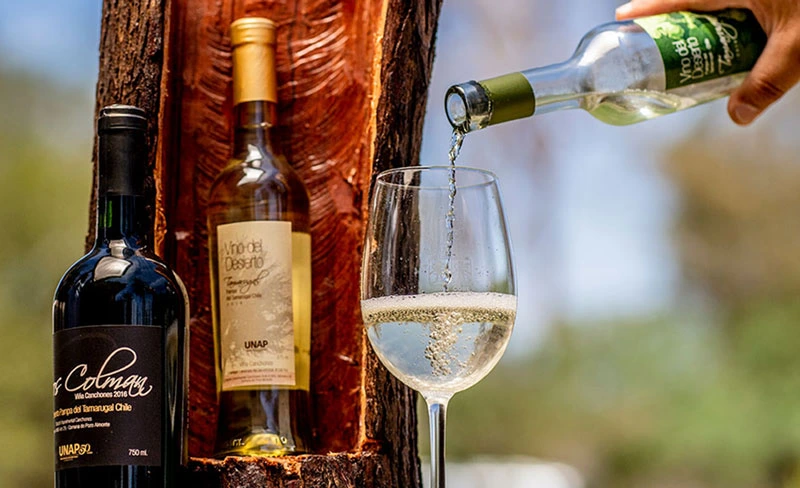 Photograph obtained from the Vino del Desierto website.
Tamarugal, a wine with the taste of the desert
During the genetic analysis process, the research team discovered that one of the rescued varieties did not match any known strain around the world. Following international protocols, it was officially registered in 2016, becoming the first 100% Chilean wine grape variety recognized worldwide.
“We named this new variety ‘Tamarugal’ in honor of the area where we are growing it. It is one of the finest varieties we have found: it has spectacular growth and high productivity, although we manage its yield to prioritize high-quality fruit,” says Poblete.
The project is based on a high value-added boutique vineyard model, with pressurized drip irrigation that is 90% efficient, using ancient groundwater from the Pampa del Tamarugal, which is approximately 9,000 years old and naturally replenished by rainfall from the highlands.
Beyond wine production, the project has enabled the development of a production model adapted to conditions of extreme aridity, combining water efficiency, applied research, and the enhancement of the region’s agricultural heritage. Added to this is the participation of small local farmers and the consolidation of an emerging wine tourism offering in northern Chile.
Distilled with endemic botanicals
One of Tamarugal’s many plantations in the desert is located on the grounds of Destilados del Desierto, a boutique distillery in the Pica Oasis dedicated to producing artisanal spirits that reflect the identity of the region.
So, in addition to harvesting Desert Wine, Destilados del Desierto has its own unique creations, including “Picay,” a double distilled Pica lemon spirit with local botanicals, and “Altiplaniko,” a London Dry gin made with more than 12 endemic high-altitude botanicals. Produced in traditional stills and using raw materials from the area, these spirits express the unique character of one of the world’s most arid deserts.
More than just wines or spirits, these projects demonstrate Chile’s ability to transform extreme territories into opportunities for sustainable development. Both products now carry the Chile Brand, helping to position the country from genetic rescue and scientific research to the production of high value-added beverages. The Tarapacá Desert is now projected as a living laboratory for agricultural and cultural innovation.
Dining and Cooking