
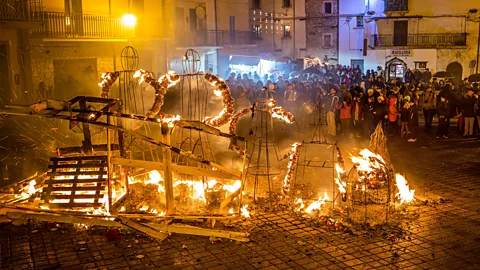
 AlamyFor the entire festive week of Saint Anthony Abate, the villagers barely sleep (Credit: Alamy)A feast shaped by miracles, hunger and heritage

The earliest written records of the panarda date to 1657 and describe a ritual linked to the end of winter. At its core are two founding legends and two families.
According to tradition, the custom began when the Serafini, local landowners, pledged to offer an abundant meal to the community if Saint Anthony Abate freed them from a pact with the devil.
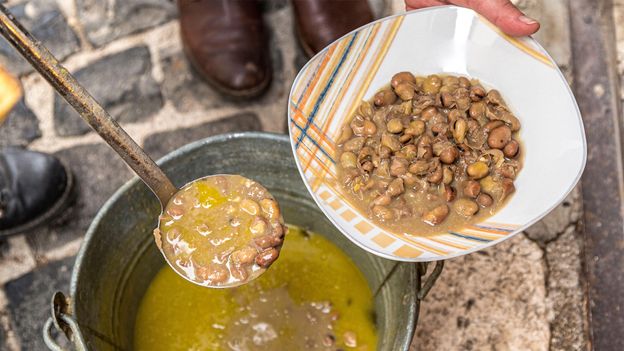
Another legend tells that it was the Bianchi family, instead, who vowed to distribute the favata – fava beans and bread – to the townspeople at dawn on 17 January, from house to house, after Saint Anthony saved a child taken by a wolf.
“But for us, panarda isn’t folklore,” says local official Constantina Ferrari. “It’s how we recognise ourselves. Even if you live elsewhere, this is where you feel you still belong.”
At first, the panarda was offered only to the poorest villagers. Today, the guest list has evolved to include anyone who wishes to take part, but the rule remains unchanged: everyone at the dinner eats the same food, in the same order, at the same pace.
Dining and Cooking