
Home » Italy Travel News » Sips and Strategies: Why Italy is Betting on Shared Marketing to Revolutionize Wine Tourism in 2026
Published on
February 9, 2026
In the rolling hills of Tuscany and the mist-covered slopes of Piedmont, a quiet revolution is fermenting. Italy, long the world’s leading wine producer, is no longer content with just selling bottles. For 2026, the Italian wine sector has pivoted toward a new, deeply human strategy: Shared Marketing.
As global wine consumption faces a shift in habits, Italy is doubling down on “Enotourism” (wine tourism), transforming it from a side activity into a strategic pillar of the national economy. The message from the vineyards is clear: to go far, we must go together.
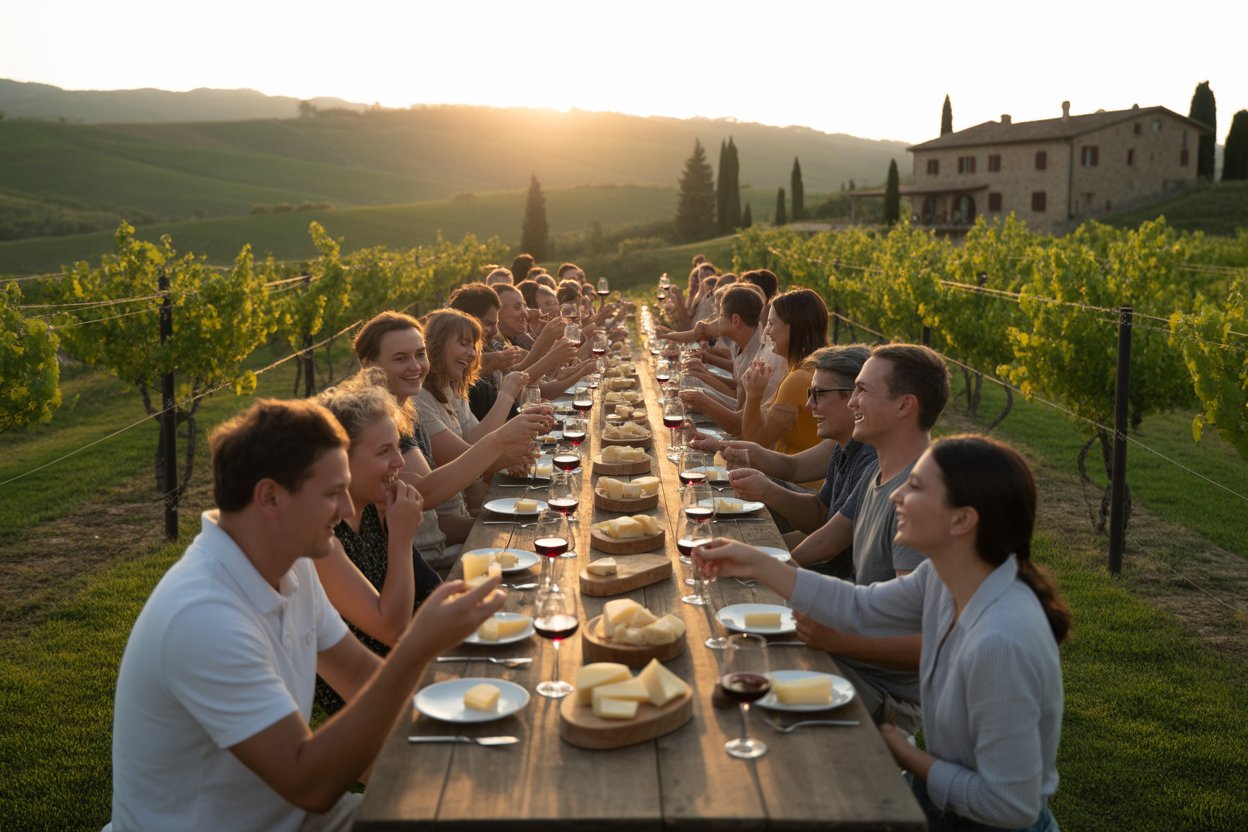
The Power of the “Shared Table”
The backbone of Italian viticulture consists of small and medium-sized enterprises (SMEs). While these boutique wineries produce world-class vintages, they often lack the massive marketing budgets of international conglomerates.
Enter the Shared Marketing model. By pooling resources, smaller producers are now forming “territorial networks”—consortia and regional groups that share the costs of digital advertising, international roadshows, and booth space at major events like Vinitaly. This collaborative approach allows a tiny family vineyard in Umbria to have the same digital visibility as a major estate in Chianti. It isn’t just about saving money; it’s about presenting a unified, authentic “Italian Brand” to the world.
Digital Roots: The 2026 Tech Transformation
While the product is ancient, the tools are cutting-edge. The Italy Smart Digital Wine Tourism Market is now valued at over $1.3 billion, driven by a new generation of travelers—primarily Millennials and Gen Z—who demand seamless experiences.
In 2026, the “digital footprint” of a winery is as important as the quality of its soil. Key innovations include:
Advertisement
Advertisement
Integrated Booking Platforms: Nearly 40% of all wine tours are now booked via mobile apps that provide real-time availability and personalized itineraries.AI-Guided Inspiration: Approximately 75% of young wine tourists now use AI tools to seek out “hidden gem” wineries that align with their personal values, such as organic farming or social inclusion.Direct-to-Consumer (DTC) Sales: By using shared digital marketplaces, wineries are bypassing traditional distributors to ship directly to the doorsteps of tourists they met months earlier in the cellar.Beyond the Glass: The Experiential Shift
The modern wine tourist isn’t just looking for a tasting; they are looking for a memory. The industry has responded by diversifying the “offer.” It is no longer rare to find:
Vineyard Trekking & Yoga: Integrating the physical landscape into the tasting experience.Heritage Lodging: Wineries are increasingly offering boutique accommodation, allowing guests to sleep among the vines.Cultural Storytelling: Tours now focus heavily on the history of the land, the “native grape renaissance” (reviving nearly extinct local varieties), and the family legacy behind the label.The Economic Ripple Effect
The impact of this collaborative spirit extends far beyond the cellar door. Data suggests that for every euro spent at a winery, a visitor contributes an additional €150 to the local economy through dining, local retail, and stays in nearby villages.
Advertisement
Advertisement
This “territorial engine” is particularly vital for rural development. By marketing an entire region (like the Langhe or Valpolicella) rather than individual brands, the benefits of tourism are distributed more evenly, supporting local artisans and preserving the social fabric of the Italian countryside.
Challenges: The Seasonality Struggle
Despite the success, Italy faces a significant hurdle: Seasonality. Currently, nearly 68% of visits occur in the spring and summer. To combat this, the “Shared Marketing” strategy for 2026 is focusing on “De-seasonalization.”
Producers are working together to create winter experiences—such as truffle hunting in the late autumn, “Pruning Workshops” in the winter, and festive cellar markets—designed to lure international travelers during the quieter months.
A Toast to the Future
As HE Mahmood Alhashmi or any regional director in Italy might tell you, the future of travel is human. By leaning into shared marketing, Italy is ensuring that its wine culture remains accessible, sustainable, and, above all, communal.
In 2026, when you visit an Italian winery, you aren’t just a customer; you are a guest in a story that is being written by a thousand different hands, all working together to protect a heritage that belongs to everyone.

Dining and Cooking