

Winemakers in Bordeaux have been trapped in a vicious cycle. Demand for their full-bodied reds has fallen but hotter, drier summers are creating more sugary wines with higher alcohol contents.
Now, however, they have found that the solution to cater to the modern tastes of Gen Z for lighter, low-alcohol wines lies in the past: the ancient practice of including stems as well as grapes in the fermentation process.
Including stems can decrease the proportion of sugar and reduce alcohol content by up to 1 per centage point, while producing more subtle, fresher aromas.
Bordeaux’s wine industry has been in crisis because of rising temperatures and the sharp drop in demand for its classic reds at a time when international competition has grown more intense than ever.
“Twenty years ago, people liked robust reds with a high alcohol content, but today they’re looking for fresher, lighter wines, so producers in Bordeaux are returning to an old winemaking method to suit new tastes,” Bernard Burtschy, a wine critic for Le Figaro, said.
In Burgundy, a region celebrated for its light, delicate pinot noirs, stems are commonly included when making red wines. Using the stems in what is known as whole cluster fermentation can produce more complex, tannin-rich wines and often adds spicy, herbal flavours.
Like grapes, stems have a spectrum of ripeness that affects the final taste of the wine. Riper, woodier stems generally improve flavour, while unripe green stems can lead to an unpleasant bitter taste.

Harvest time at Château La Marzelle in Saint-Émilion, southwestern France
ROMAIN PERROCHEAU/AFP VIA GETTY IMAGES
“Until about 50 years ago, wine drinkers were accustomed to a little bitterness,” Burtschy said. “After that, they favoured smoother-tasting wines, but now a hint of bitterness is back in fashion.”
• Bordeaux revives light, chilled red wine that gave claret its name
Frédéric Massie, of Derenoncourt Vignerons Consultants, which advises producers, said that including stems could offset the increasing risk of overripe grapes and excessively high alcohol contents. “It can help to remedy the imbalances due to climate change,” he said.
Bordeaux estates that have started making wine with whole bunches include Château Moulinet in the Pomerol appellation, Château Larrivet Haut-Brion, and Domaine Simon Blanchard in Montagne-Saint-Émilion.
“Including stems produces wines that are more delicate, softer and finer on the palate,” Burtschy said.
According to Vincent Renouf, of the Excell laboratory, which specialises in analysing wines, grape stems are “a taste accelerator of incredible aromatic power”. They can produce aromas that evoke vanilla, kiwi or apricot while reducing acidity, he said.
• Bordeaux embraces taste for wine by glass to boost sales
“Stem inclusion is helping Bordeaux’s winemakers create new, more complex, more aromatic and expressive clarets,” Massie said. The important thing is to get the proportion of stems right and to use them correctly. Like grapes, the stems are all different and have their own distinct aromas and flavours.”
President Macron opened the Wine Paris trade fair on Monday as the government searches for solutions to the crisis in one of France’s most important export industries. The government is paying winemakers in Bordeaux to rip up their vines to reduce oversupply.
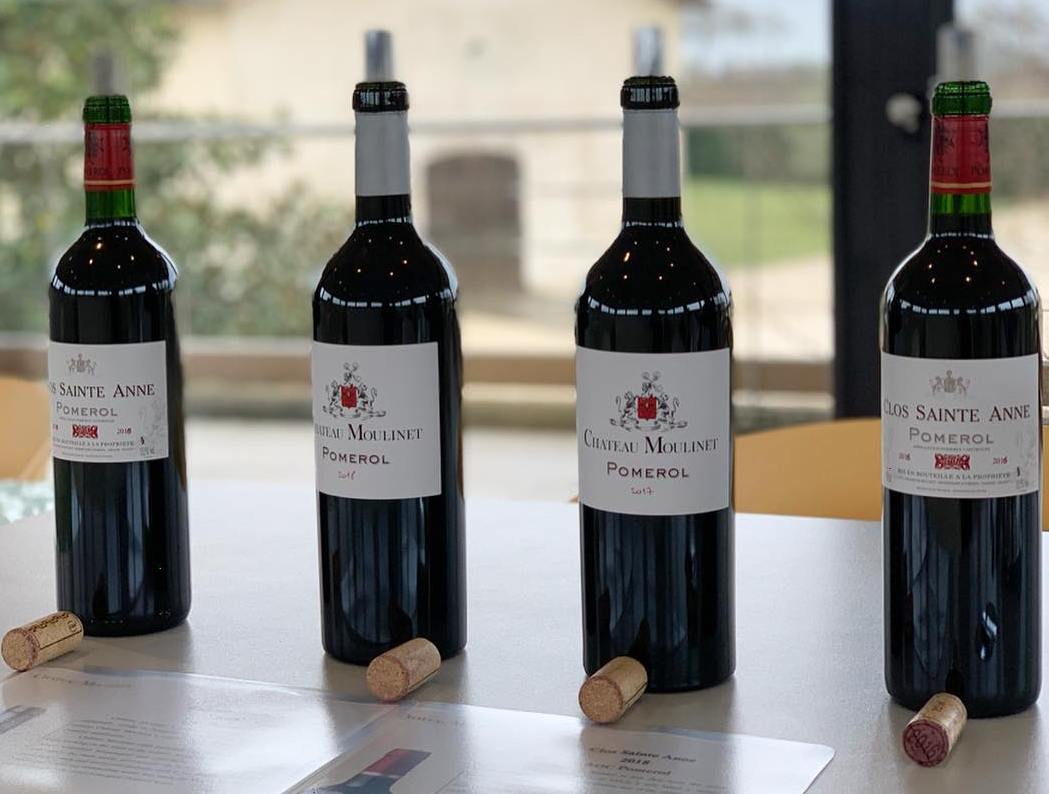
Château Moulinet has started including whole bunches in winemaking
NOT KNOWN, CLEAR WITH PICTURE DESK
President Trump’s 15 per cent tariffs on French wines have forced producers to cut prices by an average of about 8 per cent, according to Guillaume Touton, a New York-based distributor of French wines.
“Even Bordeaux’s grand crus classés, which didn’t want to change their pricing, have offered promotions,” he said. “They couldn’t afford to lose the US market.”
Some wine wholesalers in the US anticipated Trump’s return to the White House by stocking up on French wines. “We saw Trump’s tariffs coming,” Touton said. “I laid in three years’ worth of reserves for some châteaux.”
He warned, however, that if tariffs rose as high as 50 per cent, French wine exports to the US could dry up completely.
Dining and Cooking