
Getting psyched to venture to a Napa tasting room in a pair of Jimmy Choos and shell out $500 for a flight of well-aged Cabernet feels so 2007. (Was it even fun then?) But for many would-be visitors to California wine country, the perception is that it’s the prevailing option on tap at tasting rooms in the Golden State’s most aspirational neighborhoods.
That impression has merit. Stratospherically priced tasting experiences have been a thing in the Valley. Consider Tor Wines’ Black Magic Experience at $750, Immortal Estate’s 100-Point Experience at $500, and Theorem Vineyards’ Baccarat Tasting Experience at $750, to name a few.
While such lavish experiences might be the exception, the norm finds plenty of standard winery tastings priced between $100 to $200. And in Napa, hotel prices have soared to an average of $412 per night, nearly twice the rate of San Francisco.
“I have been visiting Napa Valley since the early 1970s,” says Bill Nemerever, co-owner of Nemerever Vineyards in Oakville, which he founded in the late 1990s. “At that time, there were generally no charges for tastings. Those days are long gone. As far as I know, we are the only winery in our neighborhood that doesn’t charge for a tasting, and ours include many older library vintages that other wineries charge a premium to taste.”
Photo By Acacia Productions / Courtesy of Ancient Peaks
The way forward isn’t just looking back
There has been a palpable shift in California. More vintners bemoan the days when tastings were free, or at least affordable. But they’re not just powering up the flux capacitor and slashing prices.
In addition to rethinking their fees, many of the most successful wine-tasting models now offer different kinds of tastings designed for a new era.
Barry J. White, general manager and executive vice president at Ancient Peaks Winery
“Tasting rooms aren’t solely about hard sales, they’re also about brand and relationship building.”
— Barry J. White, general manager and executive vice president at Ancient Peaks Winery
In many ways, it reflects what started in the vineyard more than a decade ago. Winemakers began to realize that overly cultivated and chemically farmed vineyards weren’t delivering the terroir-driven results they wanted.
Out went golf course-style vineyard management, in came wildflowers, cover crops, and organic farming. These days, no self-respecting wine influencer would dare pose for a shot in a vineyard that looks anything less than wild.
Such diversity and wildness are now entering the tasting room. It’s part natural evolution, but also part deference to a changing market. Millennials have surpassed baby boomers as America’s largest drinking population. And now, Gen Z is getting in the game too, according to findings from the Wine Market Council’s most recent U.S. Wine Consumer Benchmark survey.
Newsflash: Millennials and Gen Z want different things from a tasting experience than their parents.
“Offering one to three glasses of wine with cheese doesn’t necessarily get the job done,” says David Pearson, executive chairman and president of Joseph Phelps Vineyards, which is in the midst of radically restructuring its wine tasting experiences. “We are flipping the classic Napa tasting model on its head to provide immersive and meaningful experiences that connect guests, especially the many guests in the 30 to 50 [year old] range, with each other and the wines.”
Photo By Brennan Spark / Courtesy of Sangiacomo
Building relationships, not bottom lines
For decades, Sonoma-based Sangiacomo Family Wines focused more on farming than fancy tastings. It farms 1,600 acres for more than 90 clients and produces its own line of wines. But a few years ago, the third-generation owners noted a drop-off in wine sales and increased engagement among younger, would-be wine lovers. They decided to meet visitors where they were.
“We see it as our role to introduce new generations of people to the culture of wine,” says partner Steve Sangiacomo. “We offer some free tastings through lodging partners, and we always reimburse people for the cost of tastings if they buy a bottle. That’s a no-brainer.”
The winery also began to focus on new, experiential tastings in 2021, from pop-ups with local chefs to sunset viewing parties and trivia nights. Sangiacomo also designated kid and dog running zones amid the vines. Visitor numbers have quadrupled, and the size of its wine club has more than doubled.
“A lot of our friends in town were even saying that most wineries don’t welcome kids,” says Sangiacomo. “People in their 30s and 40s with young kids are often looking for fun things to do where their kids can be outside, and they can relax. We’ve found that giving them a safe space for that has really resonated.”
Photo By Acacia Productions / Courtesy of Ancient Peaks
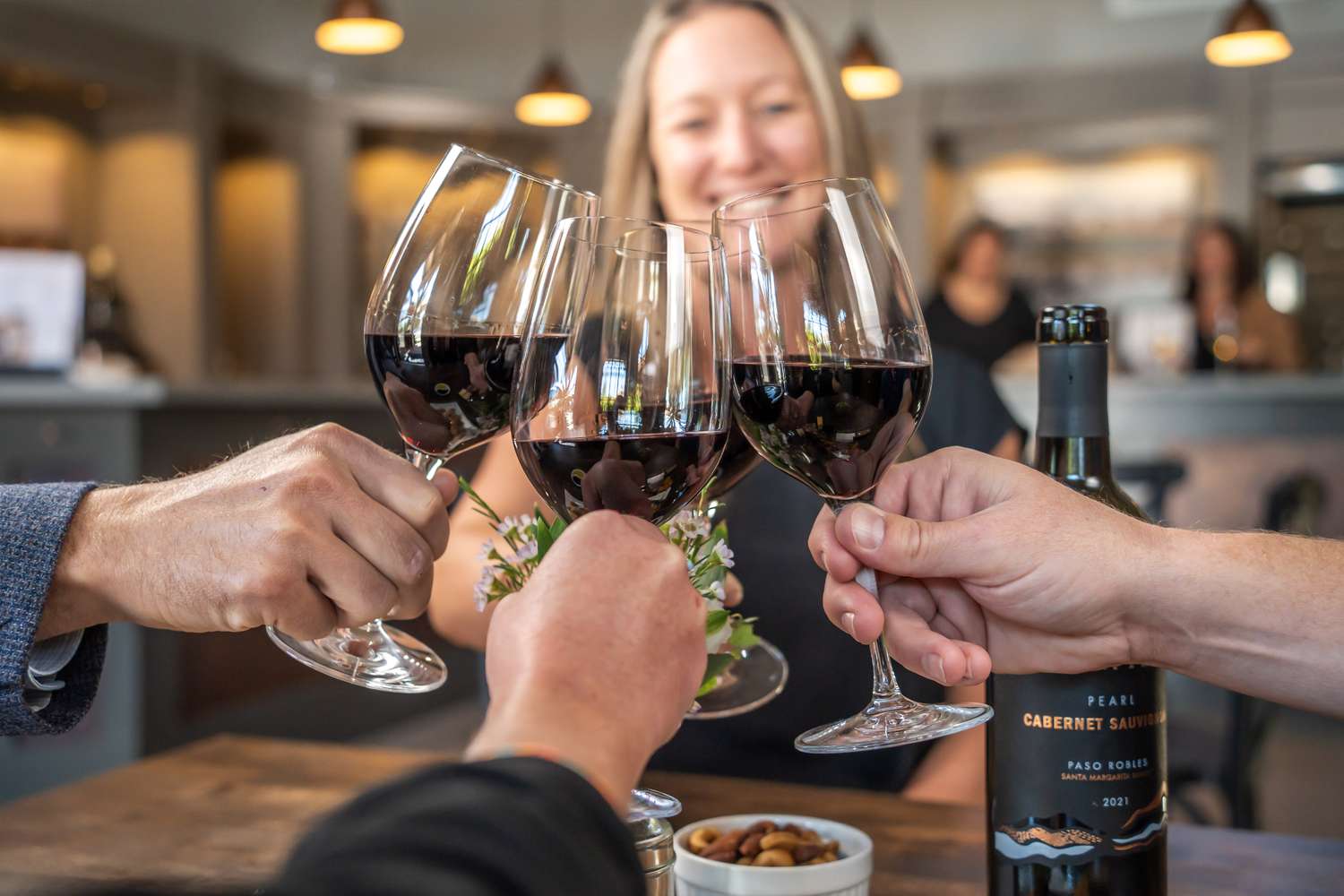
At Ancient Peaks Winery in Paso Robles, the tastings offered are $50 or less, unless they’re part of an adventure package, like the Zip n’ Sip, which takes participants on a zip line adventure over the vineyard and ends in a tasting of wines made from the vines they soared over.
Barry J. White, the general manager and executive vice president, says that the winery has gained traction with younger consumers through its on-the-ground adventures that include horseback riding and e-bike trails in the vines.
It’s a big lift, but White sees it as an investment.
“Obviously, we can’t run at a loss, but we’re also not trying to grind maximum profit out of each guest,” says White. “Our mindset isn’t transactional, it’s relational. Tasting rooms aren’t solely about hard sales, they’re also about brand and relationship building.”
Instead of exclusivity, a focus on coolness and community
To showcase relevancy and demonstrate a willingness to welcome all is notoriously tricky.
Ed Feuchuk, general manager at Tank Garage Winery in Calistoga, says that three years ago, “somebody driving up and down Highway 29 in Napa would have seen dozens of ‘by appointment only’ or ‘fully booked’ signs. It was the ultimate flex. Today, the same wineries often say ‘walk-ins welcome.’ ”
Tank Garage leans into marketing to wine lovers aged 21 to 40-something. It offers tasting times for families, and cool events that feel more urbane than classic wine-country fare.
Photo By Brennan Spark / Courtesy of Sangiacomo
“Rather than paella parties and winemaker dinners, we have arcade parties, vinyl record pop-ups, and Italo disco jams,” says Feuchuk. “Consumers are segmenting into micro-niches, and it’s a great opportunity for wineries to serve them. We’re embarking on a golden age of wineries getting weird with experiences, and we think it’ll be healthy.”
Joan Kautz, global sales and marketing head at Sierra Foothills-based Ironstone Vineyards, says its tastings start at $20, but the greatest traction among the 21–40 set can be found outside of the tasting room.
“Younger people are looking for an experience,” says Kautz, who points to the winery’s concerts, barbecues, murder mystery magic shows, paint and sips, and cornhole tournaments. “They want to learn about wines on their own terms and have fun. They also want to feel like part of a group and share their experiences with their friends.”
Photo By Brennan Spark / Courtesy of Sangiacomo
Defining too expensive
Nemerever, who blames “greed and hubris” as the driving force behind the many high charges in wine country, says his winery’s unadvertised free, by-appointment tastings are always jammed, often with millennials.
“Most of our visitors hear about us from friends,” he says. “I’m a bit biased, but I think charging more than $30 is excessive, though that can be offset by crediting higher fees against wine purchases.”
Nemerever’s biggest objection, he says, are wineries that “view the tasting room as a profit center, rather than a place to showcase their wine.”
Tank Garage offers $30 and $40 tastings in Paso Robles and Napa Valley tasting rooms, respectively. Despite that, Feuchuk says some of the skyrocketing prices of tastings have been justified.
“For some brands, the initial price increases were paired with genuinely elevated experiences,” he says. “They’d be sitting at a private table inside a cave tasting library wines paired with artisanal bites made by an estate chef. For other wine brands, it was more of an attempt to boil a frog, slowly pushing price elasticity on regular tastings until it snapped.”
To justify a triple-digit spend, wineries have to offer bang for the buck. With close to 5,000 wineries to choose from in California, it’s a taster’s market.
Photo By Brennan Spark / Courtesy of Sangiacomo
“We have been rethinking everything from the way we farm to the way we host people,” says Pearson, of Joseph Phelps Vineyards. “For a long time, certain wineries have been moving away from controlling and manipulating nature, to integrating vineyards into nature. We are taking that lens and applying it to the way we think about bringing people into the vineyard and hosting them in the tasting room.”
Phelps is in the process of replanting several acres of vineyards on the 640-acre Home Ranch estate. The team is adding 1,236 species of native plants and trees in and around the new vines to increase biodiversity.
“We’re also bringing in animals,” says Pearson. “We’re not there yet, but I fantasize about the day when we can bring visitors out to the chicken coop, gather eggs, then come back to the kitchen and cook an omelette together. We’d pair it with our Sauvignon Blanc.”
For now, visitors can choose from more structured culinary experiences, designed to explore how wine, food, and sense converge.
“The commitment to biodiversity and a restoration of balance has to start in the vineyard, but if it doesn’t also exist in the tasting room, is it really authentic?” asks Pearson rhetorically. “The model for farming had to be broken to really change, and now we’re doing that with hospitality.”
It may seem counterintuitive, but now could be the most exciting and affordable time to visit wine country in a half-century. Grab your disco gear, book your zip line, and bring your cornhole A-game.
This ain’t your parent’s wine country.
Dining and Cooking