
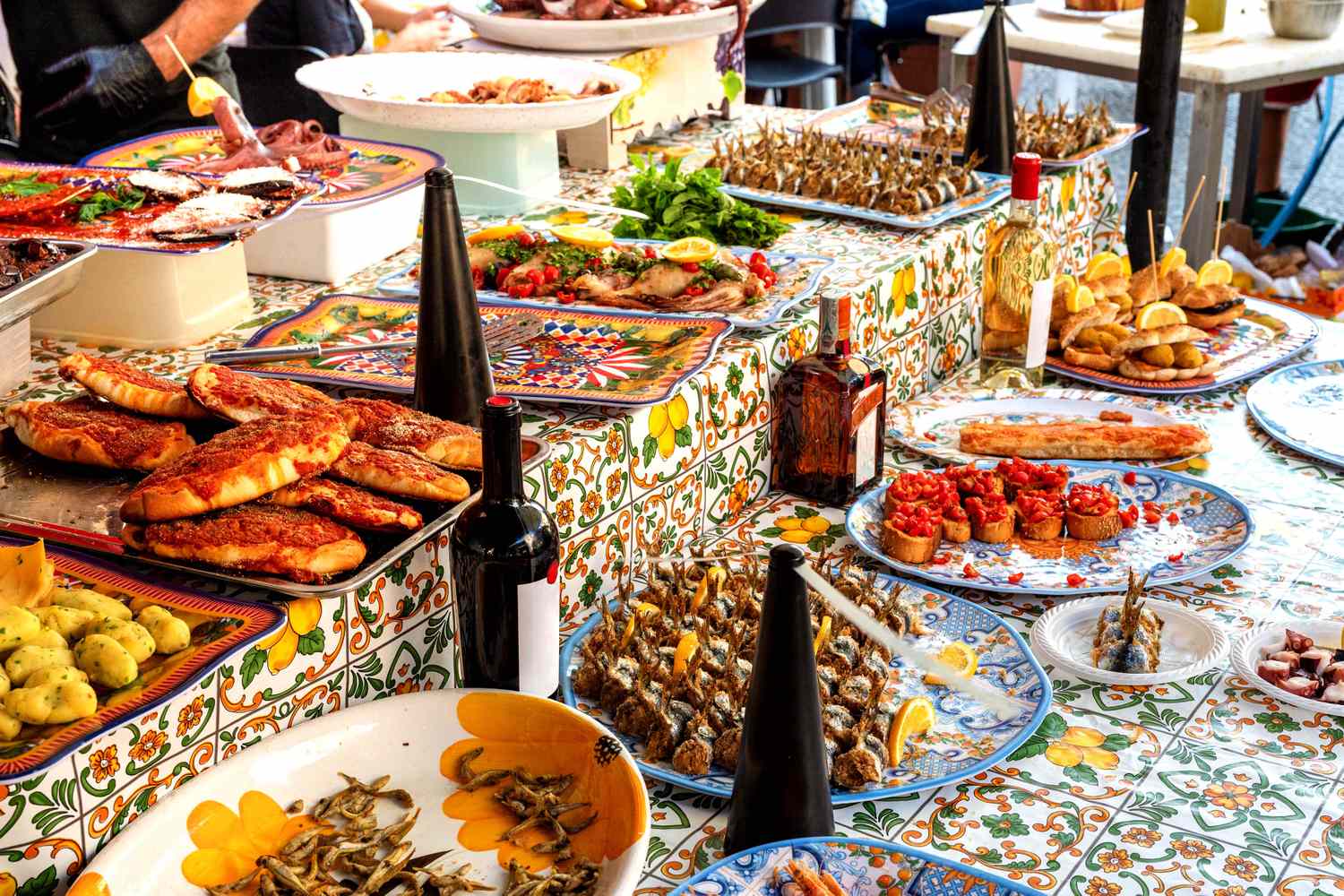
“Our luck in Sicily is great ingredients,” says chef Antonio Castronovo as he navigates the boisterous, open-air, historic Mercado de Ballarò in Palermo, the island’s capital. “We also have more history (than Italy) because the Phoenicians came here [nearly 3,000] years ago, followed by Greeks, Byzantines, Arabs, and Normans,” he explains, as market vendors trumpet their wares behind heaps of plump fruit, mounds of oversized vegetables, and groaning boards of seafood.
All those influences have turned Sicilian food into the tantalizing mashup that it is today. And I’m here to learn all about it in a cooking class from chef Antonio, as part of a custom tour of Sicily with longtime Italy specialist Perillo Tours. This cooking class, Domus Kitchen, stands out in one special way: It takes place in the chef’s own home. With his wife and children lending a hand, it’s an intimate family affair, as warm and welcoming as the Sicilian sun.
Following the chef-led market visit, the hands-on class takes place in his gorgeous alfresco kitchen, surrounded by green foliage and aromatic citrus trees. Using local ingredients and traditional recipes, we gather there to make authentic Sicilian dishes representative of this age-old cuisine. “Each dish has its own story and it is our goal to focus on the evolution that has transformed our cuisine over the centuries,” he explains on his website.
After a long career in the food and restaurant industry, Castronovo started hosting cooking classes in Eastern Europe, gradually expanding to Palermo, England, and the U.S. in 2005.
From the start of our class, the chef encourages us to cook like a Sicilian. “More, more,” he booms, as I gingerly add olive oil to the tomato bruschetta we’re preparing as an antipasto. “Those are American drops; do Sicilian ones,” he urges with a smile. Made with sun-ripened cherry tomatoes and plenty of fresh garlic, the bruschetta is unlike any I’ve eaten before — bursting with flavor. Ingredients really do reign supreme.
It’s just the start of the four-course meal I help prepare with four fellow students. As the kitchen fills with laughter, banter, and fascinating insights from Castronovo (“the best shrimp flavor is in the head”), we prepare the meal: shrimp tartare, pasta with shrimp and pistachio pesto, Sicilian veal rolls, and pistachio semifreddo.
We follow the chef in cleaning and chopping the raw shrimp, and marinating it in extra virgin olive oil, lemon juice and grated rind, salt, pepper, chopped mint, and pepper jelly. This allows the shrimp’s delicate flavor to shine. “Black tiger shrimp are mostly farmed and often injected with filler in Malaysia and Vietnam,” he says. “We don’t eat them here.”
Next comes my favorite dish: shrimp with pasta and pistachio pesto, the latter a Sicilian specialty that replaces traditional pine nuts for crushed local pistachios creating a sweeter, nuttier flavor. It’s a showstopper — and catnip for a nut lover like me. (Castronovo sells jars of the pesto in his kitchen.) Introduced by the Arabs, pistachios are famously grown in Sicily on the slopes of Mount Etna, where they are prized as “green gold” for their emerald color, rich, sweet flavor, and protected Designation of Origin status. Deeply tied to Sicilian culture and economy, they thrive in the mineral-rich volcanic soil and are often used in desserts and savory dishes, as our meal attests.
We lightly sauté the shrimp in olive oil, white wine, and red pepper flakes, and serve it with spaghetti drenched in the pistachio pesto, grated parmesan cheese, chopped pistachios, butter, and some of the pasta cooking water. Divine!
For the involtini, classic Sicilian veal rolls, we skewer very thinly sliced veal pieces rolled around a filling of breadcrumbs, olive oil, lemon and orange juice, chopped mint, grated parmesan, pepper jam, salt, pepper, and habanero oil, creating a symphony of sweet, sour, bitter, and peppery. After crusting the veal with chopped pistachios and adding orange slices from fruit in the garden to the skewers, we bake them.
Dessert also stars pistachios in a chilled semifreddo, an Italian partially frozen mousse, made with whipped cream, beaten egg whites, pistachio paste, sugar, and crusted with chopped pistachios.
After preparing our meal, we all sit down at an open-air table to feast on the fruits of our labor, accompanied by Sicilian wine. “You can’t steal the pleasure of eating together from your soul,” observes Castronovo over a forkful. “(My goal is) to have people arrive in my class as strangers and leave as friends.”
Domus Kitchen offers half-day classes either with or without a market visit followed by lunch or dinner. Each class has a maximum of 12 students. Book at domuskitchen.com.
Dining and Cooking