
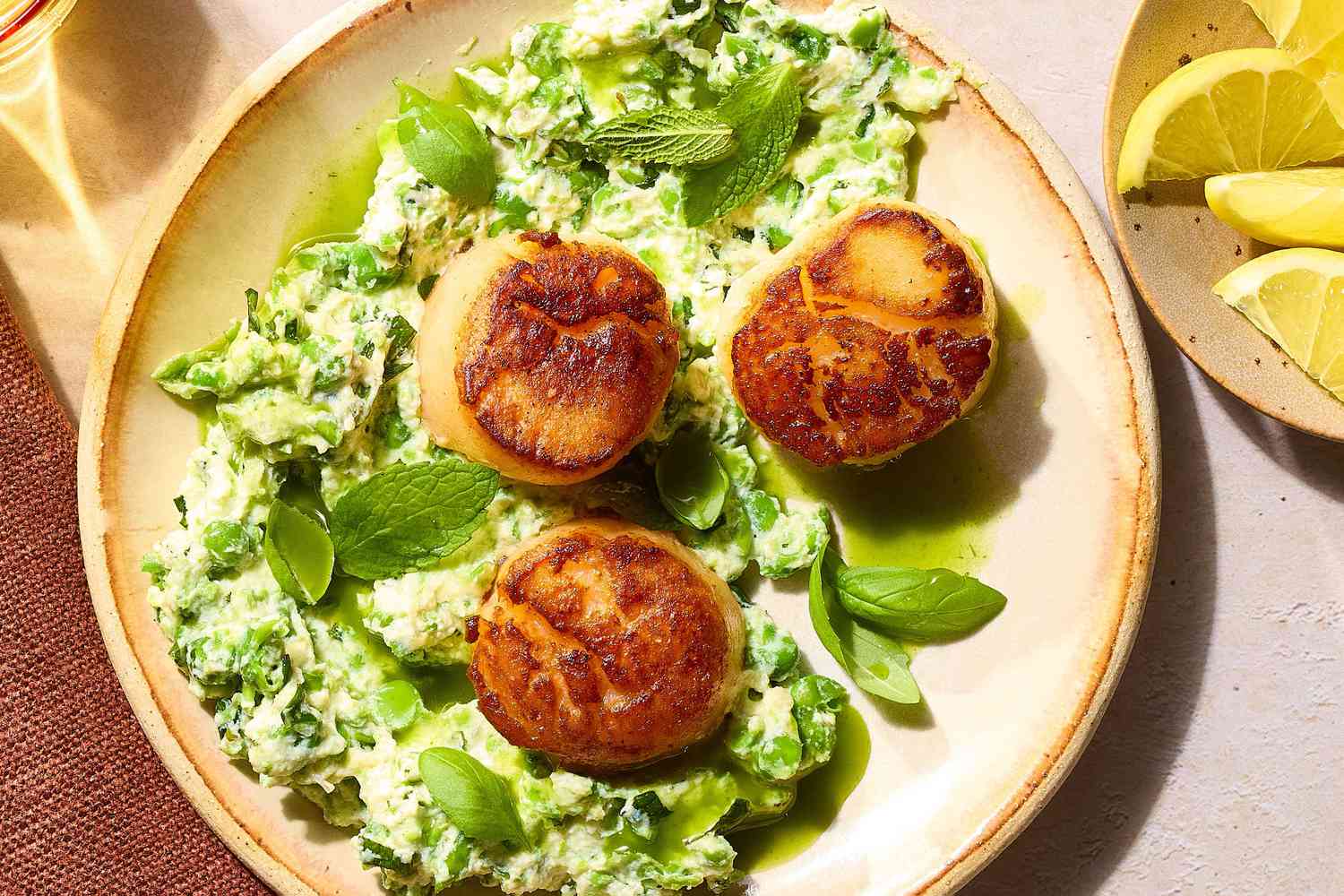
This elegant recipe pairs pan-seared sea scallops with a creamy ricotta and spring pea mash, elevating simple seafood into a restaurant-worthy main course. The spring pea mash and chive oil can be prepared ahead of time, making it easy to execute at the last minute while keeping flavors fresh and bright. Featuring fresh herbs, lemon, and Parmigiano-Reggiano, the dish balances rich and bright flavors, perfect for special occasions or elegant dinners.
There are just three simple parts to this elegant dish from star chef Emeril Lagasse. The ricotta and pea mash and the emerald green chive oil can be made well in advance, so the only last-minute task is cooking the scallops.
Are chives the same thing as green onions?
Chives and green onions, or scallions, are both members of the allium family with a relatively mild onion flavor, but they are not entirely the same thing. Chives are a grass-like herb that’s snipped just above the soil; they’re typically finely chopped and used mainly as a garnish or in recipes where they’re only just briefly cooked. Scallions, which are harvested with their bulbous end intact, have a more pronounced onion flavor and are better suited for cooked applications, though they certainly can be served raw as well. Chives and the tender green portion of scallions can generally be used interchangeably.
What is the difference between scallops and sea scallops?
Scallops are bivalve mollusks that live in saltwater; bay scallops are from the shallow waters of Atlantic estuaries, while sea scallops are from the deep, cold waters of the ocean. Habitats aside, the key distinction between bay and sea scallops is their size — sea scallops are up to three times as big as tiny bay scallops. As such, the flesh of bay scallops is regarded as sweeter and more tender than the saltier, thicker sea scallops.
Note from the Food & Wine Test Kitchen
Emeril uses canola oil to make his vibrant chive oil, but you can swap in another neutral oil or even olive oil if you wish.
Dining and Cooking