
“This allowed for the production of massive volumes of vinegar cheaply,” laments Smith, “but at the cost of a decline in flavor” as flavor compounds are “stripped out.”
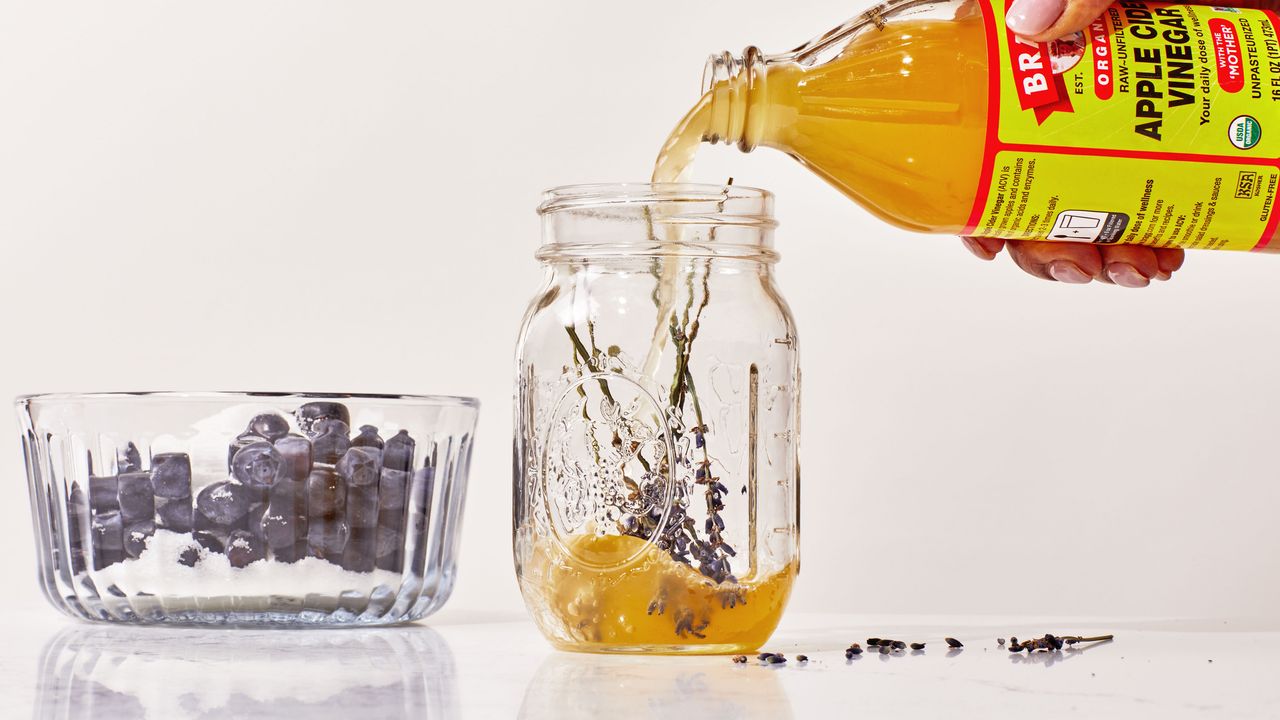
For all the convenience and reliability of standardized, mass-produced ACV, the industrial product opened the door for its counterpart: the raw, unpasteurized stuff marketed for its health benefits.
Although vinegar (of all kinds) has been used as an antiseptic, a cleaning solution, and a therapeutic digestive tonic since antiquity, the current vogue for the ACV cure has a more recent pedigree. Smith believes the first to promote ACV’s health benefits was D.C. Jarvis, a Vermont country doctor who advocated for regular consumption of the vinegar in his 1959 book Folk Medicine.
But the main force behind the rise of raw, unpasteurized ACV was a naturopath with a gift for self-promotion: Paul C. Bragg. Born in 1895, Bragg established himself as an alternative health guru in Hollywood and then in Hawaii, where he preached the secret of attaining eternal youth and good health through raw food and breathing exercises until his death in 1976 from a heart attack. A 1972 newspaper advertisement for his cookbook showed the 77-year-old flexing his muscles in a very tiny swimsuit, with the caption: “He is 91 years young.” (Bragg appears to have routinely added a decade or more to his age to gloss up his vigor.) In the 1970s the first of Bragg’s booklets promoting raw, unpasteurized ACV as a health drink was published.
This coincided with the rise of a countercultural natural food movement, which embraced the brown, gritty, and “all-natural” in its refusal of the refined, bleached, and heavily processed products of the industrial food system. Bragg’s teachings resonated with this ethos.
A recent edition of Bragg’s ACV booklet, titled “The Apple Cider Vinegar Miracle Health System,” touts a daily dose of ACV as a cure for all that ails you. Looking to lose weight? Try some ACV! Too scrawny? Ditto! ACV is also recommended to treat baldness, kidney ailments, heart disease, “female troubles,” and many, many other things.
As far as I can tell, the Bragg’s brand of ACV “with the mother”—proof of its living bacterial cultures and a symbol of its anti-industry credo—first appeared in stores nationally in the 1990s, when the company was under the leadership of Patricia Bragg, Paul C. Bragg’s daughter-in-law. By the 2000s, ACV established itself as the perfect tonic for our under-insured, hydration-obsessed, wellness-fixated age, in which we’re all searching for that one weird trick that actually works.
It’s a beautiful irony. From its roots in boozy American hard cider culture, ACV has become the opposite: a detox tonic that promises to rinse away the accumulated glut of our debaucheries and the residue of our cheat days, leaving us with the toned, well-hydrated physiques of clean-eating influencers.
One of those influencers is pop star Katy Perry. The singer and Patricia Bragg went to the same church in Santa Barbara, California, and Perry began taking daily doses of ACV as a child to soothe her vocal cords. She remains a true believer. Perry and her fiancé, Orlando Bloom, bonded over ACV when they both toted reusable bottles of ACV-laced water to one of their first dates. They loved ACV so much, they actually bought the company! Perry and Bloom were part of an investor group led by private equity firm Swander Pace Capital that acquired Bragg Live Food Products in 2019. Every dram of Bragg’s is a ka-ching in Perry’s pocket.
Dining and Cooking