
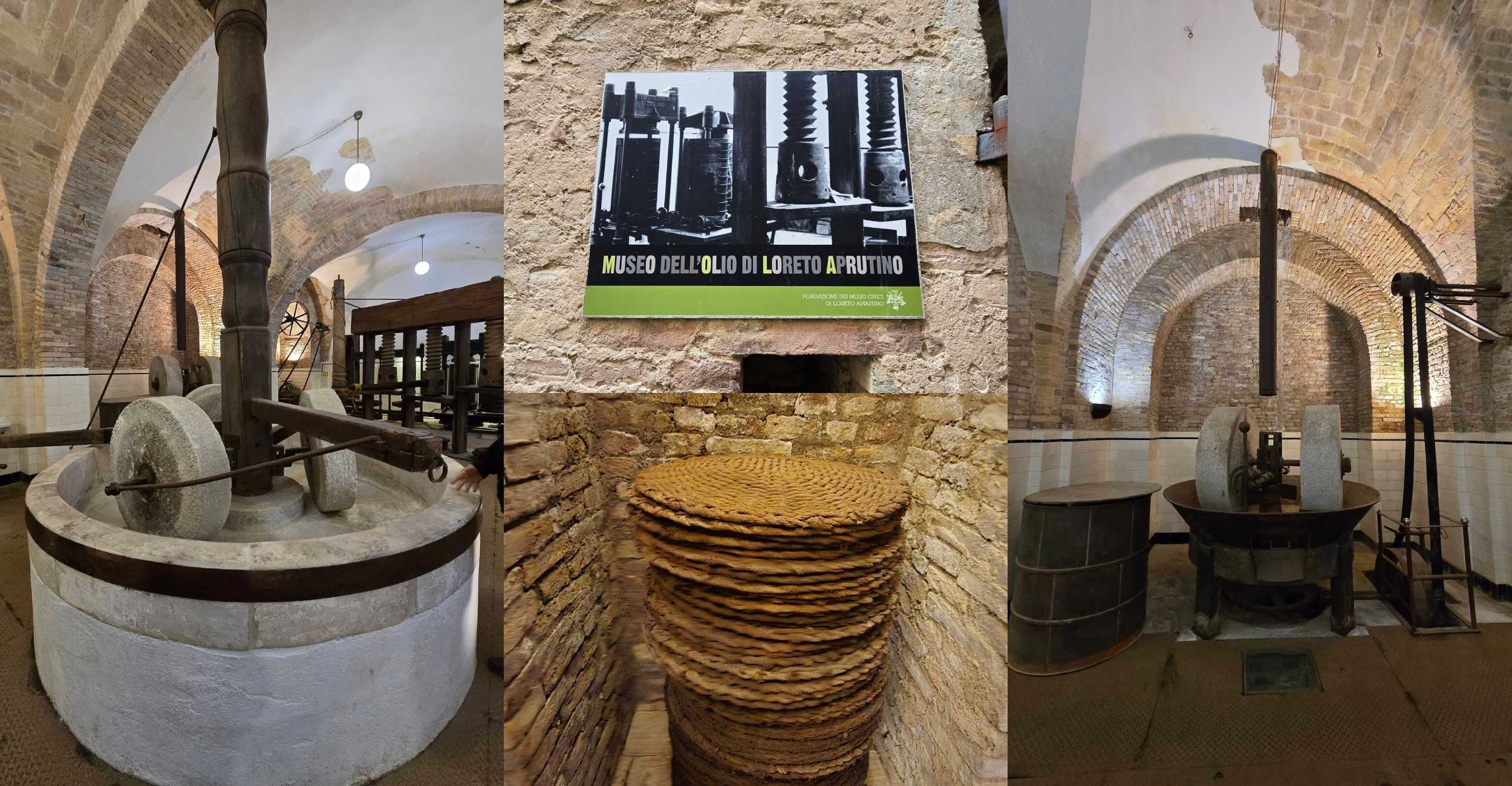
In the rolling hills of the Pescara countryside, where endless olive groves paint the landscape in soft, ancient patterns, you’ll find one of Abruzzo’s most emblematic attractions: the Oil Museum in Loreto Aprutino. Here, olive oil is much more than a culinary staple — it’s a collective story, a living agricultural memory, and a cultural treasure that stretches across generations.
Visiting the Oil Museum in Loreto Aprutino means getting up close and personal with the deep-rooted history of a land whose centuries-old vocation has always been olive growing. It’s an experience that blends tradition, architecture, art, and gastronomy — perfect for travelers who want to uncover the authentic Italy, well off the beaten path.
A Museum Set Inside an 18th-Century Olive Mill
The museum is housed within the historic mill at Palazzo Amorotti, a place so atmospheric you can almost feel time standing still. The rooms still hold the massive stone grinders, wooden presses, and collection vats — tools that whisper tales of the labor and craftsmanship of rural life.
The exhibition takes visitors on a step-by-step journey through traditional olive oil production techniques, showing the evolution from manual processing to more modern methods. What stands out is not just the historical accuracy, but the immersive sense of the olive oil culture itself.
Loreto Aprutino has long been one of Abruzzo’s key olive oil producing hubs. The region’s oil derives much of its character from the native “Dritta” cultivar, known for its fruity aroma and harmonious flavor, with subtle bitter and peppery notes.
Before you go: Always check current opening hours on the museum’s official website, consider a combination ticket that includes other civic museums, and if possible, plan your visit in autumn to coincide with olive harvest season.
Gastronomic Highlights: Olive Oil as the Star Ingredient
After exploring the museum, the next logical step is to taste the local flavors. In this corner of Abruzzo, extra virgin olive oil takes center stage on the table.
Here are some local specialties you shouldn’t miss:
Rustic bread drizzled with fresh new olive oil
Bruschetta topped with ripe tomatoes and DOP olive oil
Pallotte cacio e ova (cheese and egg meatballs)
Abruzzese arrosticini skewers
Hearty country soups made with locally grown legumes
The olive oil from Loreto Aprutino elevates every dish with its herbaceous aroma and lasting finish. Many local mills also offer guided tastings — a perfect opportunity to learn how to discern a high-quality extra virgin for yourself.
Fun Facts and Local Olive Oil Culture
Loreto Aprutino is listed among the most fascinating historic villages in the Pescara hinterland, with a charming center of stone alleys, noble palaces, and panoramic views over the rolling hills.
Olive oil production here dates back to ancient Roman times, and over centuries local families built underground mills and processing facilities that still stand as a testament to a tradition that has never truly faded.
The connection between art and olive oil culture is another intriguing aspect. Not far from the museum sits the Church of Santa Maria in Piano, renowned for its grand “Last Judgment” fresco, one of the most significant medieval painted cycles in the Abruzzo region.
What to See Around: A Day or Weekend in the Pescara Hills
A visit to the Oil Museum can easily evolve into a weekend getaway exploring the gentle countryside of Pescara.
1. Penne
Just a short drive away, the elegant historic center of Penne invites you to stroll through medieval and Renaissance architecture. Wander among ancient mills, breathe in the scent of old wood, and imagine the slow flow of freshly pressed oil — a travel experience that’s slower, more mindful, and deeply authentic.
Make It Part of Your Abruzzo Itinerary
Whether you’re planning a broader exploration of Abruzzo or want a cultural stop steeped in local tradition, the Oil Museum in Loreto Aprutino offers an unforgettable blend of culture, taste, and landscape.
Dining and Cooking