
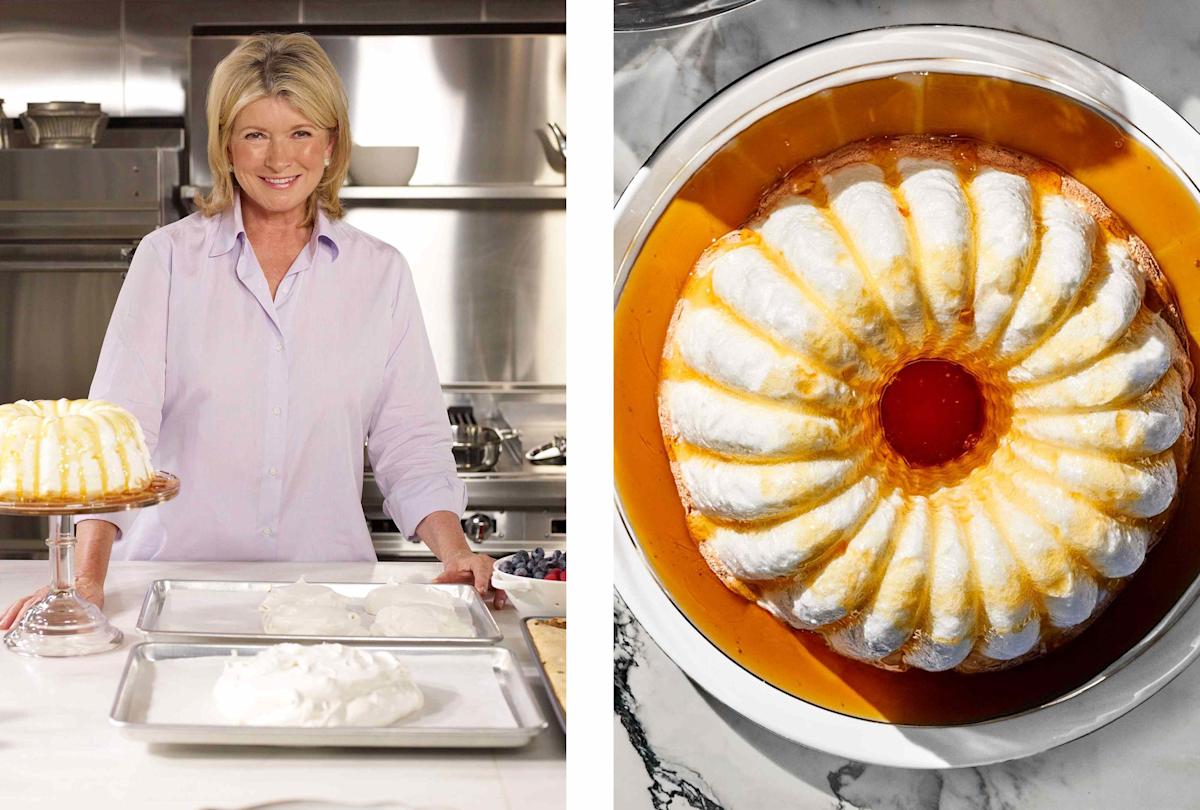
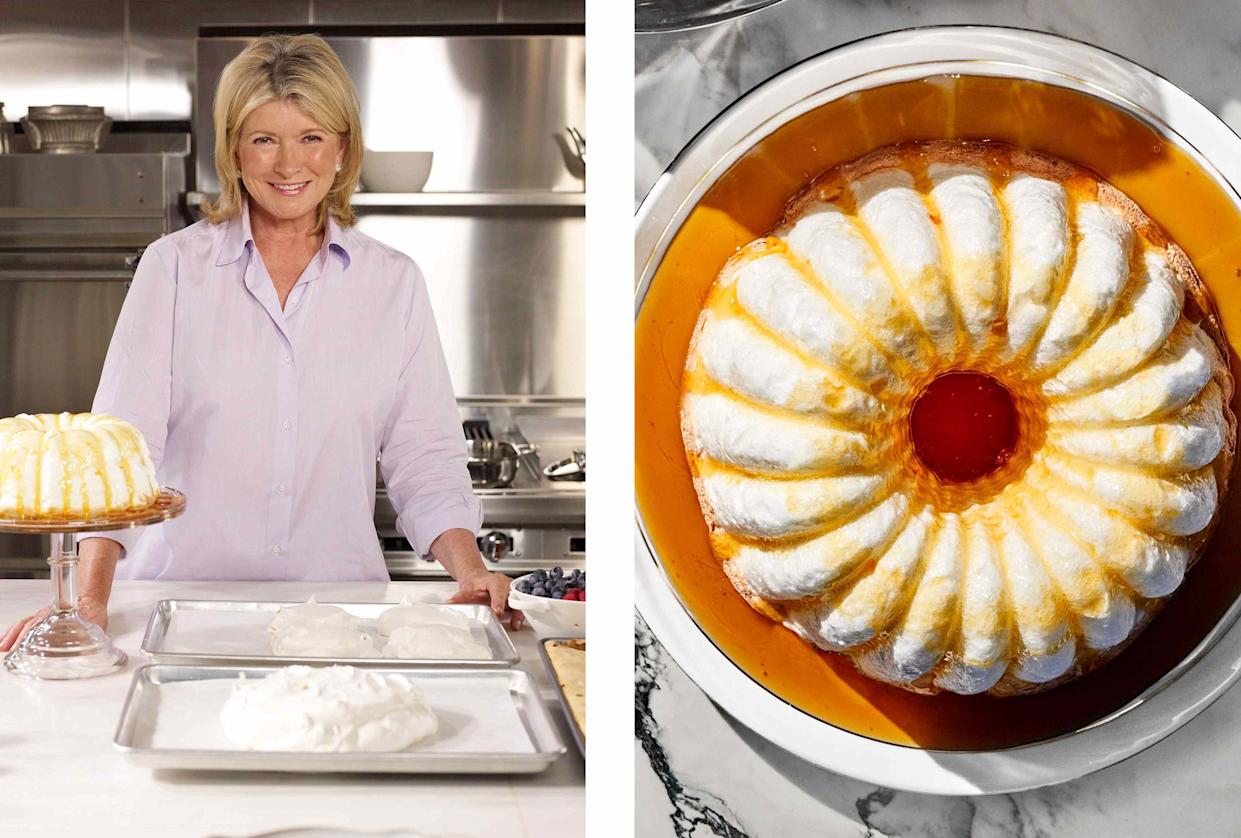
Just before she went to Milan for the Olympics, Martha hosted a dinner party for 12. The gathering of friends and neighbors enjoyed four courses of her sublime food. One in particular stood out, the dessert. Martha served ile flottante, also known as floating islands, a classic she has made numerous times before, and one that deserves more attention. It’s so different and so good—we wanted to share this favorite with you so you’ll make it for your next dinner party.
Related: 16 Make-Ahead Desserts for Entertaining (or Just Because)
What Is Ile Flottante?
“An old-school French classic mostly found at bistros and brasseries, ile flottante is light, rich, and perfect for sharing,” says private chef and food stylist Molly Wenk, a longtime Martha collaborator who helped her with the dinner. For each portion, a meringue island is set in a sea of crème anglaise or vanilla custard, often with a drizzle of caramel on the meringue for crunch and contrast.
“It’s a very satisfying dessert, without feeling heavy,” says Wenk. ”The meringues are like soft clouds, and it’s a really fun and unique texture to experience eating.” It’s also a smart choice for a dinner party as it is made ahead: the crème anglaise can be made up to two days ahead, and the meringue up to three hours ahead.
Why You Should Make It
We aren’t sure why ile flottante is not better known stateside, but like Martha, we want to change that. No one should miss out on this ethereal dessert. Many French home cooks don’t bake cakes, instead frequenting their local pâtisserie when they need a baked good. They do make ile flottante because it’s a nostalgic treat, and a simple yet impressive dessert that utilizes common pantry staples—eggs, sugar, and milk—without requiring advanced baking skills.
What Martha Says
Now that you’re excited to try ile flottante, try Martha’s recipe. Often, the meringues for ile flottante are poached in milk or water, each cooked separately. Martha’s baked ile flottante is an easier and more delicious way to serve a crowd. You can use a small Bundt pan as the mold or a glass mold, like a kugel, if you have one. Martha’s baked version is simpler for those of us who don’t have Martha or Wenk’s pro chef skills, but it’s just as dramatic.
“Baking it in a mold and then being able to slice that dessert is very effective and very charming—and it’s very easy,” she says. The baked meringue is slightly more cooked than the poached version, so the texture is firmer. The exterior has a delicate, crisp shell that contrasts nicely with the gorgeously fluffy, gooey interior.
And then there is that ocean of chilled creme anglaise. Wenk has a tip for that: always strain your crème anglaise. She says the chilled creme anglaise tastes like melted vanilla ice cream, but swapping the sauce for a pint of melted ice cream is not a Martha-approved tip!
Read the original article on Martha Stewart
Dining and Cooking