
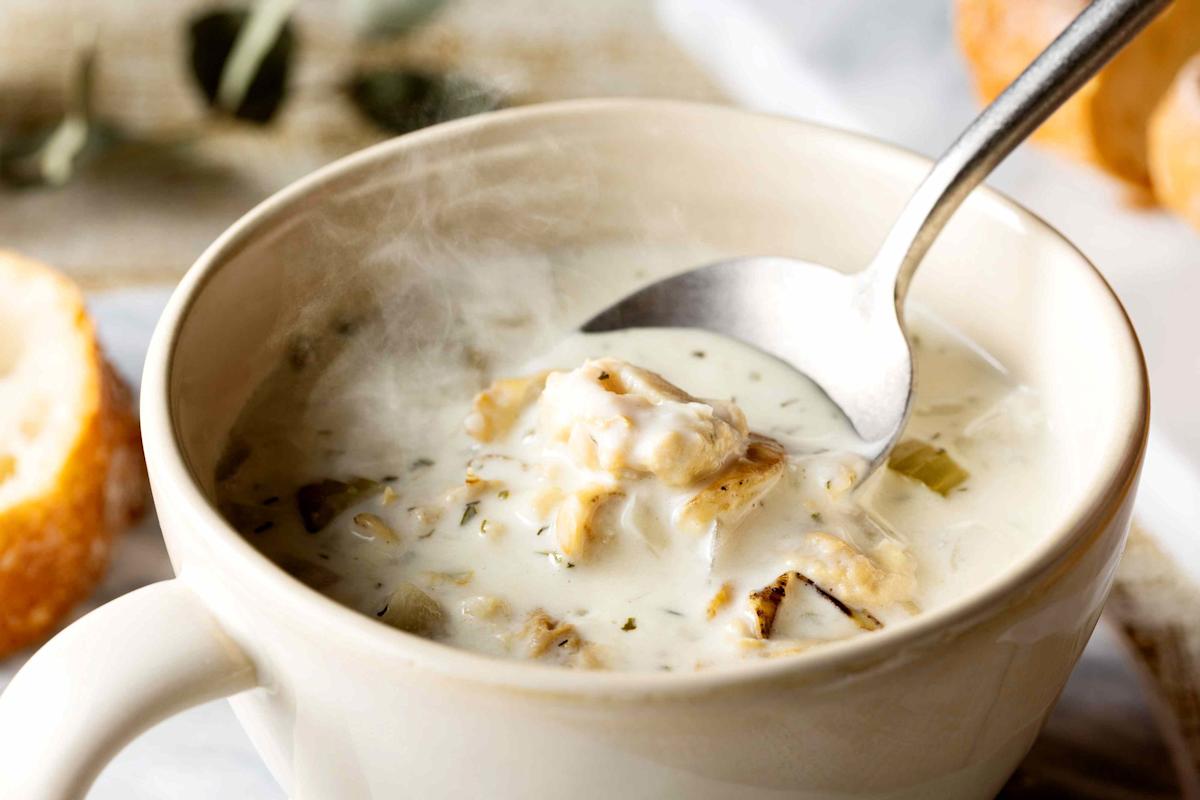
You might think that no New England chef worth their locally harvested sea salt would go near store-bought clam chowder, but that isn’t the case.
“I’m from New England,” says Lambert Givens, executive chef at Hunter’s Kitchen & Bar in Boston. “I grew up around this food and I’m telling you, shortcuts are fine if you know how to finish. If you don’t have the time or the desire to make clam chowder from scratch, using a good canned chowder is a foundation, not a failure. Treat it like a starting point and add a little love, and suddenly it tastes like you actually meant to make it.”
What constitutes a good store-bought chowder is up to you, but given the dish’s namesake ingredient, make sure any chowder you buy passes the smell test first — literally.
Related: How Chefs Make Store-Bought Tomato Soup Taste Better
“If you are working with prepared chowder that is not shelf-stable, definitely make sure you are checking the expiration date and giving it a sniff before you indulge,” says Brian Rae, culinary director of Boston’s ES Hospitality. “Chowder should taste like the ocean pulled up a chair and stayed a while,” adds Givens — not like something died on the beach.
Here’s how several New England chefs suggest upgrading store-bought clam chowder.
Sweat some aromatics
Begin as you would with many great recipes: by sweating aromatics in a little oil or butter. “I’d add shallots and a little celery cooked down in butter until everything smells right,” says Lambert. “From there I add the chowder and let it pick up that base.”
Add fresh clams
This is a no-brainah. “Add fresh clams to the soup for a flavor boost and overall nicer texture,” says Evan Hennessey, chef-owner of Stages at One Washington, The Living Room, and forthcoming Topolino in Dover, New Hampshire. “The clams found in canned clam chowder usually disintegrate into nothing or become too chewy, so adding in fresh plump clams could help save the soup.”
Related: Valerie Bertinelli’s 3 Easy Tips for Prepping Clams
Minimize the sodium
A common complaint about canned soup of any kind is its high sodium content, but you can overcome the salt in a canned chowder with an easy chef hack. “Prepared chowders tend to be aggressively seasoned, which limits what you can add without the dish tipping into overpowering territory,” says Matt Gaudet, culinary director of Sidell Hospitality and Boston’s Saltie Girl. “I’d start by cutting the sodium and enriching the flavor by doubling the volume with low-sodium vegetable stock.”
Nenad Cavoski / Getty Images
Bacon to the rescue
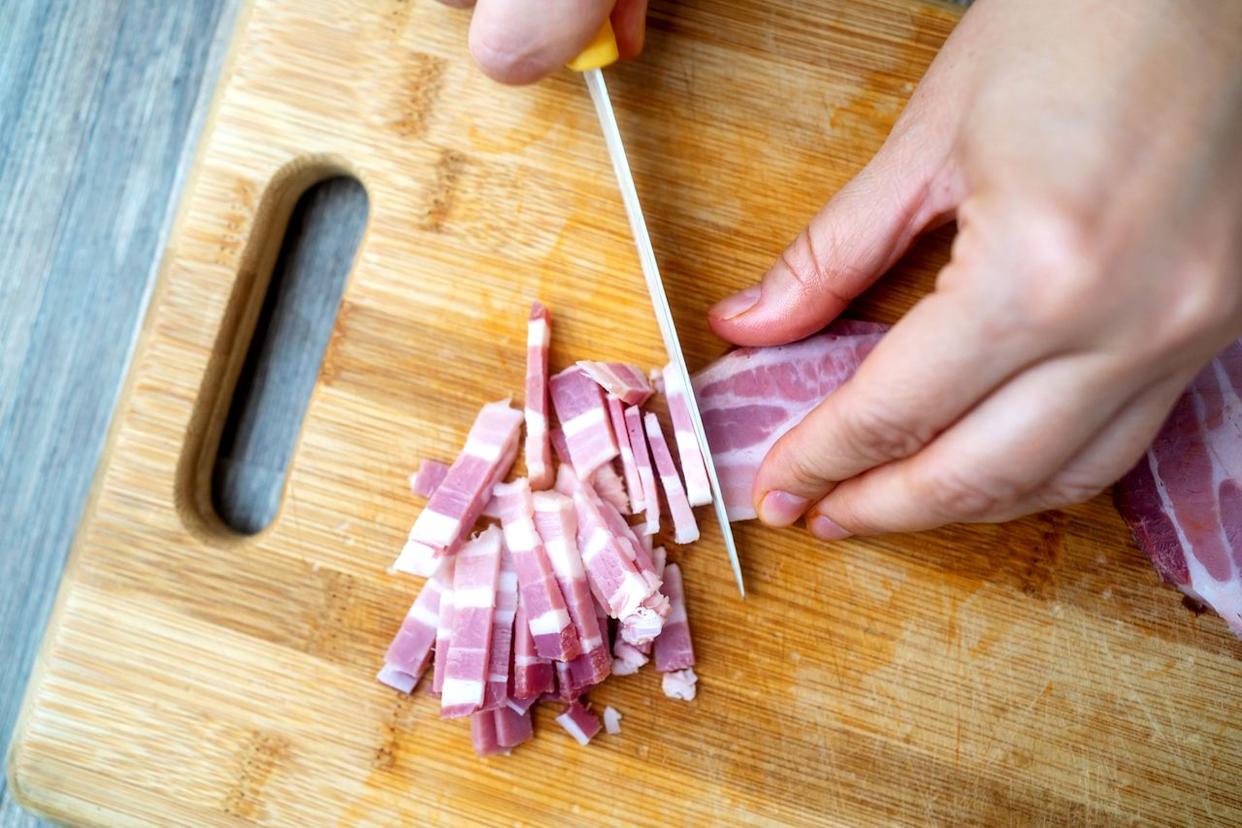
Many homemade clam chowder recipes call for bacon or some type of pork, so introducing these flavorful meats is an easy way to zhuzh up the canned stuff, especially if you’ve taken the previous tip to reduce the salt content by adding low-sodium stock. “The first thing I’d do is add some bacon,” says Givens. “And dice it up nice and small.” You can also use the rendered bacon fat to sweat your aromatics (see above).
Give it a new flavor profile
Even for New England–based chefs, clam chowder isn’t so sacred that you can’t give it a spin with innovative ingredients. “Fennel or cabbage can push it toward a more French profile,” says Gaudet, “while larger pieces of pork, ginger, or aromatics can take it in an Asian-leaning, chowder-meets-pork-stew direction.”
Related: Where to Taste the Best Clam Chowder in Boston
Punch it up
Canned soups can sometimes suffer from blandness despite serious sodium levels, but there are myriad ingredients that can enhance the flavor with minimal effort. “To spruce up canned chowder I would want to give it freshness, punch, or both,” says Rae. “Fresh cream, lemon juice, or a dash of black pepper can help. A little hot sauce is great, too.”
Give it a garnish
Even something as simple as a fresh garnish can be “the difference between reheating food and cooking,” says Givens. “Finish with fresh herbs like thyme or parsley, cracked black pepper, and something crunchy on top. Oyster crackers are classic but I recommend adding a little chile oil,” he says. “Now that’s personality, and how we like to take things up a notch here. And if you really want to ball out, serve it in a warm bread bowl.”
Related: The Nearly Forgotten Chowder Cracker That Julia Child Loved — and Where to Find It Today
Read the original article on Food & Wine
Dining and Cooking