
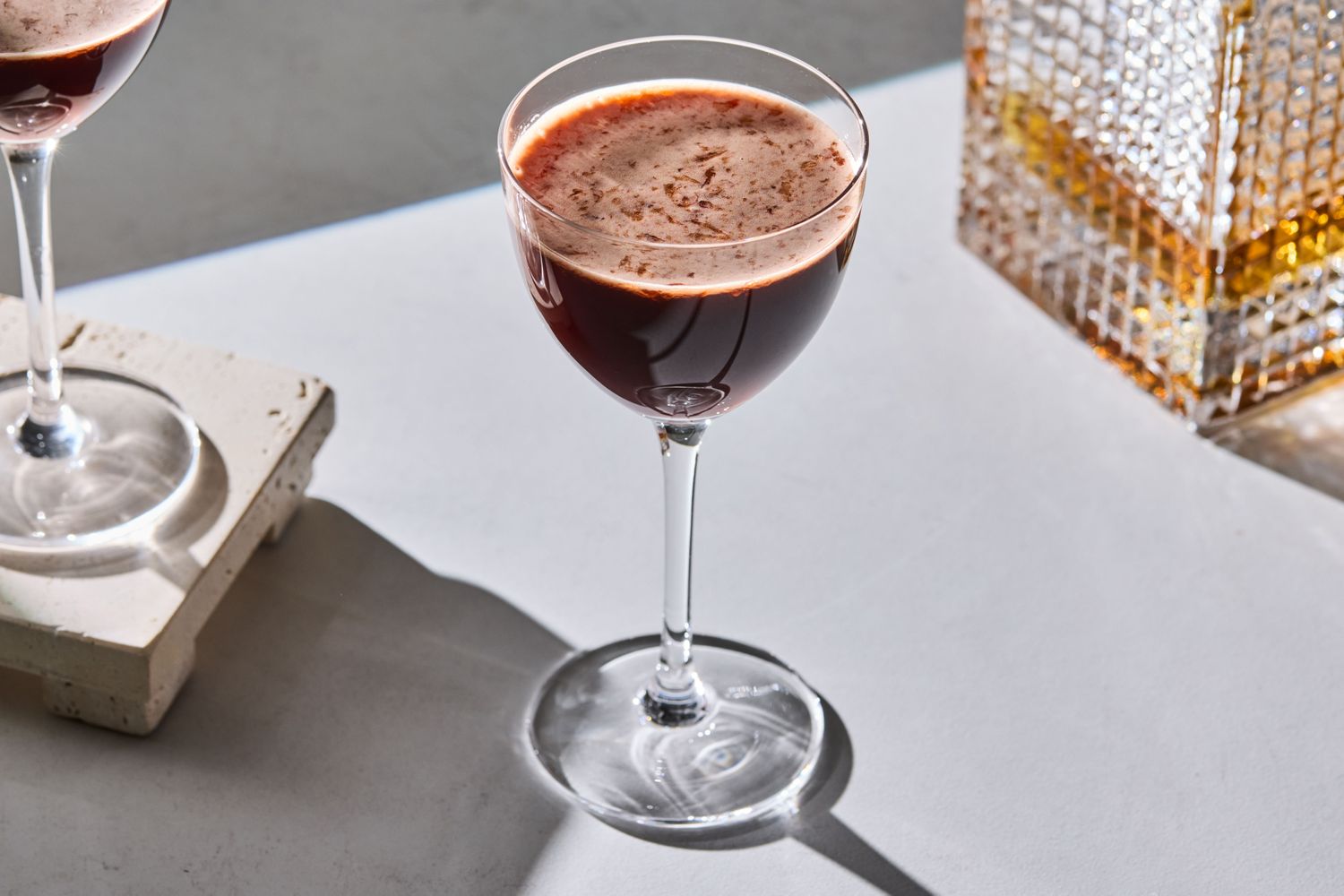
With a base of Angostura bitters, rye whiskey, lemon juice, and orgeat, the Trinidad Sour is a modern classic that turns the logic of mixing drinks upside down. The drink was created in 2009 for a competition by Giuseppe Gonzalez, who was then working at Clover Club in Brooklyn. At the time, building a drink on a full 1 ½ ounces of Angostura bitters read as either a dare or a catastrophic miscalculation. Cocktail bitters are almost always considered a seasoning, measured in drops rather than pours.
But the cocktail revival rewarded ambition. As bartenders pushed beyond faithful reproductions of pre-Prohibition classics and into new territory, the Trinidad Sour gained a cult following. Its deep reddish-brown hue and improbable specs made it a rite of passage for adventurous bar patrons. Over time, the experimental cocktail earned recognition from the bartenders and drinkers, securing its place as one of the most original drinks of the modern era. In doing so, the Trinidad Sour proved that even the most sacred “rules” of balance were open to interpretation.
Why the Trinidad Sour works
On paper, the Trinidad Sour appears unbalanced to the point of absurdity. Angostura bitters, bottled at around 45%ABV, are intensely aromatic and structured around clove, cinnamon, gentian, and other tightly guarded botanicals. In most drinks, a dash or two supplies depth. At 1 ½ ounces, they serve as the base spirit, adding alcohol weight, tannic grip, and, most importantly, a dense core of baking spice.
The key to the drink’s viability is orgeat. At a full ounce, the almond syrup provides both sweetness and texture, softening the sharp edges of the bitters with a creamy, nutty roundness. Rather than simple syrup, orgeat adds dimension, preventing the cocktail from reading as medicinal.
The measure of lemon juice gives just enough acidity to brighten and structure the drink, while remaining restrained enough to avoid amplifying the bitters’ astringency. The rye whiskey acts as connective tissue. Its peppery grain and oak notes reinforce the spice profile while lending familiarity to an otherwise radical composition.
Properly chilled and diluted, the finished cocktail is intensely aromatic yet surprisingly cohesive with a profile that’s warmly spiced, lightly nutty, and tart. It’s a drink that shouldn’t work by conventional standards, and yet, in the glass, it resolves into something singular and unique.
Dining and Cooking