
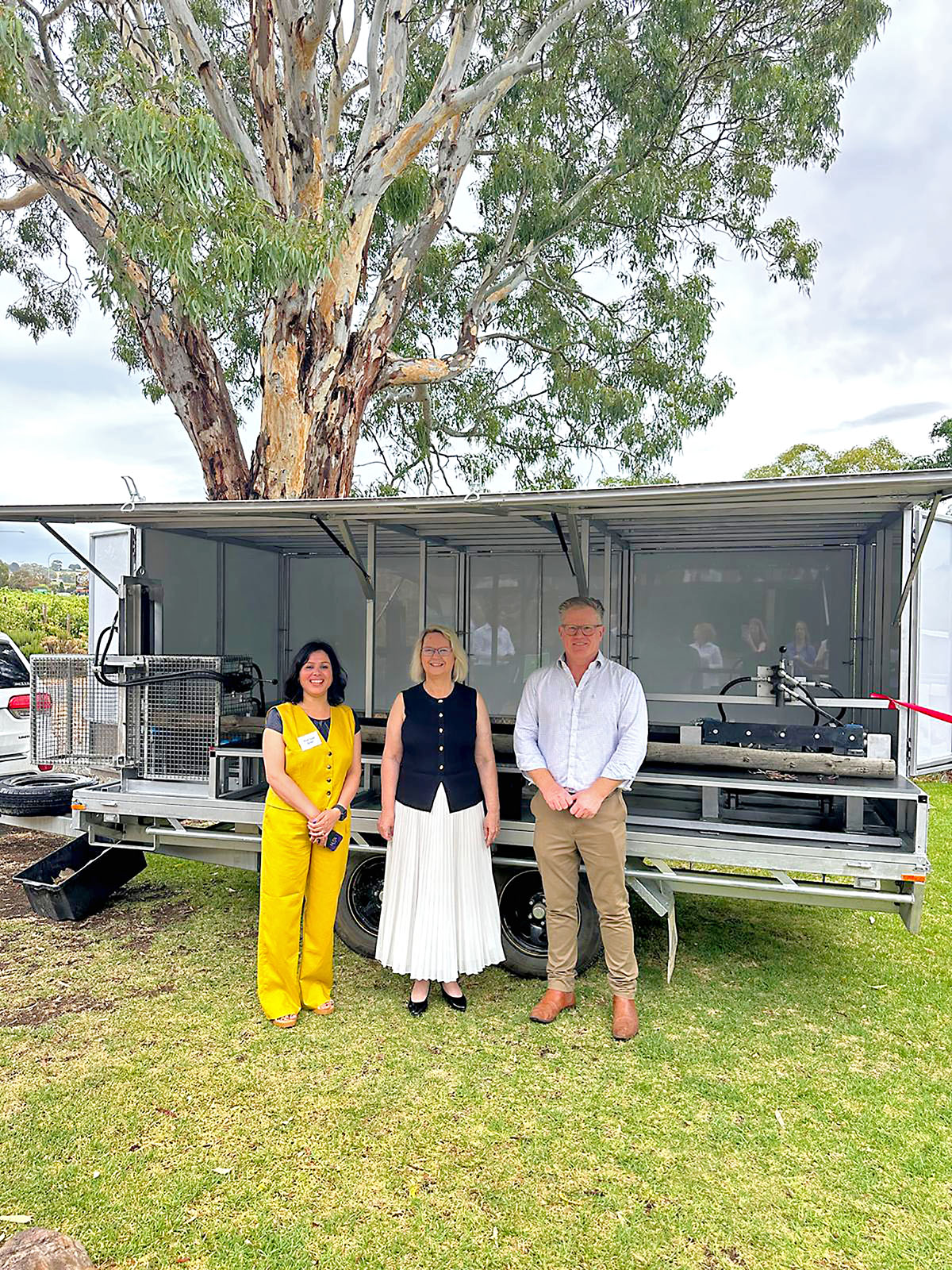
Practical and safe ways to re-use growing stockpiles of vineyard posts are being explored through a new pilot project launched as part of the South Australian Wine Recovery Program.
Through the Department of Primary Industries and Regions, the State Government is co-investing $150,000 into the project along with the National Centre for Timber Durability and Design Life and the University of the Sunshine Coast.
Delivered by one of Australia’s leading vineyard management companies – Food and Beverage Australia Limited (FABAL) – the project aims to find safe and sustainable solutions for stockpiled CCA treated posts.
It is estimated there are around 89 million posts in vineyards across the country, with about half located in South Australia.
Timber trellis posts are treated with Chromated Copper Arsenate (CCA), a timber preservative to protect against fungal and insect pests.
CCA can release toxic arsenic gas and ash when burned, making disposal difficult and subject to strict environmental regulations.
As a result, broken posts and posts from removed vineyards are often stockpiled on properties.
Three vineyards across South Australia will participate in the pilot and explore ways to re-use the posts for agriculture fencing, the logistics of moving them from vineyards to processing sites, and regulatory and safety considerations for handling and cutting the timber.
The study will also assess regional demand and economic viability for re-use.
Minister for Primary Industries and Regional Development Clare Scriven said the project builds on the success of a similar initiative in New Zealand, which has successfully turned broken CCA-treated vineyard posts into fencing, extending their lifespan and reducing waste.
“I am acutely aware of the impact of the global wine oversupply and have been actively working with industry groups to address the challenges facing the sector,” she said.
“In 2024, I proposed and established a national Viticulture and Wine Sector Working Group to provide advice on how to move the wine sector to a sustainable supply demand balance.
“One of the working group’s recommendations was to address barriers for growers to exit and diversify their farms including investigating options to support vineyard waste management and solutions for vineyard posts.
“By investing in innovative projects like this pilot, we are supporting our wine producers to minimise environmental impacts and safeguard the health of our communities.”
Minister Scriven said the initiative strengthens the long-term sustainability of one of our state’s most valuable industries.
National Centre for Timber Durability and Design Life Director Professor Tripti Singh, Director said the group was thrilled to see PIRSA backing the important initiative.
“South Australia’s wine industry is facing a growing challenge with stockpiles of used vineyard posts, and this pilot is an important step in developing scalable, circular solutions that address this issue,” he said.
“By exploring safe, practical ways to recover and reuse timber posts, we are supporting the industry to move toward more sustainable resource management and waste reduction practices.”
Reuse Pilot Partner FABAL Group’s Ashley Keegan welcomed the pilot project.
“This pilot is an exciting opportunity to investigate what’s possible when timber is given a second life, in this case the potential for used vineyard posts to be safely recovered, processed, and reused in new applications,” she said.
“We will be sorting, de-nailing, and grading posts to ensure quality and safety, and working closely with the supply chain to explore the economics of getting these materials back into use.
“We’re proud to be exploring one potential part of the solution to not only reduce landfill but also potentially create local jobs, showcasing locally developed technology, and working towards a sustainable, circular solution for the wine industry.”
Dining and Cooking