
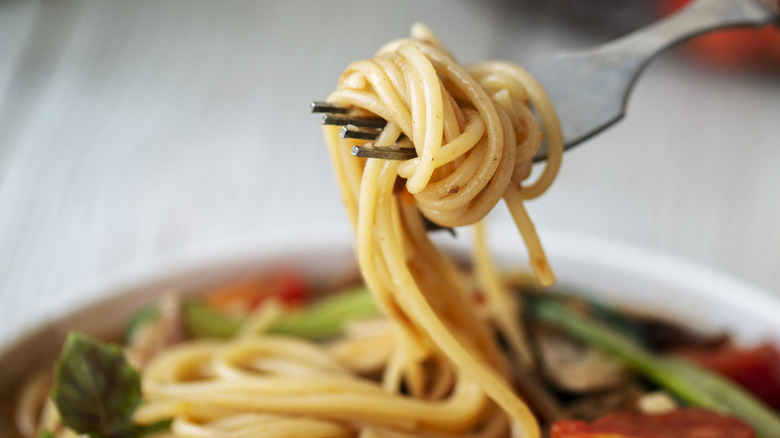
Who doesn’t love pasta? Whether you’re trying to feed a picky toddler or sitting down at the finest restaurant in town, pasta is on the menu. Even if you’re gluten-free, keto, or grain-free, there’s a noodle variety or pasta-inspired alternative promising to satiate your cravings. It’s easy to see what makes pasta such a beloved staple: it’s inexpensive, easy to prepare, filling, and a crowd-pleaser. The average American consumes about 20 pounds of pasta each year, while Italians eat an average of 60 pounds per year. But while some might think a plate piled high with pasta is just taking a note from Italian cuisine, in reality, the sheer volume of carbohydrates is a big difference between typical Italian and American meals. Italians may eat a lot more pasta annually, but Americans tend to eat larger servings of it in one sitting.
When you eat too much pasta in a meal, you’ll certainly feel full, but Kathleen Benson, a certified registered dietitian at VNutrition, says there’s a difference between feeling full and feeling nourished. Specializing in sports nutrition and digestive health, Benson is well-versed in fine-tuning the balance between what we eat and how we feel. “Pasta itself is not inherently a problem,” Benson tells Tasting Table. (Did you hear that? It being unhealthy is just one of many myths about pasta you can stop believing.) However, Benson says portions and nutrient balance matter. “Where I tend to see issues is when it becomes the main thing on the plate most nights and everything else kind of shrinks around it,” Benson explains, adding, “Over time, that can affect satiety, blood sugar stability, and overall diet quality.”
Read more: 13 Facts You Should Know About Olive Garden
How to enjoy pasta without the ill effects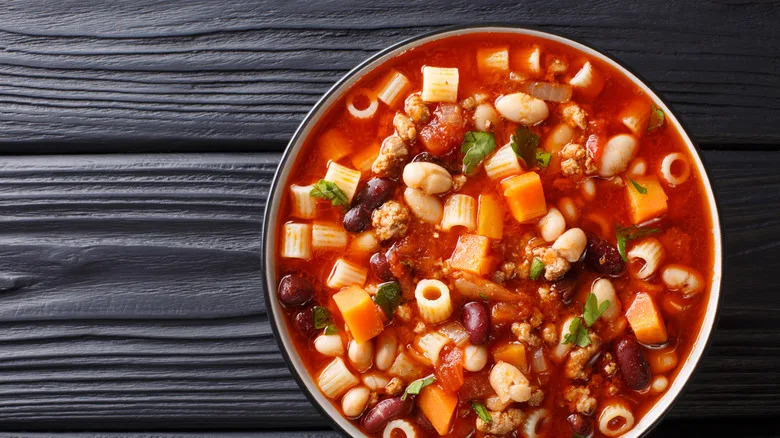
Many point to the Italian diet as a picture of (enviable) healthy eating, crediting their embrace of fresh-baked bread, in-season produce, simple proteins, and, of course, hand-made pasta to Italy’s long life expectancy. (It’s worth noting here that the pasta in Italy isn’t the same as the stuff in your pantry.) Kathleen Benson explains the key lies in the balance of ingredients to create healthy meals. “If meals are heavily centered around refined pasta without much protein, fiber, or vegetables, someone can feel very full but still not be getting a balanced mix of nutrients,” she tells us.
Large portions of pasta on its own, or without enough protein, veggies, and healthy fats, can cause blood sugar levels to rise, which can impact insulin response over time. “Portion sizes are also tricky,” Benson says. “A standard serving is about one cup cooked, but most restaurant plates are easily three or four cups, sometimes more.”
To avoid the ill effects of too much pasta, Benson recommends being intentional about the ratio of pasta and other foods in your meals. “One practical approach is to mix pasta with vegetables, beans (think fagioli), or lentils so the volume stays satisfying but the ratio shifts,” Benson says. Another tip? “Choosing a higher fiber option like whole wheat or legume-based pasta (like chickpea pasta) can also help,” Benson suggests, “especially if someone eats it regularly.”
Want more food knowledge? Sign up to our free newsletter where we’re helping thousands of foodies, like you, become culinary masters, one email at a time. You can also add us as a preferred search source on Google.
Read the original article on Tasting Table.
Dining and Cooking