
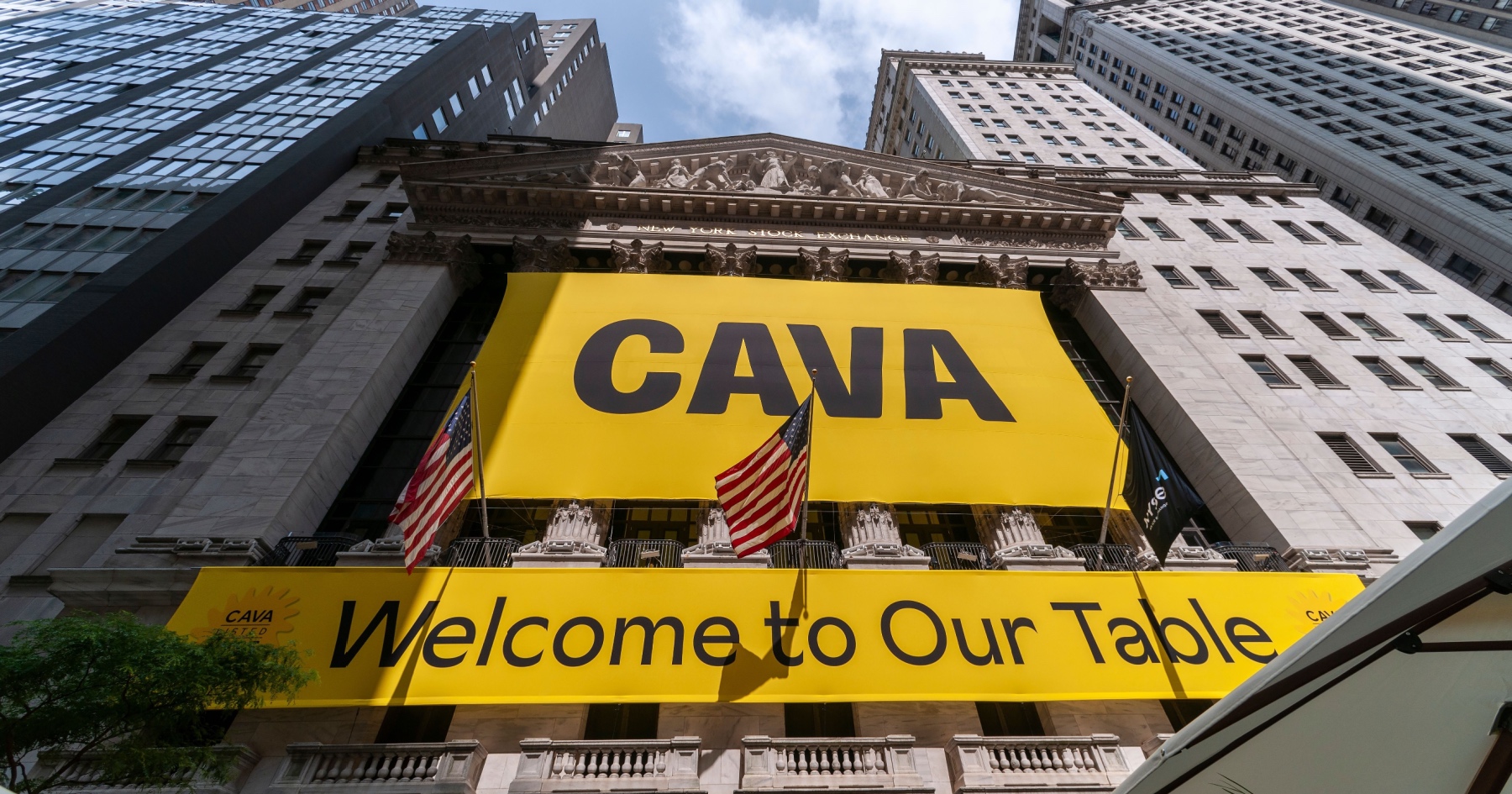
Cava’s revenues in 2025 crossed the $1 billion threshold. | Photo: Shutterstock
Cava took less than half of the menu price increases of its peers in 2025 and that “everyday value” positioning apparently paid off.
The fast-casual Mediterranean chain’s same-store sales increased 0.5% in the fourth quarter, with a 1.4% decline in traffic, the company said on Tuesday. That was better than investors expected, given tough comparisons, sending the company’s stock soaring more than 10% in off-hours trading on Wednesday.
For the full year, same-store sales were up 4%, including a 1.6% increase in traffic, despite a challenging macroeconomic climate that has created problems for the chain’s rivals, including Chipotle and Sweetgreen.
Cava’s annual revenue passed the $1 billion mark for first time in 2025, just two years since the fast-casual chain went public and 15 years after it was founded.
Revenue for the year was up 22.5% to $1.2 billion, boosted by the opening of 72 restaurants for a total of 439.
Investors were braced for sales declines in the fourth quarter, given the government shutdown and its impact on Cava’s home market of greater Washington, D.C., along with tough comparisons. Cava’s same-store sales a year ago were up 21.2%, with traffic up nearly 16%. So, on a two-year basis, Cava’s same-store sales were up 21.7%.
For most in the limited-service segment, 2025 was a challenging year, with intense promotional discounting, said Brett Schulman, Cava’s, co-founder and CEO.
And, while that resulted in some “buying of transactions in other places,” discerning consumers “are gravitating back to where they find great bang for their buck.”
Cava did take an incremental menu price increase of 1.4% in January, though the base bowl did not increase in price, and that’s it for the year, Schulman said.
The economic “fog” that was hindering sales earlier in 2025 appeared to begin to clear in the fourth quarter, he said.
“We saw those headwinds abate toward the end of the year,” he said, despite the government shutdown and tariff volatility (that could rear its head again). “We saw a firming of the consumer and then strengthening as we exited the year into 2026. And I think it’s a reflection of our ability to deliver real value every day with differentiated, craveable Mediterranean cuisine.”
Cava is expecting same-store sales growth between 3% to 5% this year, and fiscal 2026 so far has started above expectations, despite the terrible weather.
Later in the first quarter, the chain is rolling out roasted salmon with a pomegranate glaze, the chain’s first seafood protein, a move made possible in part by the rollout last year of new TurboChef ovens.
Salmon will be a premium offering, but it fits well with the Mediterranean niche and hits the demand for healthful protein. The chain is also testing shrimp as a possible menu addition.
This year, the chain brought back the popular roasted white sweet potato, new power greens and a new flavor of pita chips: sumac sour cream and onion.
With the plan to open 74 to 76 restaurants in 2026, Cava is expected to cross the 500-unit threshold. Schulman said the chain is making some changes to the management infrastructure to better prepare for that next phase, as the brand works toward its goal of 1,000 units by 2032.
Cava has hired Doug Thompson (formerly of Texas Roadhouse) as chief operating officer, who starts next week.
Thompson will build on a Flavor Your Future team-member development program launched last year, which included the creation of a new assistant general manager position, which Schulman said is designed to create a deeper bench of role-ready leaders. He said 60% of those AGM positions are filled and most from internal promotions.
Cava also introduced two zone leaders, who will report directly to Thompson, splitting the country to increase focus, accountability and leadership proximity. The chain also narrowed the span of control for regional leaders to deepen their restaurant engagement and ability to coach.
And Cava added a new market leader role to create “a clear span breaker” between regional and area leaders, strengthening day-to-day support and execution at the local level, he said.
Meanwhile, Cava is adding another city (after Houston) to its test of catering. And, despite Schulman’s belief that catering could be a significant sales driver, that move is likely to be deliberately slow to go national, he said.
“We’re just trying to be very thoughtful and very, very methodical, because the production rhythm of catering is very different than our traditional channels in restaurant and digital. It’s highly concentrated, high volume,” he said. “We want to make sure we have the load balancing through and correct, and that we have our operators positioned, and our guest user experience up to the par of our other channels.”
Members help make our journalism possible. Become a Restaurant Business member today and unlock exclusive benefits, including unlimited access to all of our content. Sign up here.
Lisa Jennings is a veteran restaurant industry reporter and editor who covers the fast-casual sector, independent restaurants and emerging chain concepts.
View All Articles by This Author
Dining and Cooking