
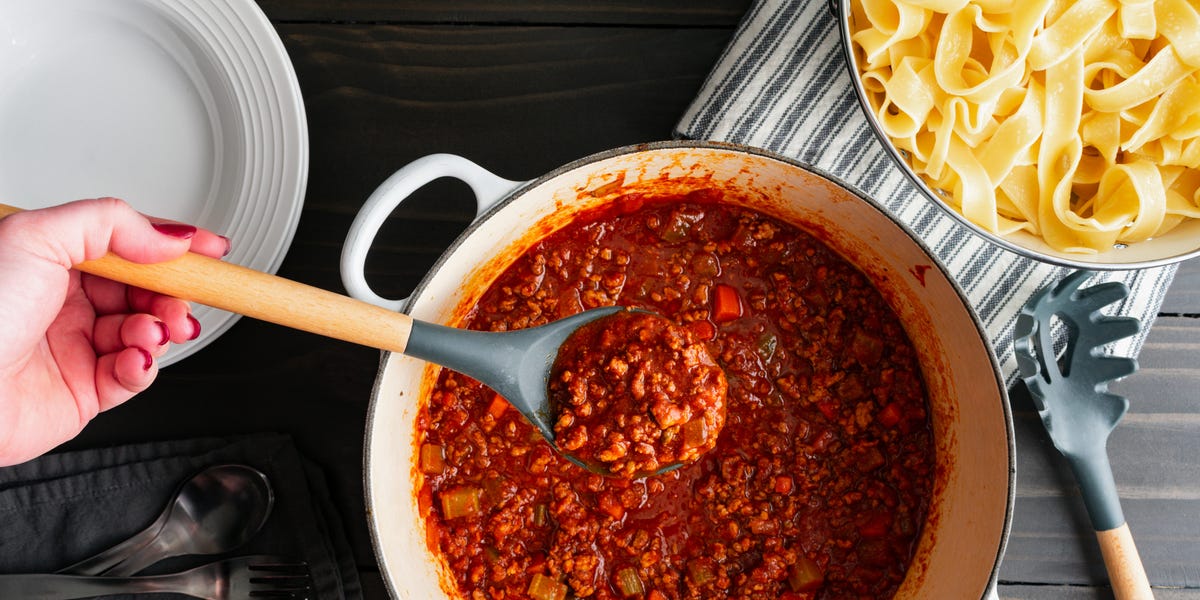
If your pasta sauce sometimes tastes a little too sharp or acidic, TikTok thinks it has the answer: add a carrot. The viral tip – often framed as an old-school Italian trick – suggests dropping a single carrot into simmering tomato sauce to mellow acidity and add natural sweetness. For home cooks trying to cut back on added sugar without sacrificing flavour, the idea feels both wholesome and ingenious.
But does it actually work? And more importantly, when should you reach for a carrot instead of a sugar bowl?
How a carrot can mellow tomato sauce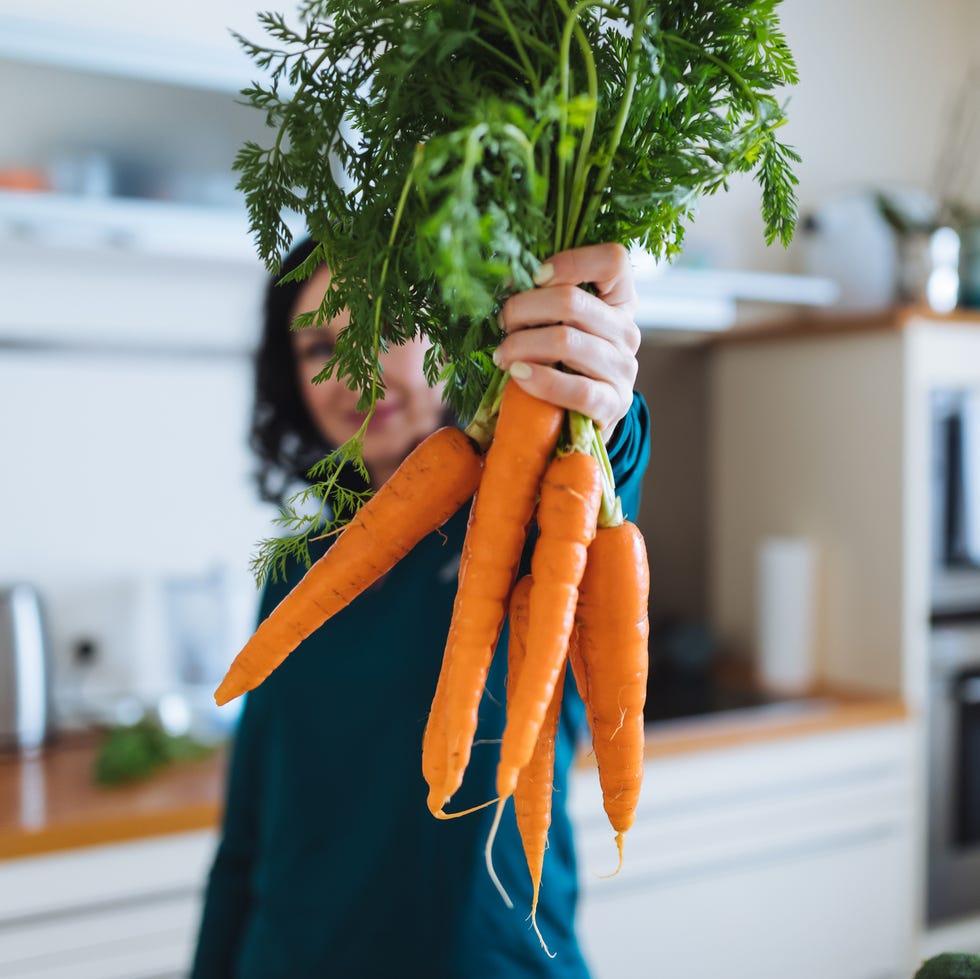
Tatsiana Volkava//Getty Images
Tomatoes are naturally acidic, which gives pasta sauce its bright, tangy backbone. Depending on the variety, season or whether you’re using canned tomatoes or jarred sauce, that acidity can veer into harsh territory. Carrots contain natural sugars that are released during cooking and, when simmered slowly, they add a gentle sweetness that softens sharp edges without making the sauce taste sugary.
Tina Martinez, food producer and recipe developer at Good Housekeeping US, says she learned the method from her Italian mother and still relies on it today. She has experimented with shredded and finely chopped carrots and often blends the sauce afterward so they fully disappear into a smooth texture. ‘When cooked slowly, carrots release their natural sweetness, which gently softens the sharpness of the tomatoes without imparting a noticeable carrot flavour,’ says Martinez. ‘Additionally, allowing the sauce to simmer and reduce over time further enhances its natural sweetness and depth.’
The right way to use this viral trick
While TikTok often shows a whole carrot tossed into the sauce at the end, experts say timing matters. Martinez recommends adding carrots at the beginning of the cooking process, so they soften and release their sugars properly. She typically sautés the carrot alongside onions in olive oil, then adds the tomatoes and allows the sauce to simmer until the flavours develop. For a cohesive, velvety texture, she finishes by blending the sauce so the carrot becomes fully integrated.
Does it work for homemade and jarred sauce?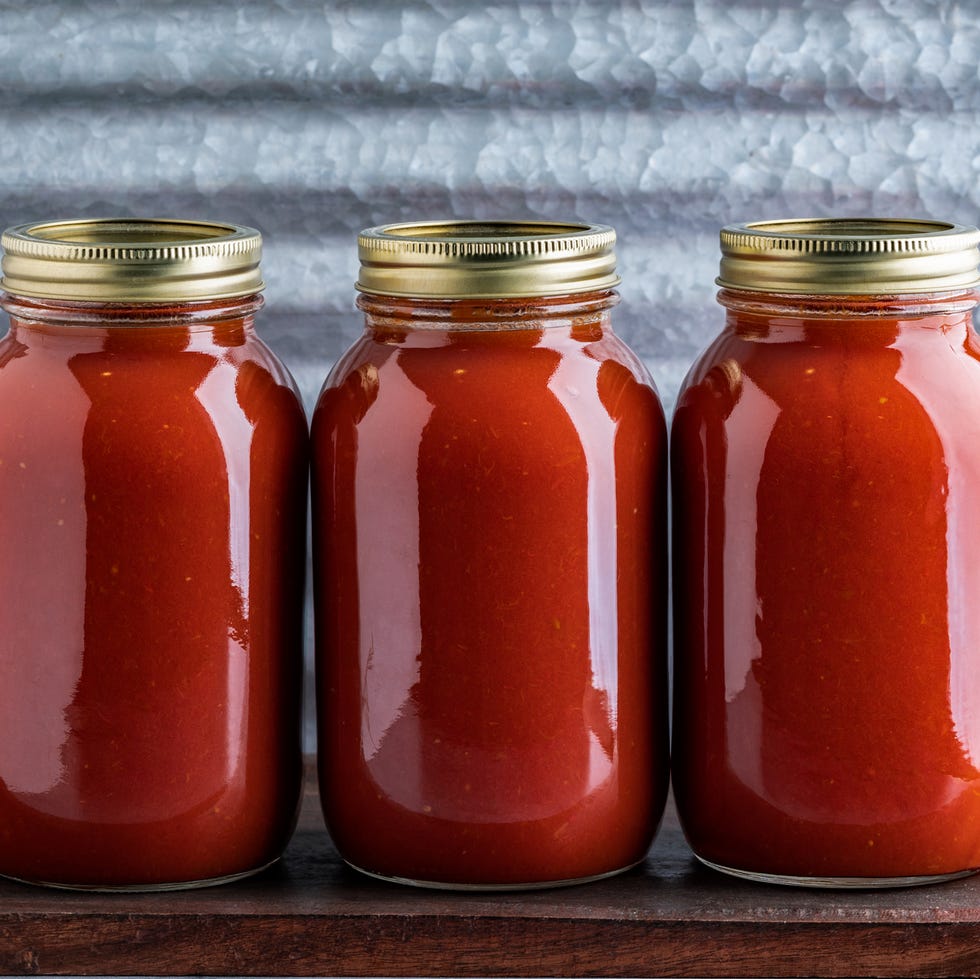
eurobanks
This technique shines in homemade sauces, where longer simmering allows flavours to meld and deepen. That said, it can also improve jarred sauce. Simmering a store-bought sauce with a sautéed carrot for about 15-20min can mellow acidity and add a more ‘from scratch’ taste.
Can a carrot replace sugar entirely?
Carrots don’t completely replace sugar, but they offer a more nuanced balance. Instead of masking acidity, they complement the tomatoes and round out the flavour. That distinction matters: sugar delivers quick sweetness but can flatten complexity if overused, while carrots support a deeper flavour profile – especially when paired with proper reduction. Martinez also avoids honey in tomato sauce because its distinct sweetness can alter the overall flavour of the dish.
Texture matters more than you think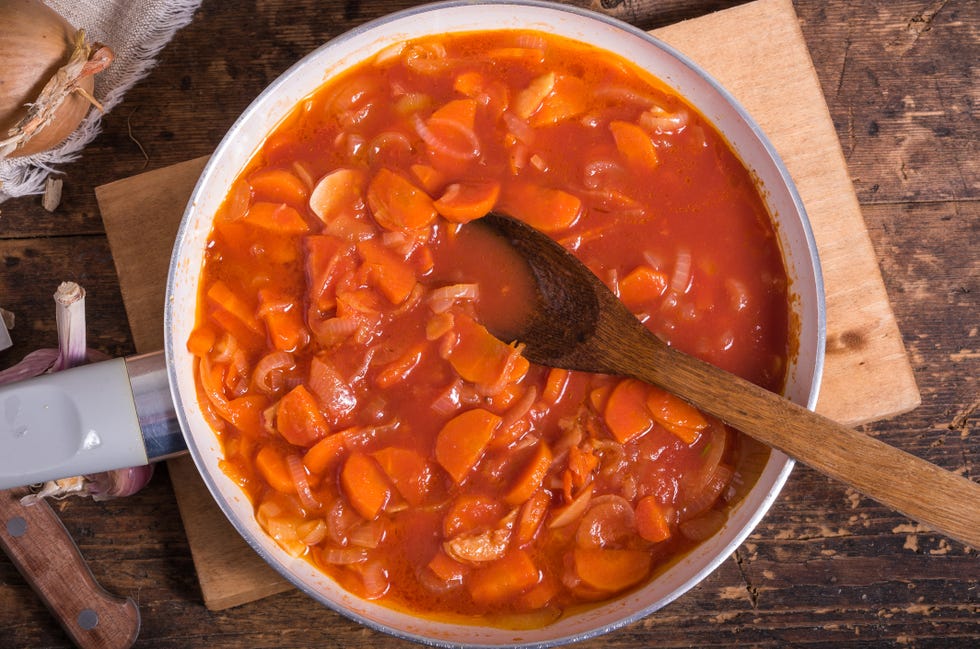
Stanislav Ostranitsa//Getty Images
If texture is a concern, preparation makes all the difference. Finely grating the carrot allows it to melt into the sauce, while a small dice adds subtle body; you can also do the full carrot à la TikTok as long as you simmer for long enough to ensure the sweetness comes through. Blending at the end creates a silky, restaurant-style finish and is especially useful when serving picky eaters or anyone who prefers a smooth sauce.
So, yes… add a carrot?
Adding a carrot to pasta sauce won’t transform a rushed sauce into a masterpiece. But when used correctly – sautéed early, simmered slowly and blended if desired – it can soften acidity and enhance natural sweetness in a way refined sugar simply can’t.

Samantha Leal is a writer, editor, and content strategist whose work centers around all things lifestyle—beauty, fashion, drinks, food, travel, and wellness (to name a few). Basically, all the good things in life. She holds a journalism degree from the Medill School of Journalism at Northwestern University, and has held roles at Well+Good, Marie Claire, Latina magazine, and The Knot. Her byline has appeared in Refinery29, Glamour, Teen Vogue, Apartment Therapy, and more.

Stacey looks after all food and drink reviews — from coffee pods and veg boxes, to natural wine and tequila. Stacey is also founder of Crummbs, where she’s written nearly 2,000 restaurant and hotel reviews since 2013. Prior to this, Stacey wrote hundreds of in-depth buying guides for the Independent, i newspaper and BBC Good Food, as well as reviewing restaurants and interviewing celebrities in her column at Balance Magazine. Stacey has also appeared in BAFTA-nominated BBC documentary Blood, Sweat & Takeaways, where she investigated South East Asia’s food production industry, appearing on both Newsnight and BBC World Service to share her findings. Regularly checking out the latest restaurants, bars and product launches, Stacey also loves experimenting with recipes at home, and is a WSET-certified wine and spirits expert, with over 10 years of experience in the business. You can follow Stacey on Instagram @crummbs_uk
Dining and Cooking