
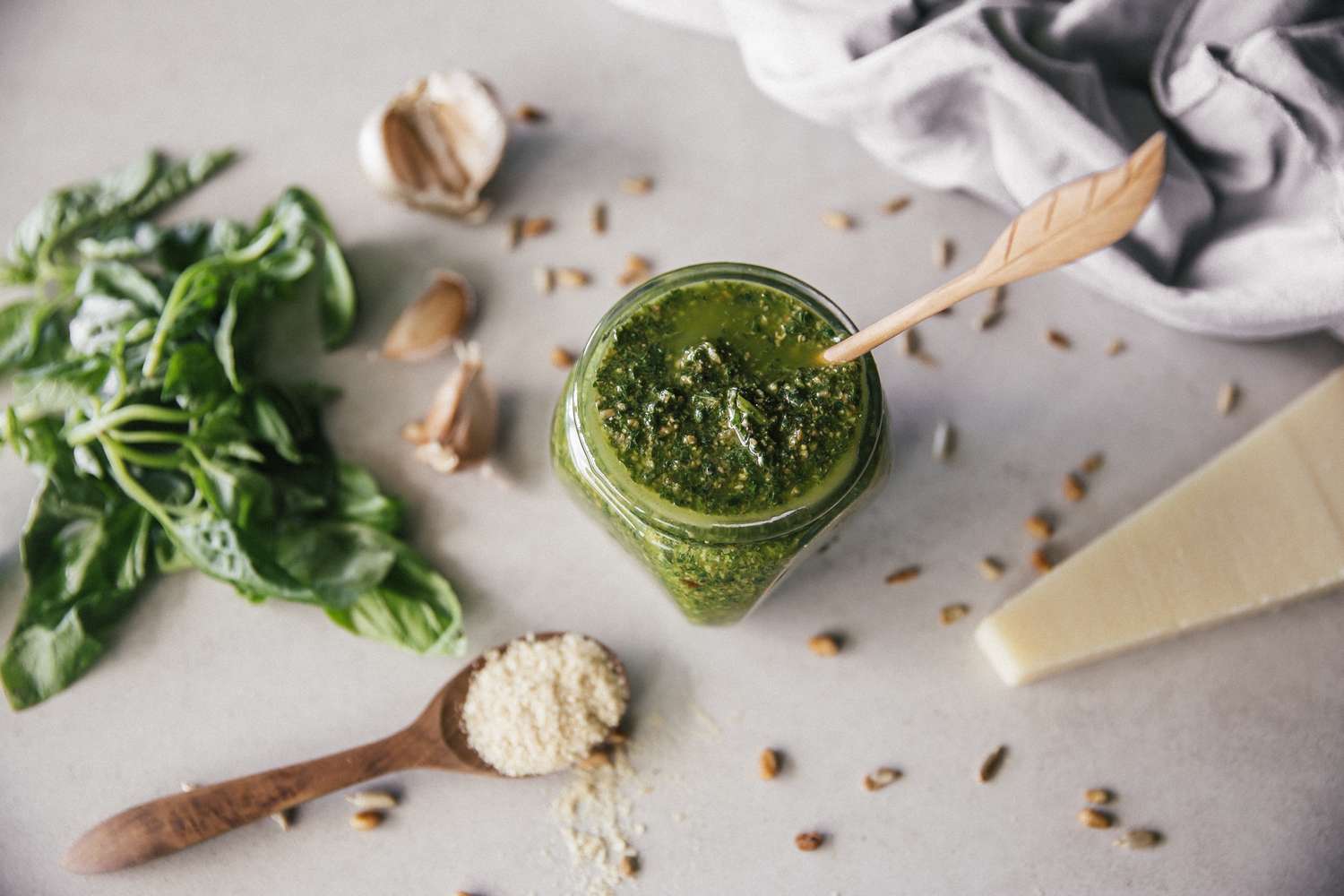
A jar of pesto should make pasta night simpler, not introduce new problems. But there’s a large range of options on store shelves, from bright and herbaceous to flat, oily, or aggressively salty. And once that sauce is stirred into your dish, there’s little you can do to fix it.
We asked a few chefs which store-bought pesto they love when they’re not making it from scratch. Ahead, they explain why this particular brand and variation works and what to look for when you’re shopping for pesto yourself.
Matt Harding, executive chef and chief innovation officer at PIADA Italian Street Food
David Davidov, home chef, baker, and founder of The Cooking Foodie
Katie Vine, chef, recipe creator, and founder of Dinners Done Quick
What to Look for When Buying Pesto Sauce
A quality pesto is easier to identify than you might think. Experts say these straightforward checks can help you choose a jar that tastes homemade.
Quality Ingredients
The first step to evaluate most grocery store products is to head to the ingredient label. “The most important thing for me is ingredient quality,” says David Davidov, home chef and founder of The Cooking Foodie. “I also look for a short, simple ingredient list with basil, olive oil, nuts, good-quality cheese, garlic, and salt.”
Matt Harding, executive chef and chief innovation officer at PIADA Italian Street Food, says to look for those base ingredients, then scan for any ingredients added for preservation, like citric acid. “But that should be it,” he explains. “The longer the list, the ‘heavier’ the container should become, so much so that it only deserves a place on the shelf and not in your cart.”
All the experts recommend looking for real ingredients, like basil, garlic, pine nuts, Parmesan cheese, and salt. Harding avoids products with other herbs like parsley that are used to cut costs.
Real Olive Oil
While the other ingredients are important, the real difference maker is the type of oil. “Ideally, pesto should be made with extra virgin olive oil only, without cheaper oils mixed in,” Davidov says. “I personally prefer pesto made exclusively with olive oil for a more authentic flavor.” Harding adds that he prefers brands that make a point to use extra virgin olive oil.
Balanced Flavor
When evaluating store-bought pesto, the actual taste and texture are just as important as the ingredient list. “I also pay attention to flavor balance; pesto shouldn’t taste overly acidic or oily,” Davidov says. “Good pesto should taste fresh, herbaceous, and cheesy, almost like homemade. Texture matters, too. It should be slightly coarse and spoonable, not completely smooth.”
No Added Sugar
Even salty sauces like pesto can have some added sweetness where it doesn’t necessarily belong. “When it comes to shopping for pesto, I make sure that there is no added sugar (because you don’t need it in pesto!),” says Katie Vine, chef and founder of Dinners Done Quick. Also, she recommends taking a close look at the type of nuts used, since everyone has their own preference. “If you’re like me and dislike a certain type of nut, it’s important to check which nuts are being used, as you’ll see everything from pine nuts to walnuts to almonds out there!”
Glass Bottle
Lastly, just general “good practices” for buying anything: check the expiration date. “Look for a vibrant green color (no browning),” Vine says, who recommends glass bottles that keep flavors better than plastic. In general, glass jars are nonreactive and less permeable to oxygen than plastic. Unopened pesto typically lasts until the printed best-by date when stored in a cool pantry, but once opened, it should be refrigerated and used within about 5 to 7 days.
The Best Pesto Sauce Brand, According to the Experts
When we asked for their top pick, all the chefs chose Barilla, a brand that carries several jarred pesto flavors. Davidov prefers the Pesto Alla Genovese option: “It’s a very popular and widely-available classic Genovese pesto with a balanced basil and cheese profile,” he says. “It uses sunflower oil (not the best option in my opinion, but it’s widely available) plus a touch of extra virgin olive oil.”
Credit:
Barilla
He loves to use it as a shortcut for pasta, bruschetta, and dressings, and his choice ultimately comes down to how the pesto tastes and feels: “The flavor is balanced, with mild basil and cheese notes, and the texture is a bit smoother than traditional homemade pesto, which many home cooks actually prefer for quick meals,” Davidov says.
Harding also loves Barilla but tends to reach for the Rustic Basil Pesto flavor. “It’s my favorite store-bought pesto with a bright Italian basil flavor and fragrant aroma,” he says. “It’s widely available and an excellent everyday choice for pasta or sandwiches.” He likes that Barilla uses real basil without too much citric acid flavor to preserve freshness. He notes that the Parmesan comes through with a gentle sweetness at the end.
While Vine doesn’t use store-bought pesto as often, when she does, she usually grabs the Barilla Rustic Basil flavor as well. “It’s forward in basil and garlic flavor in particular, and it’s perfect on pasta, vegetables, and proteins (I like chicken) alike,” she says. “I’m not a fan of pine nuts, which pesto is traditionally made with, but this option uses cashews instead, so the flavor is much better for my personal tastes.” Though it’s not a perfect choice with the inclusion of sunflower oil, Barilla pesto seems to strike the right balance of quality, flavor, and texture.
Dining and Cooking