
INGREDIENTS:
150g active starter at peak rise
350g water
500g unbleached bread flour
7g sea salt
DIRECTIONS:
Mix starter and water together.
Once mixed, add in the bread flour and salt until combined. Cover for one hour.
After the hour, do three sets of stretch and folds (once every hour until three are done).
Bulk fermentation starts after the first stretch and fold so keep it covered and somewhere warm during that time. For me, it is about 6hrs, but can vary.
Once bulk fermentation is complete, dump the dough onto the counter and flatten into a rectangle.
Once in a rectangle, you can add inclusions or start folding. Take one side and fold into the middle then do the same with the other side. Roll the skinny rectangle up and do push and pulls.
Place dough ball into a floured bowl or banneton then refrigerate overnight.
8, Preheat oven to 450 – 500*F with vessel inside.
When heated, dump the dough onto the vessel and flour the top of the loaf and score.
Bake for 20min with the lid on. Take it out, remove the lid and lower the oven to 400*F and cook till crust is brown.
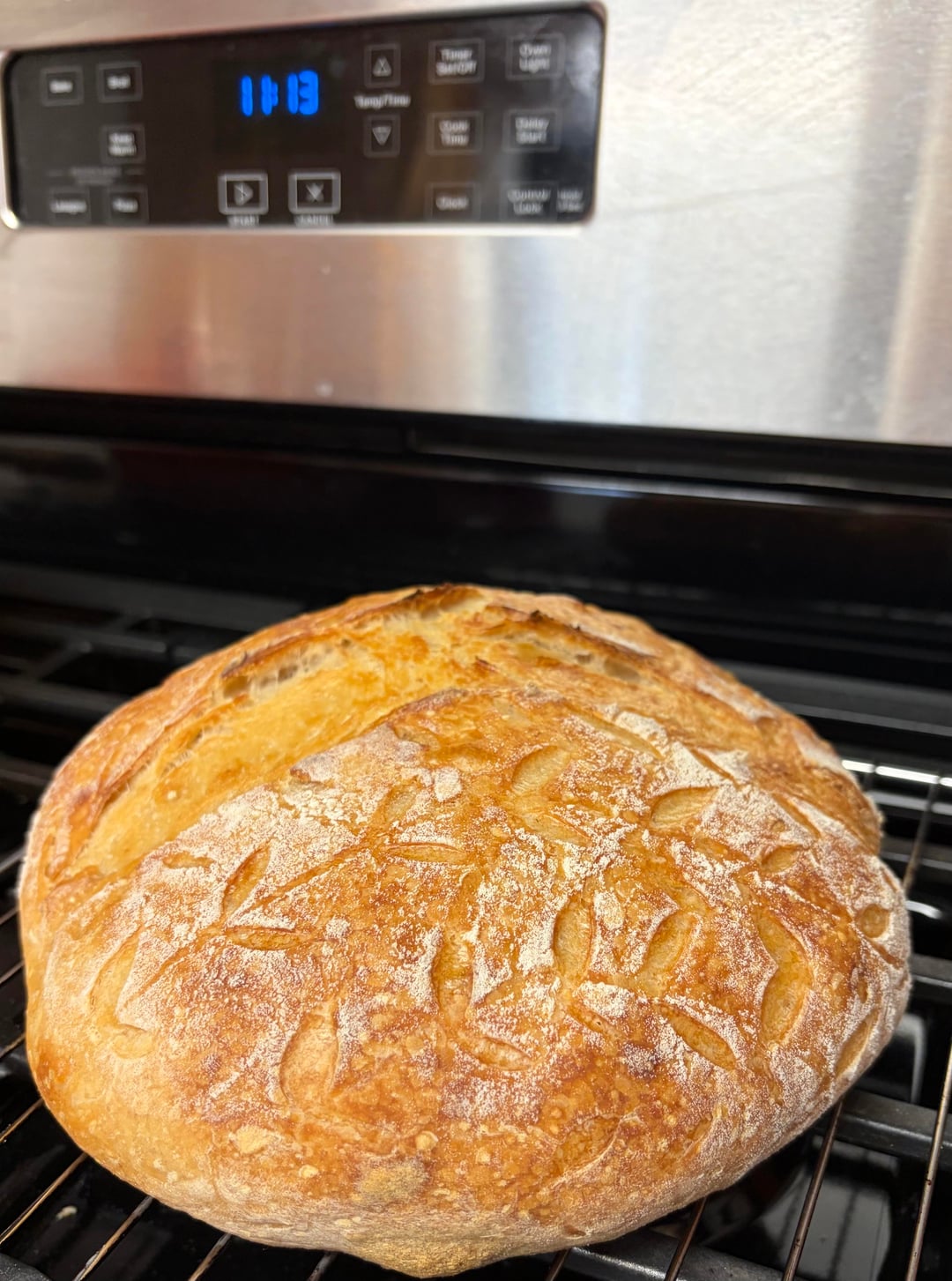
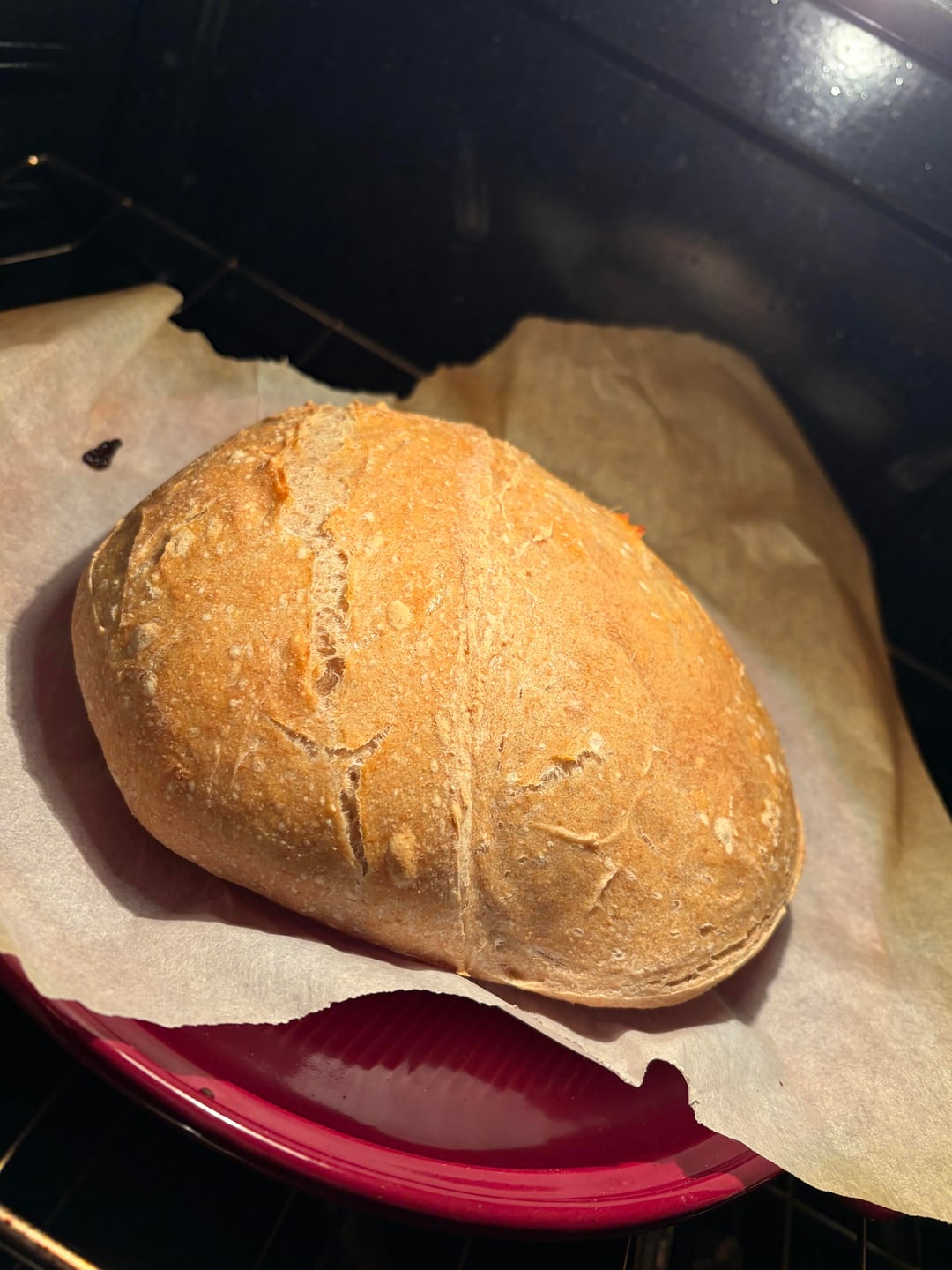
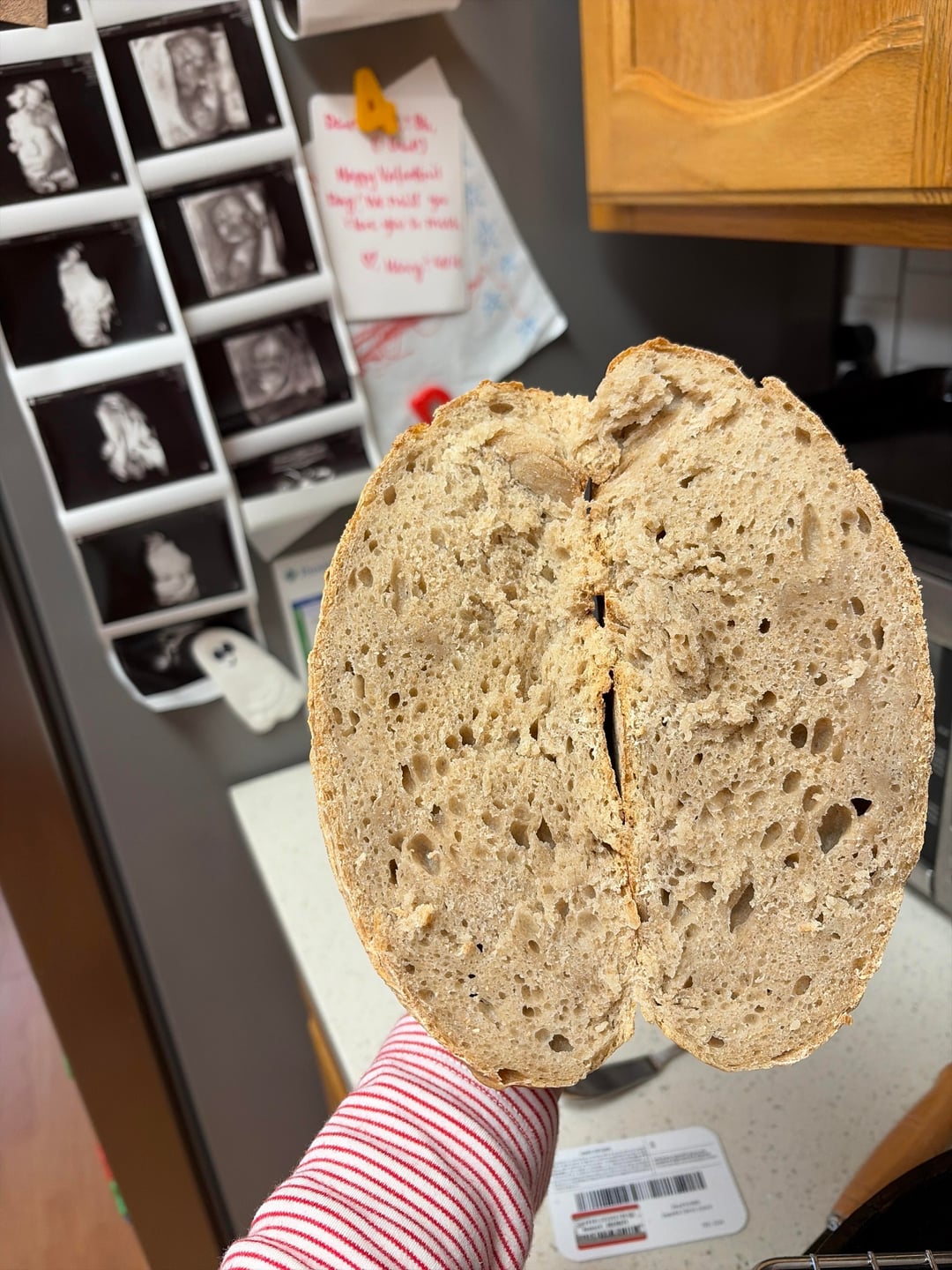
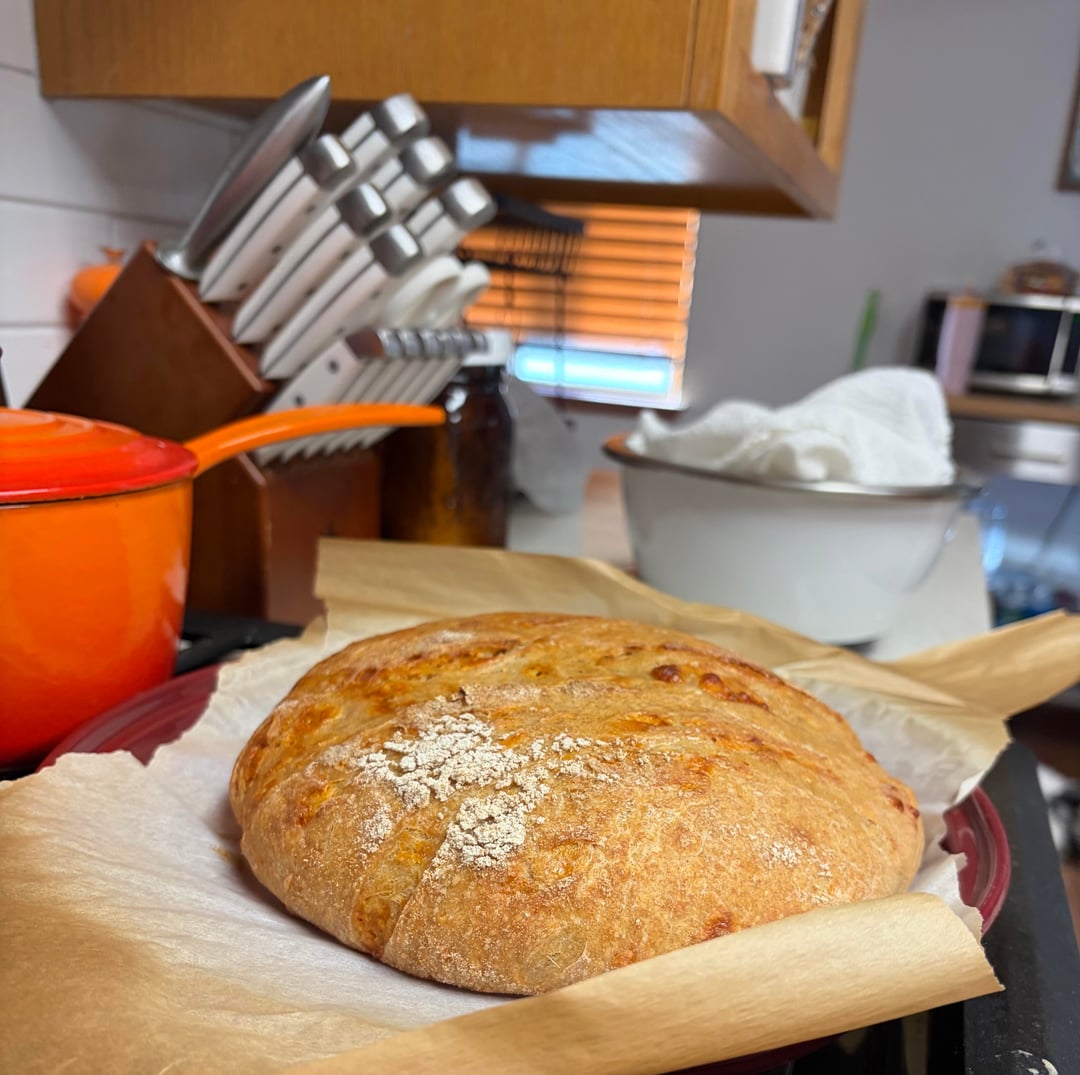
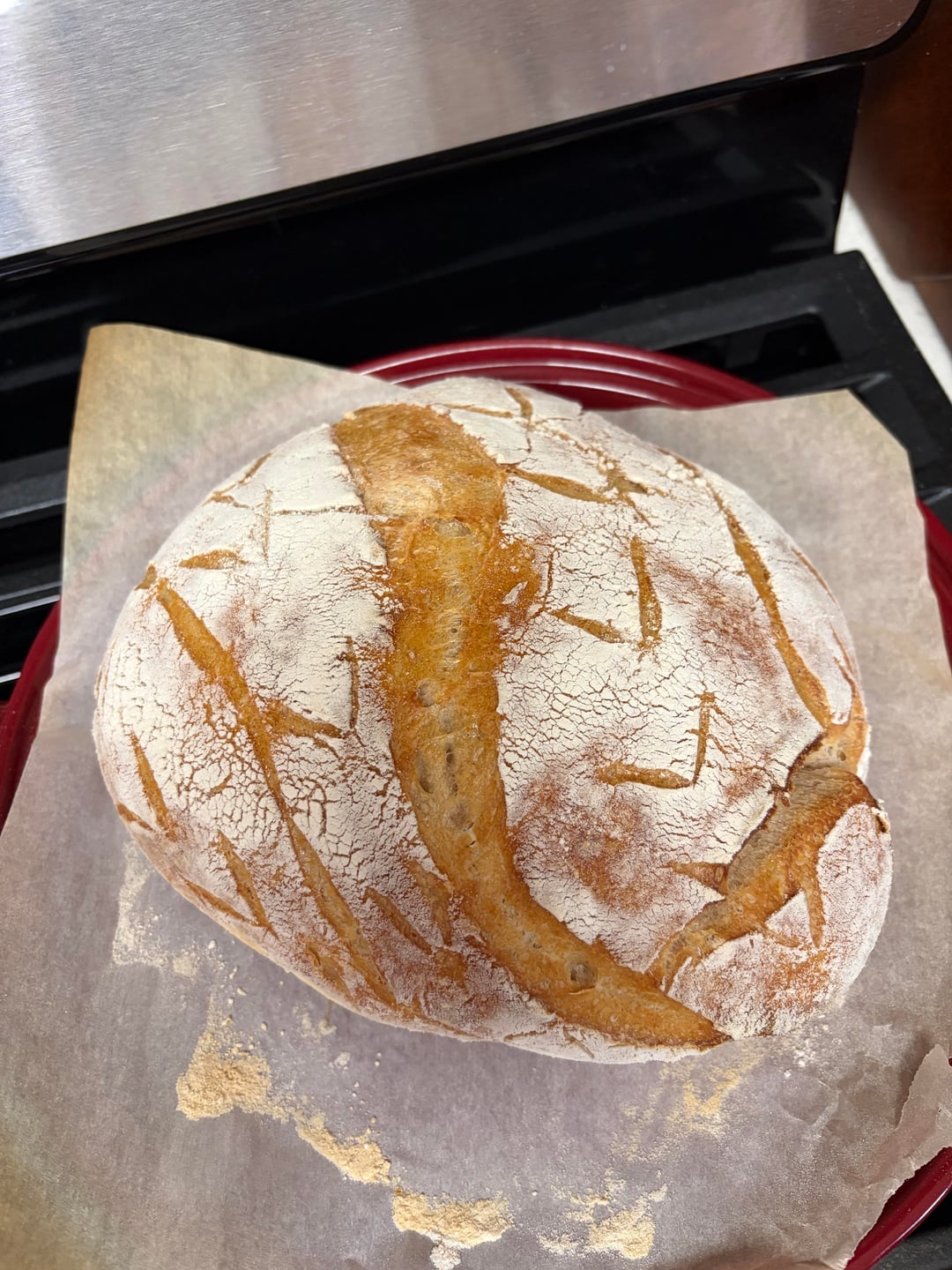
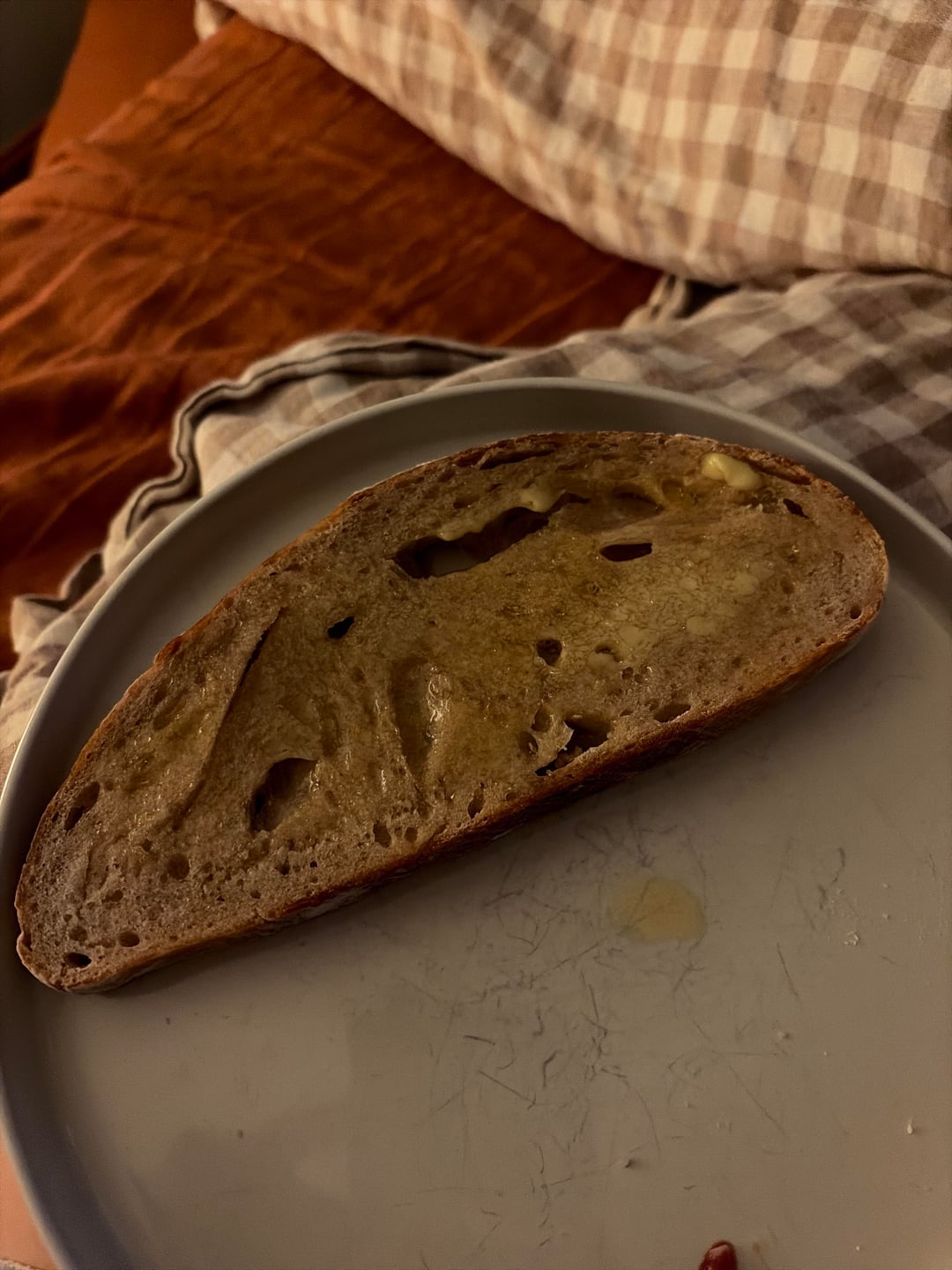
My starter is about 2 months old. Started from scratch. I feed it with all purpose King Arthur flour and sometimes add in King Arthur wheat flour. bake with King Arthur bread flour. I feel like every loaf I’ve made has been quite flat. Here’s the recipe I used for the most recent loaf (the other 3 I was trying a kitchen aid in place of stretch and folds). I tried to really spend time getting good surface tensions especially on the most recent one. I use the Emile Henry bread cloche which you can see the bottom of it in the oven photo. It’s kind of wide so maybe it just spreads out? I mean, it always tastes good so I guess it’s not a huge problem but they’re just…. Kinda flat!
A safety PSA: I cut the ever living shiz out of my finger using a bread lame this am and had to go to urgent care to get it glued together. So please, be careful lol.
by Glum-Refrigerator826
10 Comments
**Hello Glum-Refrigerator826,**
# **Bot notice – ALL posts sharing Sourdough bake pics or videos should meet [Rule 5](https://www.reddit.com/r/Sourdough/wiki/sourdoughrules/).**
(Please include ingredients & steps taken to make your bake).
# **THIS-BOT-HASN’T-READ-YOUR-POST** – this comment appears on **every single thread**.
**[Modmail us :-)](https://www.reddit.com/message/compose?to=/r/Sourdough)** with questions.
# **[READING CRUMB GUIDE ](https://www.reddit.com/r/Sourdough/wiki/reading_crumb/)**
# [Wiki index](https://www.reddit.com/r/Sourdough/wiki/index/), &
# [FAQ Beginner starter guide](https://www.reddit.com/r/Sourdough/s/gnqFg7osBO)
*I am a bot, and this action was performed automatically. Please [contact the moderators of this subreddit](/message/compose/?to=/r/Sourdough) if you have any questions or concerns.*
How warm is your kitchen? Mine is 71° and it takes 10+ hours to bulk ferment. I think yours is underproofed.
Unferproofed and not even mixing in the beginning to create strength in the dough
Can’t really say if its over or under proofed definitively, but there’s a few things in the recipe that seem odd.
Your timing after autolyse and in between stretch and folds is super long, 1 hr is too long… should be like 20-30min in between steps.
How are you determining when bulk fermentation is done? Are you putting it in a straight walled vessel and waiting for it to double?
There also seems to be no bench rest and final shape in this recipe? I think that’s pretty important to get good tension before going in the banneton.
something else to consider might be your shaping method! im fairly new too but ive never used lamination as a final shape – instead im very gentle with the dough after bulk fermentation, being careful not to pop all those beautiful bubbles.
also re: your emergency! omg! I have such a terrible dull lame that I absolutely abhor lol but your situation sounds worse
https://preview.redd.it/quo0rgf27xlg1.jpeg?width=264&format=pjpg&auto=webp&s=ca19d65b32ad200e5fda08280877229341fbfc5f
Always get one with a handle
That seems like too much starter for that amount of flour/water
It also seems like too few stretches and folds over too short a time. I was taught 4-6 stretches/folds over 2 hours AFTER shaping the dough which seems like a step this recipe is missing
Why are you flattening after BF? You should be gently shaping a boule or batard then doing a cold ferment. Not sure where the push and pulls are coming from after BF that seems wrong (if you want inclusions add them during stretch and folding)
I see many comments asking what the temp in your kitchen is and while that may give a very generalized idea as to the temp of your dough, it’s important to actually take your dough temp because it can vary quite a few degrees from the ambient temp in your home.
One thing I realized through my sourdough journey is the dough actually retains quite a bit of heat from the water temp so depending on how warm the water you’re using, that could significantly impact the dough temp.
Please get a retractable bread lame. I had to get four stitches because of mine.
I am by no means a dough expert but in my own personal experience, despite what others are saying, stretch and folding makes little difference. The only time I had loaves that ended up like in your photo was when I cold proofed.
Honestly, I have not had good experience with cold proofing. will make no attempt to justify that scientifically but it is what it is.
I know that theoretically cold proofing slows down the fermentation, but I would always let it proof a bit at room temperature before putting it in the fridge. I ended up with a couple loaves that look like yours and just went back to my usual method.