
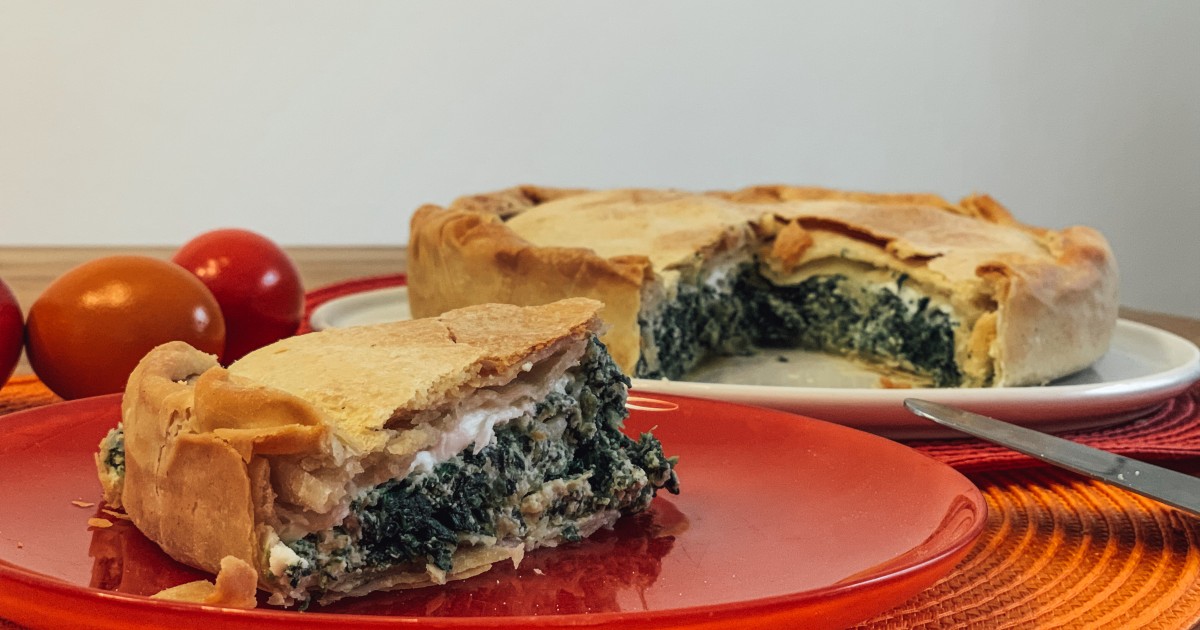
Easter in Italy is less about chocolate bunnies and more about long, noisy lunches built around recipes people have been making for generations. Easter food in Italy tends to revolve around lamb, savoury pies and a handful of very specific desserts that only appear at this time of year.
Torta Pasqualina – the classic Italian Easter pie
Torta pasqualina is a Ligurian savoury pie made with layers of pastry, spinach or chard, ricotta and whole eggs cracked directly into the filling so they bake inside.
You’ll see it in bakeries in the days leading up to Easter Sunday, and in many families, it’s served as part of the Easter lunch spread.
Casatiello – Savoury Italian Easter bread pie
Down in Campania, casatiello is one of the most authentic Italian foods to eat at Easter. It’s very specifically an Easter thing in Naples and the surrounding area.
It’s technically a bread, but it behaves like a pie: a rich dough packed with salami, cheese and sometimes pancetta. Whole eggs are pressed into the top of the dough before baking.
You’ll see it on Easter Sunday tables, but also carried out on Easter Monday for picnics during Pasquetta.
Pastiera Napoletana – the iconic Italian Easter ricotta pie
If there’s one sweet that screams Italian Easter pie, it’s the traditional Easter dessert pastiera napoletana.
Made with ricotta, cooked wheat berries and scented with orange blossom water, it has a very particular flavour and slightly grainy texture. It’s not subtle,
In Naples, it’s strongly tied to Easter traditions and rarely eaten at other times of year. Many families still make it at home during Holy Week, and bakeries start displaying them a good week or two before Easter Sunday.
Colomba Pasquale – Italy’s traditional Easter cake
You can’t talk about traditional Italian food to eat at Easter without mentioning colomba pasquale. It’s the Easter counterpart to panettone at Christmas.
It’s a soft, yeasted sweet bread shaped like a dove (colomba), topped with pearl sugar and almonds. Inside, you’ll usually find candied orange peel.
Every supermarket in Italy, from the tiniest local shop to the big chains, will be stacked with them in the weeks before Easter.
Italian Easter cookies: traditional biscuits and family recipes
Italian Easter cookies are usually made at home, especially in southern Italy and in Italian-American families. They’re simple, lightly sweet and often decorated with icing and sprinkles.
Cuddura cu l’Ova – Sicilian Easter cookie
In Sicily, cuddura cu l’ova is part cookie, part sweet bread, glazed and covered in coloured sprinkles. The dough is shaped into rings, hearts or simple plaits, with a whole egg baked into the centre.
Italian Easter knot cookies and glazed biscotti
Elsewhere, you’ll find simple knot-shaped cookies flavoured with lemon zest or sometimes anise. After baking, they’re dipped in a thin sugar glaze and scattered with sprinkles.
The most traditional Italian food to eat at Easter
If you ask, “What is a typical Italian Easter dinner?”, the answer is almost always lamb. Agnello al forno – roast lamb with potatoes, garlic and rosemary – is probably the most recognisable centrepiece of Easter Sunday lunch.
The association comes from Christian symbolism, but for many families today, it’s simply tradition rather than overt religious observance.
Stay in the know about living all things Italian and foodie—get our weekly newsletter for the latest travel, legal, and lifestyle news.
Dining and Cooking