
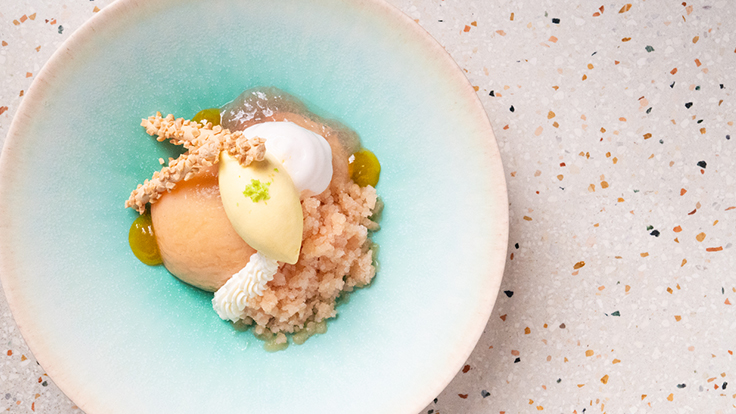
Desserts are moving beyond their traditional role as a meal’s closing note, emerging as something to be enjoyed on their own terms. At these restaurants, the dessert course is anchored by assiette de dessert — plated varieties arranged into a deliberate progression. Some restaurants draw on the spirit of Japanese tea; others coax deeper character from fruit through careful maturation. The results could not be more varied.
In this feature, six Tokyo restaurants offer a window into dessert’s evolution — richer, more dynamic and more participatory than ever. Dessert courses, in other words, are no longer just about sweetness. Salt and acid create the rhythm, while aroma, texture, temperature and even the room itself all help shape the experience.
Kukuku
At this elegant restaurant, guests watch artisans knead bean paste and form it into seasonal flowers, playing close attention to temperature and texture. The Hakka Kyucha (traditional Hakka tea tasting) course moves from Hyoro, a charcoal ice cream, and Rikyubo, a sesame mochi, to a seasonal main sweet, finished with a bowl of matcha. With every dish, tea is served freshly brewed with leaves from across Japan carefully selected by a tea master. In addition to this course, the restaurant also offers bar service, with wagashi (Japanese sweets) and sake offered à la carte for a range of occasions.
From the restaurant: “We cherish the softness and flavor that only freshly made wagashi can offer, ensuring our diners can enjoy them the moment they’re made. We hope to share a few enriching moments that reveal new and fascinating facets of Japanese sweets and tea.”
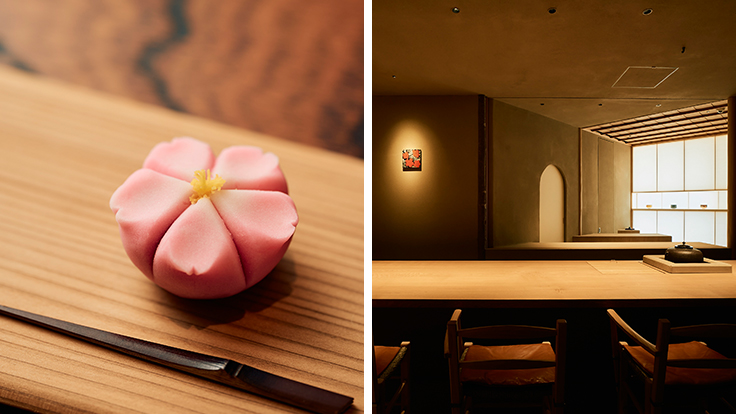
A main sweet shaped like a seasonal flower at Kukuku (left). Counter-side setting suggests the quiet vantage of a tea room (right). © Kukuku
VERT
Japanese tea sits at the heart of the dessert course at VERT, with sweets expressing a breadth of aroma and flavor. Every dish highlights the care behind the ingredients, letting their flavors shine. The Chasou Ryusui course begins with a carefully chosen cup of tea then unfolds at the counter, where sweet and savory dishes alternate as guests observe the preparations. After the final rice dish, diners are invited to the tea room, where the main sweet is served with matcha. Through eleven sweets and nine tea pairings, diners are offered a hint of the diversity of Japanese tea.
Toshihiro Tanaka, owner chef of VERT, says: “A dessert course can take many forms — each restaurant has its own voice. We hope our guests will take that first step to experience something new.”
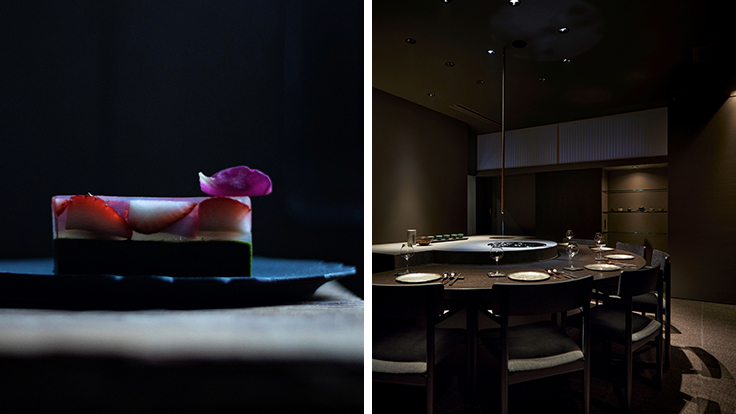
Strawberry yokan that keeps the fruit’s natural shape while building up layers of aroma (left). The low entrance and encircling seating recall elements of a traditional Japanese tea room.(right). © VERT
çayca Inspired by a fusion of Japanese and French sensibilities, this restaurant offers a contemporary take on the tea gathering. It opens with a tea master’s temae hosting, then moves to desserts finished by the pastry chef as guests look on. The Menu Saison course is a full progression grounded in French pastry technique and guided by each season’s offerings. Matcha and tea sweets are followed by a savory interlude, two dessert mains and a finale of black tea and petits fours. The course centers on sweet fruit, bright citrus, a touch of vinegar and a mix of textures and temperatures, sometimes finished with a savory side or matcha. Seasonal signature cocktails, both alcoholic and non-alcoholic, complete the experience.
Kaoru Kurihara, owner and pastry chef of çayca, says: “The name comes from the idea of restoration — a place where one regains energy. For us, the desserts, the room and the staging are all part of a single carefully composed experience. We invite guests to enjoy an assiette de dessert where Japanese and French cultures meet and mingle.”
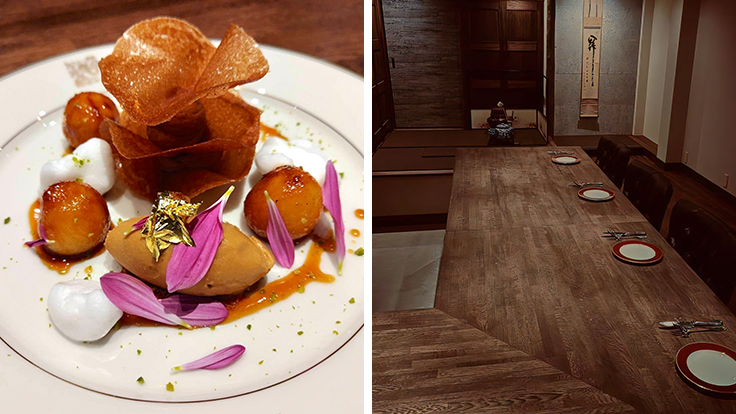
A mille-feuille of feuilletine and mascarpone cream with caramelized Marguerite Marillat pear, tonka bean ice cream and sangria sauce (left). Interiors blend tea-room aesthetics with Western-style decor (right). © çayca
BAMBAKUN
The two pastry chefs, Bamba-kun and Bamba-chan, host their dessert course in a friendly, relaxed setting. French pastries provide the base, brightened by seasonal fruit and Japanese ingredients. The course starts with savory touches like soup, salad and sandwiches before giving the stage to a succession of desserts based around seasonal fruit. Spirits and liqueurs, like awamori (a distilled spirit from Okinawa) misted over baked sweets, add aromatic twists along the way.
Yoshihiro Bamba, owner and pastry chef of BAMBAKUN, says: “Even if it’s your first dessert course, we hope you’ll feel at ease — relax and enjoy our sense of play filtered through your own sensibilities.”
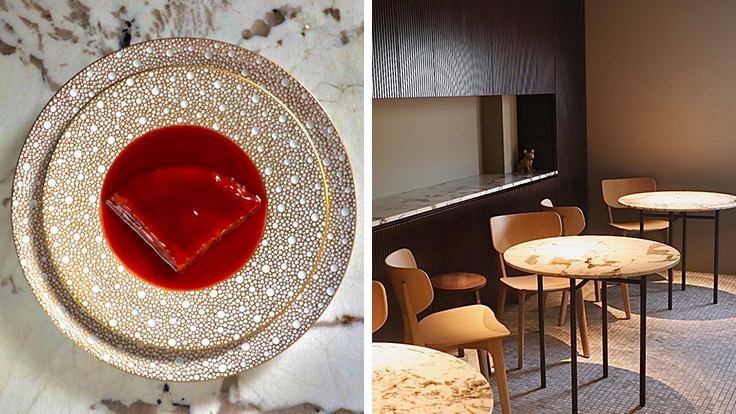
Seasonal fruit, dried fruit and alcohol-soaked ingredients form BAMBAKUN’s Crêpes Suzette (left). Intentionally restrained interiors ensure attention settles on the plate (right). © BAMBAKUN
Haruka Murooka
Seasonal fruits arrive from producers across Japan, chosen for freshness and ripeness. Sweetness is kept light to ensure aroma, acidity and astringency stay intact. The softly rounded room invites guests to watch each dessert come together. The course begins with a milk dessert inspired by the chef’s hometown in the Asagiri Highlands, then builds a rhythm item by item. Savory notes appear, too: a vegetable dish that highlights natural sweetness, and warm, fresh-baked focaccia are woven into the sequence. A cacao-infused broth made using dashi techniques clears the palate before the course turns to the two main desserts. Freshly fried churros arrive near the end, followed by petits fours. Pairings are wide-ranging, with guests choosing alcoholic or non-alcoholic options when reserving. Wine anchors the alcoholic pairings, joined by mead, sake, cocktails and more. Non-alcoholic pairings range from house-made fruit drinks to herbal teas, classic teas and carefully assembled mocktails.
Haruka Murooka, owner chef of Haruka Murooka, says: “To keep the experience engaging to the last, we weave savory elements throughout the course. We hope guests enjoy the aromas, the playful presentations and the stories behind the ingredients.”
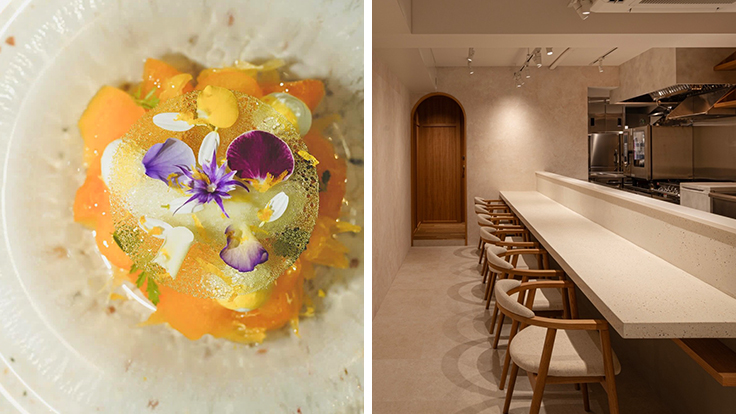
Citruses such as Himekoharu, Shiranui and Hassaku with amazake gelato, served with a disc of hard candy (left). A calm, white-toned interior designed for unhurried comfort (right) © Haruka Murooka
Yama
Guided by visits to farms across Japan, the restaurant devotes itself to fruit, pursuing the point where taste and beauty meet. Believing Japanese ingredients are complete in themselves, the kitchen works without fixed recipes, choosing techniques to suit each ingredient’s condition and showcase it at its best. Fruits are rested across several temperature zones to deepen their flavor. Seasonal fruit and vegetable dishes create a landscape of sweetness and salinity, rising and falling as the course unfolds. Warm and cold shifts, plus textural contrasts, steer the progression. Pairings include Yame Dentou Hon Gyokuro (a traditional, high-grade Gyokuro tea from Yame), along with herbal teas grown in the restaurant’s own fields. Everything is shaped by the seasons, aligned with nature’s rhythms.
Koichi Katsumata, owner and chef of Yama, says: “We give our all each day so that guests leave with a smile. This may be Tokyo, but we still hope you’ll feel the richness of the seasons in nature. Please open our door and experience it for yourself.”
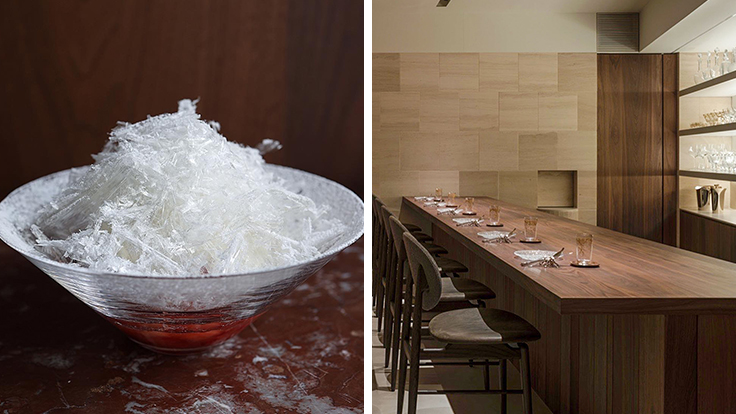
Yama’s Hatsuyuki (shaved ice) pairs strawberry and umeboshi (pickled Japanese plums) confiture with butterbur sprout ice cream, finished with a texture reminiscent of frost columns (left). The restaurant’s quiet, understated interior (right). © Yama
Written by
Suma Wakui
Based in Tokyo, Suma is a Digital Editor for Michelin Guide Japan, creating content that showcases the delights of dining and travel.
As a marketer for Michelin Tire, she has been involved in numerous user-oriented magazines and promotional projects.
She loves Jidori yakitori and Junmai-Ginjo Sake, and spends her weekends freediving in the ocean. She brings a sense of curiosity into her creative work.
Dining and Cooking