
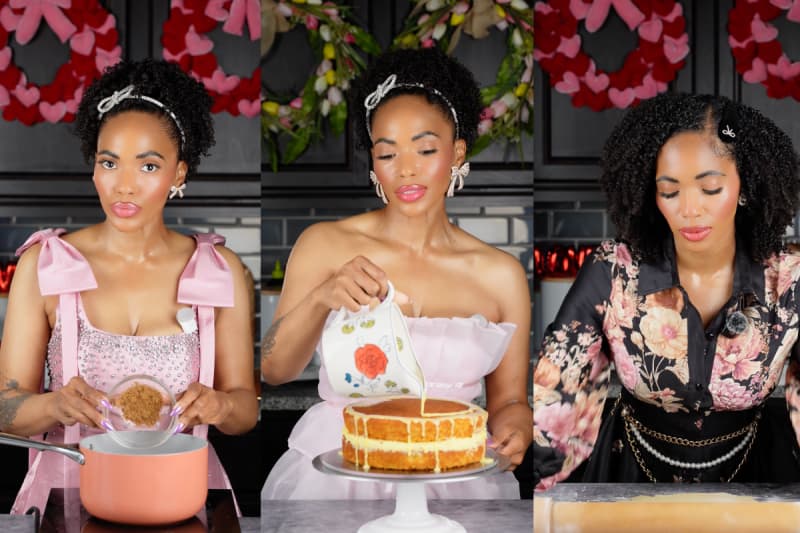
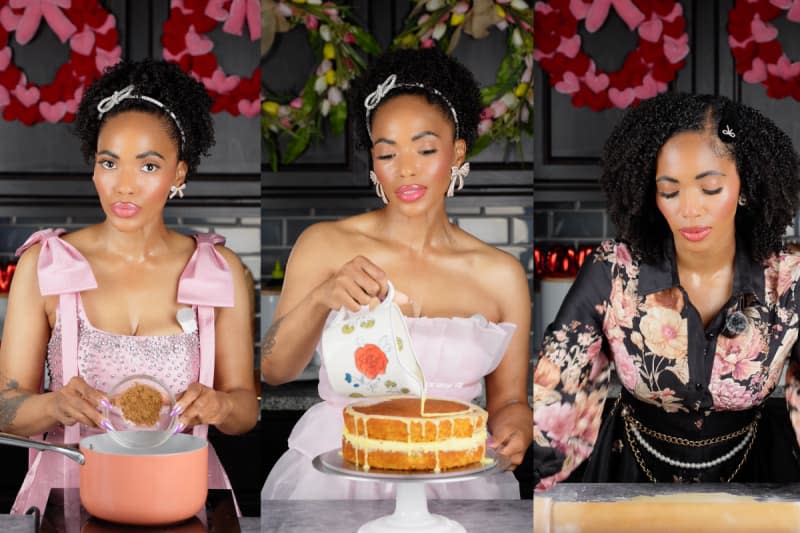
Sonja Norwood took on a remarkable feat during Black History Month. She revived dozens of nearly forgotten Black American recipes, sharing not only the recipes but also the context and history behind them. Her already enamored digital devotees devoured the series, and it’s attracted hundreds of thousands of new followers. Sonja’s wit, poise, and knack for storytelling are as irresistible as the food she makes.
Before the viral recipe videos, Sonja’s cookie brand Wick’d Confections exploded in popularity for its intricate, artfully decorated designs. She’s been featured on platforms like Food Network and BuzzFeed Tasty, but today, Sonja’s work has expanded far beyond beautiful sweets.
Through her ongoing series that preserves and dissects lost Black American recipes, Sonja has stepped into a fascinating role that’s part baker, part researcher, part cultural archivist. Each video feels like you’ve pulled up a chair in Sonja’s kitchen near Houston, Texas, and are listening to this baker, artist, and — most recently — food historian school you on a recipe you may or may not remember from your childhood.
“We’re losing recipes, and I’m going to find out if that’s for a good reason. All Black History, I’m making Black American recipes we left behind,” is how Sonja starts each video. Image: Wick’d Confections
How did this series come to be, and how did it grow as you really dug into it?
It honestly started with vinegar pie. I saw a video about its Black American roots around Thanksgiving and made a note to myself that I would recreate it for Black History Month. But once I started researching, I realized vinegar pie was just one thread in a much larger story. That curiosity turned into a deeper question about why so many of these recipes disappeared, and who decides what gets remembered.
As I dug in, it grew naturally. I started talking to my mom about her memories, then friends from different regions, and I realized how layered our food history really is. The more I learned, the more responsibility I felt to handle it with care. It became less about just recreating a dish and more about honoring the people behind it.
Take us back to young Sonja. When did you really start connecting to food and sharing it? What would young Sonja think about the viral success you’re experiencing today?
Young Sonja always connected to food through family. The kitchen was where stories were told, where laughter happened, where you learned without realizing you were learning. I did not grow up thinking I would be teaching food history to hundreds of thousands of people. I just loved creating.
I think young me would be shocked, but also proud. Not because of the numbers, but because the work actually means something. It is bigger than dessert. It is about legacy.
How does your art training influence the way you conceptualize and present your confections?
My art training influences everything. Composition, color balance, texture, even the pacing of how I speak while cooking. I think visually first. I think about contrast, warmth, mood. Food is storytelling through texture and color.
Even the way I present historical information feels artistic to me. It is layered. It has movement. I want people to feel like they are experiencing something, not just watching a recipe.
What’s a common misconception (or two) you often hear about baking creators?
One big misconception is that we just wake up, casually bake something pretty, and hit record. There is so much research, testing, scripting, editing, lighting, and storytelling that goes into it.
Another misconception is that baking content is shallow. For many of us, especially in cultural storytelling, it is research-driven and deeply intentional. It just happens to look beautiful.
In your research and storytelling, can you share a particularly moving or funny story you heard from your community?
The moving stories I get in my inbox are constant. People share memories of great-grandmothers they barely remember, but they remember the smell of something cooking. I have had people tell me they cried watching a recipe because it brought back a Sunday dinner that no one makes anymore. Those moments are sacred to me.
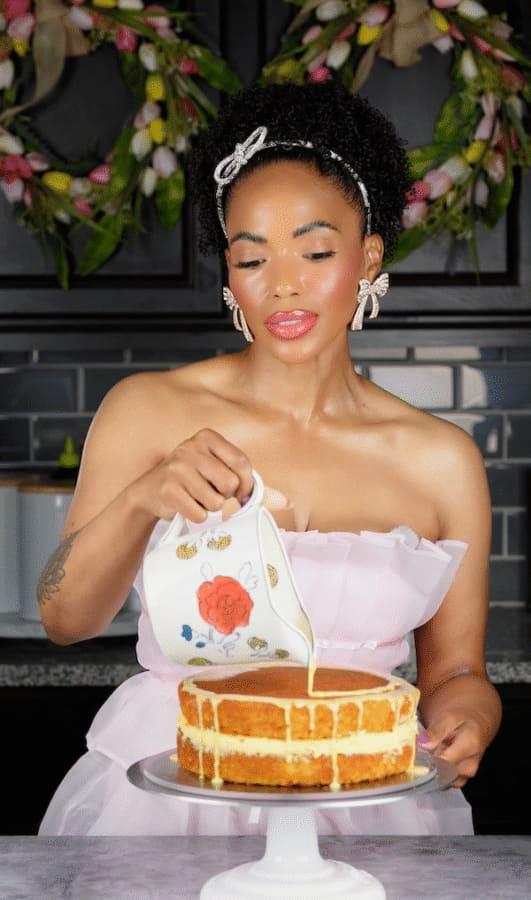
![Sonja hears funny stories, too. Someone said they thought burnt sugar cake [Sonja’s making it here] was just a cake someone messed up and decided to keep anyway. “I laughed because that is such a beautiful metaphor for resilience,” Sonja says. “Sometimes what looks ruined turns into something rich and unforgettable.” Image: Wick’d Confections](https://www.diningandcooking.com/wp-content/uploads/2026/03/90bd9d9281d86063d22eaba5bce40665.jpeg)
Sonja hears funny stories, too. Someone said they thought burnt sugar cake [Sonja’s making it here] was just a cake someone messed up and decided to keep anyway. “I laughed because that is such a beautiful metaphor for resilience,” Sonja says. “Sometimes what looks ruined turns into something rich and unforgettable.” Image: Wick’d Confections
Where do you get the ideas for recipes to recreate or immortalize?
A lot of it starts with conversation. I talk to my mom. I talk to friends. Someone will mention a dish their grandmother made, and I will start digging. From there, I research articles, journals, and personal accounts. I look for patterns and references that show up more than once. Then I curate the recipe in a way that honors the original while making it accessible today.
What’s something people are often surprised to learn about you?
People are often surprised by how much research I actually do. They see the finished video, but they do not see the hours of reading, cross-referencing, and making sure I am being responsible with the history.
They are also sometimes surprised that I am not a huge sweet tooth, even though I make desserts all the time.
If you could cook for anyone — living or passed — who would it be and why? What would you make them?
I would love to cook for my grandmother, whom I never had the chance to meet. When I first started baking, I remember my mom’s eyes lighting up as she told me how her mother used to bake with the same Swans Down cake flour I was reaching for. There was something so powerful about that moment. It felt like a thread connecting us across generations.
I often wonder if I inherited my ability to bake from her. I would make her a full table of the recipes I have brought back and sit with her, just to hear her stories and see if she recognizes herself in what I create.
What’s the best advice you’ve received and from whom?
The best advice I received was from my mom. She always emphasized intention. Do not just do something because it is popular. Do it because it means something. That has guided every decision I make, especially with this series.
Not every recipe Sonja shares is sweet! Her followers had a lot to say about this butter roll recipe.
Any idea for a new series, or anything else you can tease?
This series opened a door that cannot be closed. I am continuing the series weekly because there are still so many stories and recipes that deserve to be brought back into the light.
And let’s just say … a book is on the way, with even more recipes that have never been seen before, and a deeper history that we have not even touched yet.
The response has made it clear that people are hungry for this history. I am just getting started.
LIGHTNING ROUND
Three things you cannot live without? Shimmer oil, Korean Lip Care, and eight hours of sleep!
Go-to hostess gift to bring? A bouquet of flowers
A daily ritual you never skip? Words of affirmation.
Follow Sonja Norwood and Wick’d Confections on Instagram to see and learn so much more. Thanks for chatting, Sonja.
**********
Learn about more dynamic and inspiring women through our FACES archives!
Dining and Cooking