
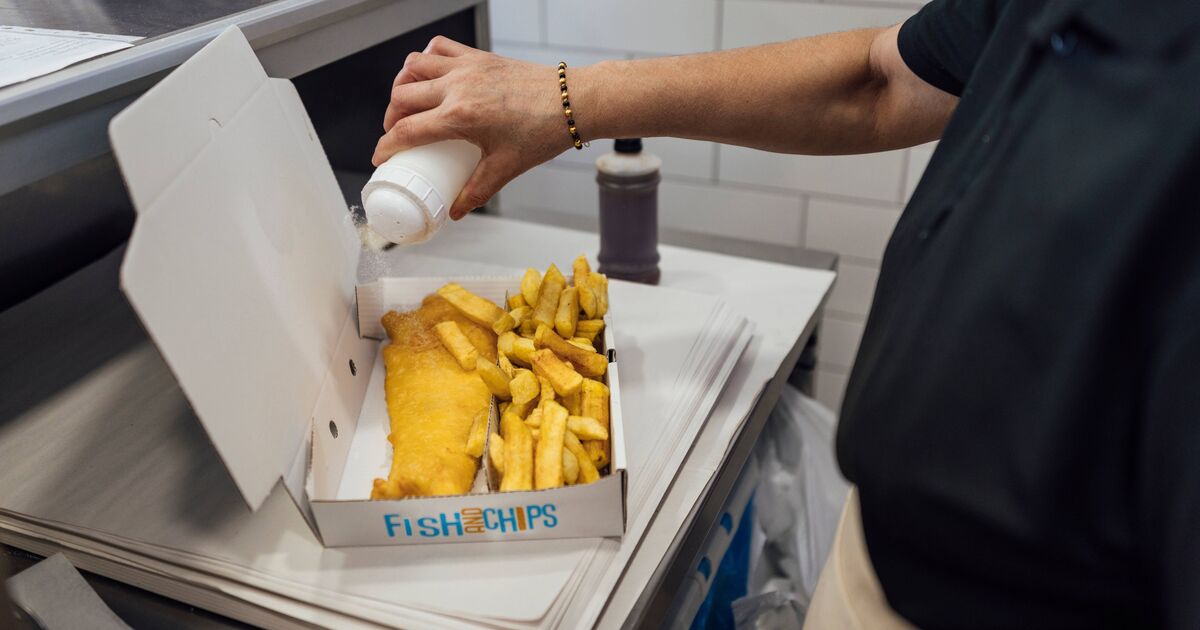
Fish and chips are a British favourite, with an impressive 382 million portions consumed each year – that’s roughly six per person. While salt and vinegar are considered essential accompaniments to the dish, many might be shocked to discover that the ‘vinegar’ normally isn’t actually vinegar at all.
Vinegar is created through the fermentation of alcohol and can be derived from a number of sources such as fruits, grains, or even honey. However, in the UK, most chippies opt for non-brewed condiment instead of traditional vinegar.
Non-brewed condiment is a synthetic, vinegar-like substance made of acetic acid, water, and flavourings. It offers a similar tangy taste to malt vinegar but is quicker and cheaper to produce as it bypasses the need for fermentation like traditional vinegars.
Although some chippies may still provide authentic malt vinegar, non-brewed condiment is the more common choice due to its cost-effectiveness and extended shelf life.
Chippies also have the option to purchase non-brewed condiment in a concentrated form and dilute it with water. Non-brewed condiment has additional benefits, such as being alcohol-free – making it an excellent option for teetotal customers, reports Wales Online.
And if that wasn’t enough to surprise you, the fish in your fish and chips might not be the cod you thought you were getting. Some shops substitute cod with haddock, while others may occasionally serve pollock, whiting, sole or hake.
A 2014 study by Oceana revealed that as much as 7% of fish sold in UK shops and restaurants was mislabelled, with other types of white fish (such as pollock or haddock) being passed off as cod. This could be due to supply chain issues or intentional misrepresentation for cost reasons, given that cod is typically pricier than other white fish.
However, the practice of mislabelling has seen a decline in recent years, thanks to heightened regulation and public awareness. The implementation of tracing systems and DNA testing has aided fish and chip shops, restaurants, and suppliers in verifying the authenticity of their fish.
Dining and Cooking