
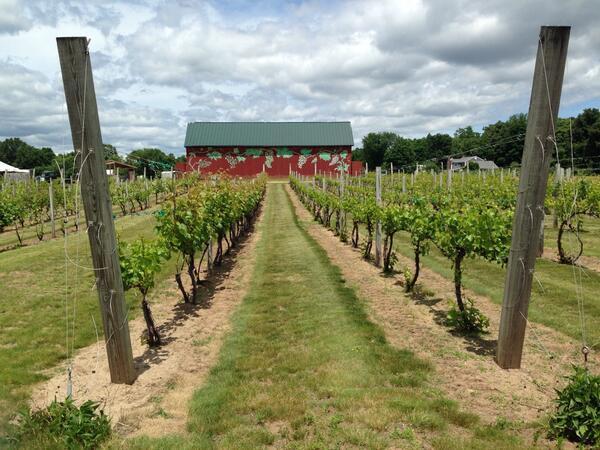
The town has given the OK to a historic farm along East Weatogue Street to expand its wine operation, a project that owner Marshall Epstein said is important to keeping the Rosedale Farms & Vineyards business going.
“It’s hard to do. What we do is not easy, we’re trying to stay in business,” said Epstein, a third-generation owner of the 106-year-old business Simsbury that he hopes might eventually be run by his grandson.
Like vineyards and farms across Connecticut, Rosedale has been steadily adding events and attractions to generate more income. It hosts seasonal corn mazes and sunflower strolls, along with music performances and “Chef to Farm” dinners in conjunction with Max Hospitality.
Epstein now plans to convert the wine-bottling area into about a 2,000-square-foot wine-tasting room with hopes of creating a more comfortable, spacious setting that could do business in bad weather. Currently most wine tasting is done outside.
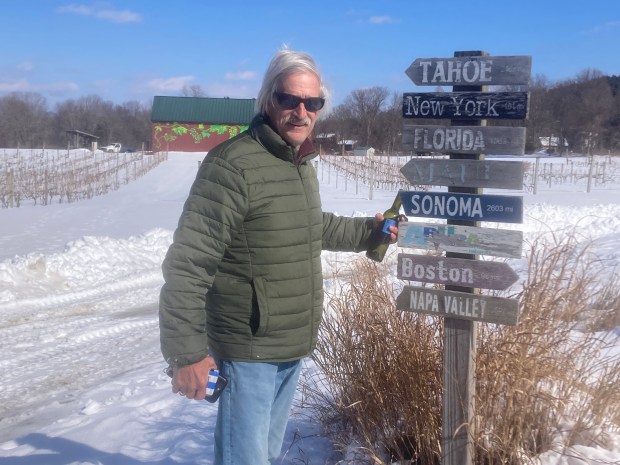 Marshall Epstein at Rosedale Farms & Vineyards in Simsbury. (Don Stacom/The Hartford Courant)
When Rosedale approached the zoning commission last month for permission to do the conversion, Town Planner George MacGregor cited a key reason for approval.
“Agritourism, events, these kinds of auxiliary or ancillary uses of farms are what farms are today,” MacGregor told commissioners. “We really see them as part and parcel of the entire operation. These things are necessary for farms to survive.”
MacGregor noted that the farm is making and selling wine there already, and its plan meets the requirements for a special zoning exception.
“There are no traffic considerations,” he reported. “There is no indication the special exception request would affect property values in any negative manner. There are no extraordinary public safety considerations.”
Rosedale produces 15 wine varieties, but about 80% of its overall business is still in vegetable sales, said Epstein, whose grandparents founded the business. At 73, he is optimistic about Roseland continuing with his grandson, who recently moved into the farm house to oversee some of the operation.
“The only reason the farm is (still) here is because I was a professor at AIC (American International College in Springfield, Mass.) in marketing and entrepreneurship. I had a pension and benefits, I was very fortunate to be able to do this,” said Epstein, who has been running the farm since 1981.
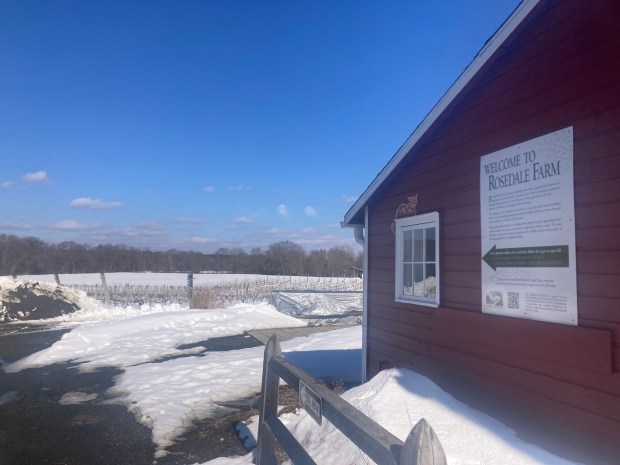 Part of the 110-acre Rosedale Farms & Vineyards stretching out toward a treeline. (Don Stacom/The Hartford Courant)
It’s been a strictly seasonal business with weddings, music performances and other gatherings on outside. Epstein hopes the new tasting room extends the season.
“We’re known for the outside, we have music every weekend. Now we can go into September, October when it gets a little chilly; we just have to get people reoriented to that,” he said.
Part of his goal is to keep up with market changes.
“The wine business has changed. It costs a lot to do, labor is so expensive,” Epstein said. “It’s become hard to move the chain. And wine and beer sales are way down all over.”
He mentioned a popular central Connecticut taproom that hosts a trivia night; in recent years it has had two tables a night of people buying non-alcoholic drinks.
“A lot of younger people order mock drinks, now,” he said.
Rosedale’s niche is locally produced but not wildly expensive wines.
“We’re very reasonable, most most of our wines are $20 to $25. Compared to other wineries in the state, it’s cheap — they charge $30, $40. I don’t know how many people are going to pay that in this economy.
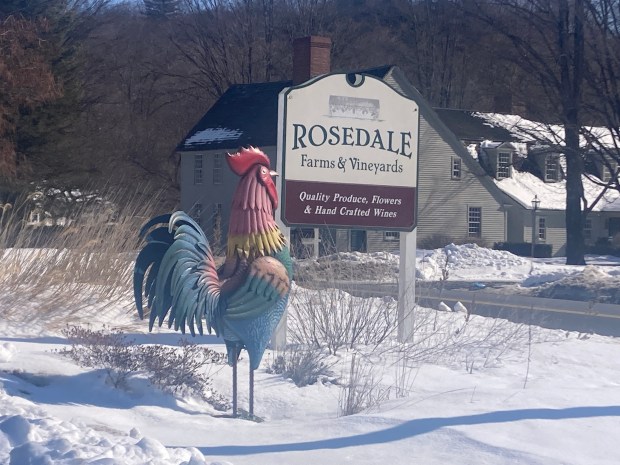 Rosedale Farms & Vineyards in Simsbury, where the same family has been growing crops since 1920. (Don Stacom/The Hartford Courant)
“It’s hard to make any money. You don’t mind working hard if you’re making money. But if you’re doing this work all the time and not making money — or losing money some years — how long can you do that?”
Dining and Cooking