
At 88, Sandro Boscaini is a font of energy and ideas about modernity, Italian culture and, of course, wine. The sixth generation leader of Masi, associated with Amarone della Valpolicella and other wines from Italy to Argentina, is restless. But that restlessness is how he keeps his family company dynamic.
Boscaini seems annoyed about the way wine is so often explained by reciting technical details of production. “We have only been talking about how wine is made,” he says, in a critique of the wine world. “But how many people care?”
Recounting an epiphany he had some years ago, he pulls his telephone out of his jacket pocket. “Is there anybody who asks, ‘How is the telephone made?’” he says. “No. But people use it and enjoy it just the same.”
In other words, there is a lot more that goes into experiencing and learning about wine than the enological details.
Proof of Dynanism
While musing on how we discuss wine, Boscaini is lunching in the modern, light-filled restaurant called Locanda Costasera in Masi’s sleek, new visitor center, Monteleone21, whose design is based on Boscaini’s decades of travel and draws on influences from Napa and Sonoma, chief among them the eclectic Francis Ford Coppola Winery in Geyserville.
The center is his attempt to change the conversation. “The idea was to turn the page on wine,” Boscaini says of Monteleone21, first conceived in 2012 with Verona architect Libero Cecchini. “To present wine in a different way. Wine needs to be discussed at the center of lifestyle, culture, gastronomy, history, tourism, terroir, tradition and innovation—everything.”
![Sandro Boscaini with Fabrizio Piezzi at Monteleone21.]](https://www.diningandcooking.com/wp-content/uploads/2026/03/rc_masi-art-030426_1600.jpg)
Sandro Boscaini discusses art with Fabrizio Piezzi at Monteleone21. (Courtesy Masi)
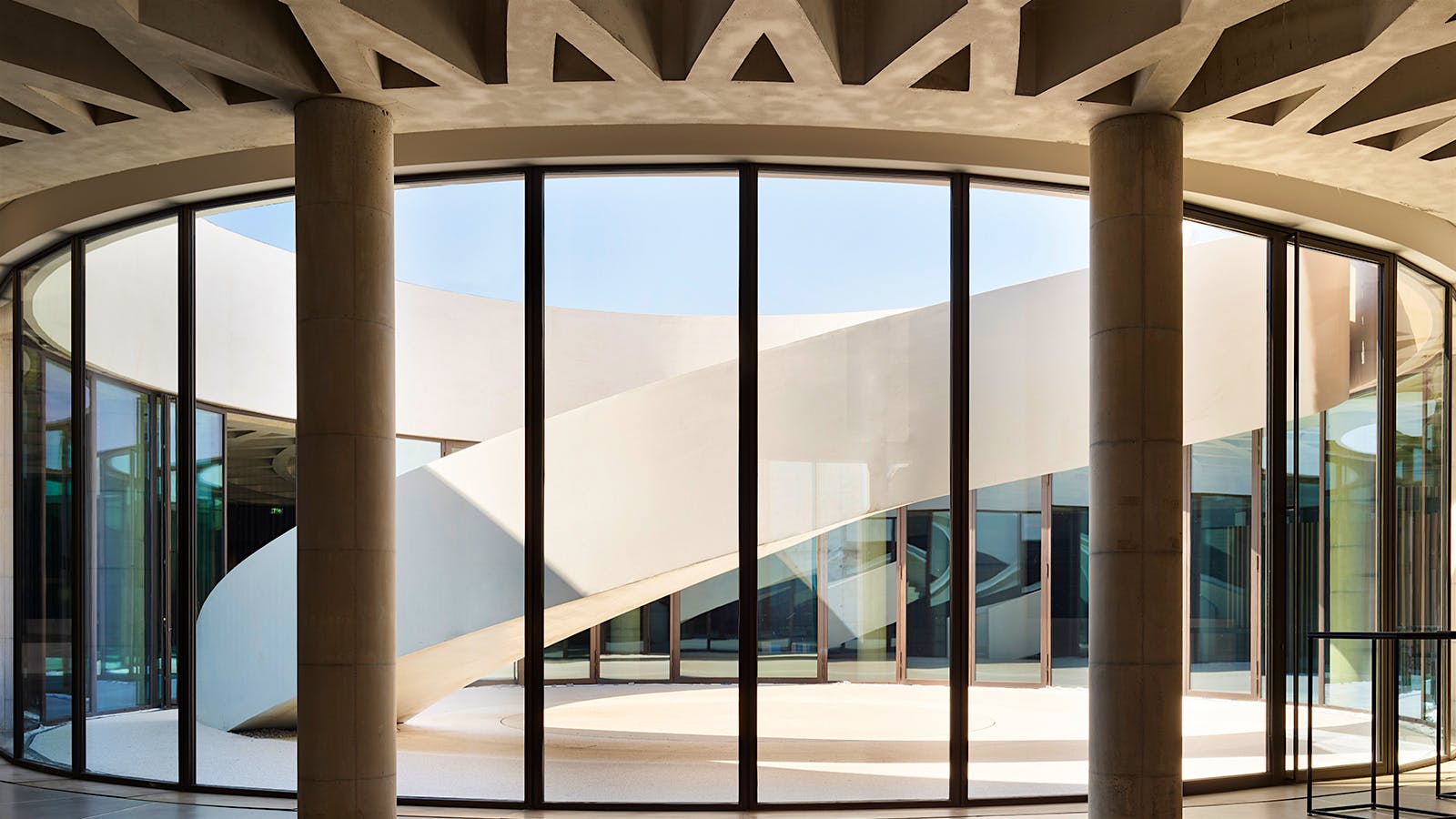
Set into Valpolicella vineyards, Monteleone21 is a work in progress, with areas still under construction. The nearly 90,000-square-foot modern structure featuring spiraling stone and glass is inspired by a sea ammonite, the extinct prehistoric mollusks that commonly left their fossilized impressions in stone quarries the world over, including those of Valpolicella.
The ground floor houses a wineshop, lounges, a tasting bistro and Locanda Costasera, which features specific wine-food pairings using Masi’s lineup of 60 wines from across northern Italy and Tuscany, as well as the company’s Tupungato in Mendoza, Argentina. On the unfinished floor above, Masi plans to build out spaces and labs for the use of wine and culinary education associations.
Creative Fermentation
The most intriguing and freewheeling aspect of the project is found at ground level in a soaring 40-foot-high fruttaio, a grape drying room that will be employed three months after harvest beginning in 2026 for the fruit used for Amarone.
Until then—as well as the nine months a year when the room is not in use for Amarone production—it will be used for what Boscaini calls a “center for creative fermentation,” meaning art installations and any other project that Boscaini devises.
For the opening of Monteleone21, Masi commissioned a dramatic multimedia installation called “The Soul of Amarone” from internationally acclaimed Venetian video artist Fabrizio Plessi, who was awarded a Masi prize this year. (The annual prize, which includes a barrel of Amarone, was founded in 1981 and recognizes contributions to art, culture, literature, wine and humanity. Past winners include a range of talents—from Italian tenor Andrea Bocelli to Champagne’s Krug family.)
The installation, which will remain in place through next summer, is stunning and typical of Plessi, who is known for dynamic large-scale installations on themes such as water, fire, lightning or smoke.
The “Soul of Amarone” is composed of four identical stations—each consisting of a black, 26-foot-long sandolo (the traditional Venetian flat-bottom cargo rowboat similar to a gondola) facing a tall, arched, two-sided video screen. Both faces of the screens as well as longer screens set in the boats’ hulls play similar videos of cascading red wine must.
The work is not just visual. At the back of each vertical screen is a pile of drying grape bunches with their faint aromas of fruit and wood. The audio played on surrounding speakers features a meditative electronic sound loop accompanied by a minimalist piano composition from British composer Michael Nyman.
![Sandro Boscaini at Monteleone21.]](https://www.diningandcooking.com/wp-content/uploads/2026/03/rc_masi-sandro-030426_-1600.jpg)
Boscaini believes wine is art, and should be looked at with a similar, untechnical lens. (Robert Camuto)
“The idea is [the space] is the cathedral of Amarone and [the work] is its soul,” says Boscaini.
Monteleone21 shows off the complexity of Masi today: a publicly traded, family-run corporation that wants to be a player in world culture, and a big enterprise producing about 1.6 million cases of wine while still focusing on terroir. Masi is also simultaneously traditional and experimental—producing Amarone but also novel blends as well as low-alcohol organic wines for cocktail mixing.
Lunch with Boscani starts with a white wine gin and tonic and ends with a glass of Masi’s vinous crown jewel: Vajo dei Masi, a limited-edition Amarone from a single vineyard the Boscaini family has farmed since the 18th century. It’s released 25 years after harvest. After three years in barrel, the wine is stored an additional two decades in stainless steel tanks protected by inert gas. The hard-to-find wine retails for about $445 a bottle in Masi’s wineshop.
“It’s like an old wine that is beginning to live just now,” enthuses Boscaini, who continues to inject Masi with something from his own fountain of youth.
Dining and Cooking