The Ultimate Guide to Moroccan Tagine
A tagine is the centerpiece of Moroccan cuisine. Whether you use a traditional clay pot or a heavy Dutch oven, the secret lies in the layering of spices, the slow simmer, and the balance of flavors.
1. Essential Moroccan Spices & Aromatics
To get an authentic flavor, you’ll need these staples:
Ginger & Turmeric: The “base” of almost every tagine.
Saffron: Provides the deep golden color and floral aroma.
Cinnamon: Used in both sweet and savory dishes.
Ras el Hanout: A complex blend of dozens of spices (the “head of the shop”).
Preserved Lemons: Salt-cured lemons that provide a unique tangy depth.
Olives: Usually green (pitted) or red (cracked) olives.
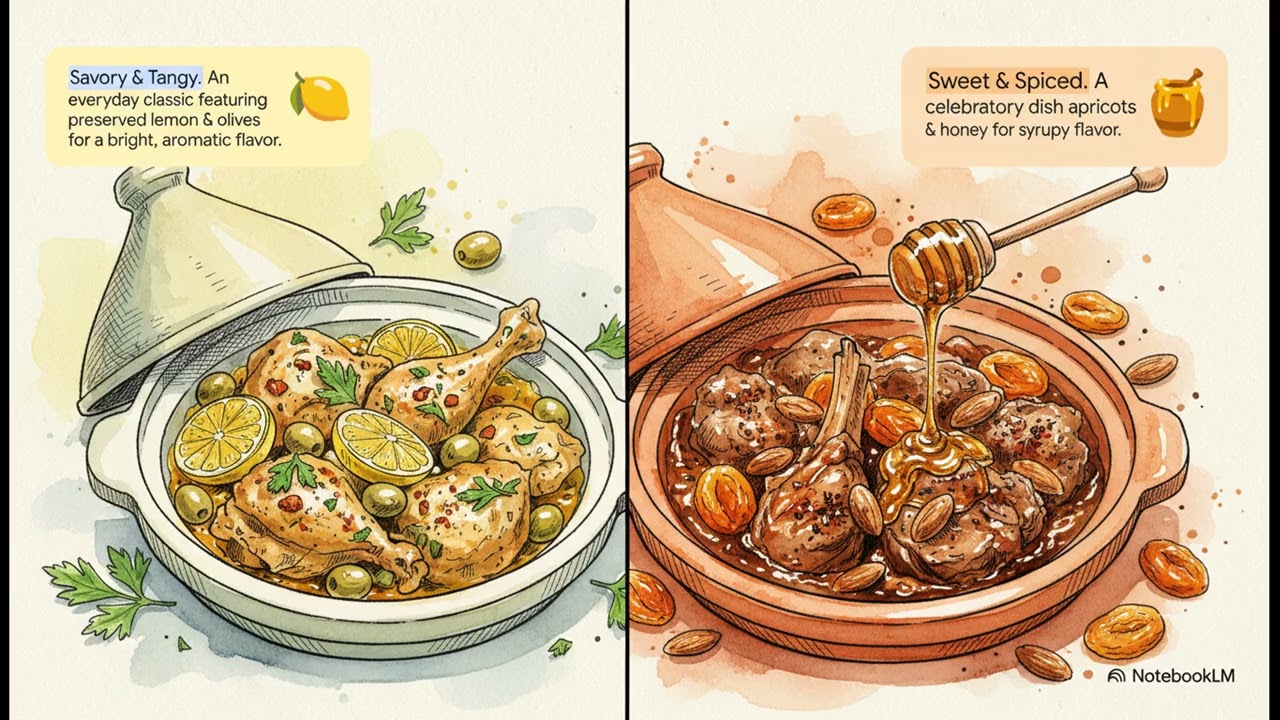
2. Recipe: Chicken Tagine with Preserved Lemon & Olives
This is the most famous “daily” tagine in Morocco. It is salty, tangy, and incredibly aromatic.
Ingredients
Chicken: 1 whole chicken (cut into pieces) or 4–6 bone-in thighs.
Aromatics: 2 large onions (grated or finely diced), 3 cloves garlic (minced), 1 bunch fresh cilantro and parsley (tied together).
Spices: 1 tsp ginger, 1 tsp turmeric, 1/2 tsp black pepper, a pinch of saffron threads (crushed in a little warm water), salt to taste.
The “Finishing” Touch: 1 preserved lemon (flesh removed and chopped, skin reserved for garnish) and 1 cup green olives.
Liquid: 1/2 cup olive oil and 1 cup water.
Instructions
Marinate: Mix the spices, garlic, chopped preserved lemon flesh, and olive oil. Rub it all over the chicken. Let it sit for at least 30 minutes.
Layer: Place the onions at the bottom of the tagine. Arrange the chicken on top. Pour any remaining marinade and the saffron water over it. Add the bundle of herbs in the middle.
Cook: Cover and place on low heat (use a heat diffuser if using a clay pot on a gas stove). Let it simmer gently for about 1 to 1.5 hours. Do not open the lid too often!
Reduce: Once the chicken is tender, remove the herbs. Add the olives and the preserved lemon skin (sliced into strips). If the sauce is too thin, simmer uncovered for 10 minutes until it thickens into a rich “daghmira” (gravy).
Serve: Serve directly in the tagine with crusty Moroccan bread (khobz) to scoop up the sauce.
3. Recipe: Lamb Tagine with Apricots & Toasted Almonds
This version is often served at celebrations. It leans into the “mrouzia” style—sweet, spiced, and savory.
Ingredients
Meat: 2 lbs lamb shoulder or leg, cut into large chunks.
Aromatics: 2 onions (finely diced), 2 cloves garlic.
Spices: 1 tsp cinnamon, 1 tsp ginger, 1 tsp turmeric, 1/2 tsp Ras el Hanout, pinch of saffron.
Sweetness: 1 cup dried apricots, 2 tbsp honey, 1 tbsp butter (Smen if available).
Crunch: 1/2 cup blanched almonds (fried or toasted).
Instructions
Sear: In the tagine (or a separate pan), brown the lamb chunks in olive oil and butter until golden.
Slow Cook: Add the onions, garlic, and all spices. Cover with water (about 2 cups) and simmer on low for 2–3 hours until the lamb is “fall-apart” tender.
Glaze: About 30 minutes before the end, add the apricots and honey. The sauce should reduce until it is thick and syrupy.
Garnish: Top with the toasted almonds and a sprinkle of sesame seeds before serving.
4. Pro Tips for Success
The Heat Diffuser: If you are using an authentic clay or ceramic tagine on a gas or electric stove, always use a metal heat diffuser. Without it, the direct heat will crack the clay.
Low and Slow: Never rush a tagine. High heat will toughen the meat and might scorch the bottom.
No Peeking: The conical lid works by creating a “rain” effect inside. Every time you lift it, you lose the steam and pressure required to cook the food evenly.
Don’t have a Tagine? You can achieve 90% of the same result using a Dutch Oven. Keep the lid tightly sealed (you can even put a layer of parchment paper under the lid to seal it better).

1 Comment
ok nice