
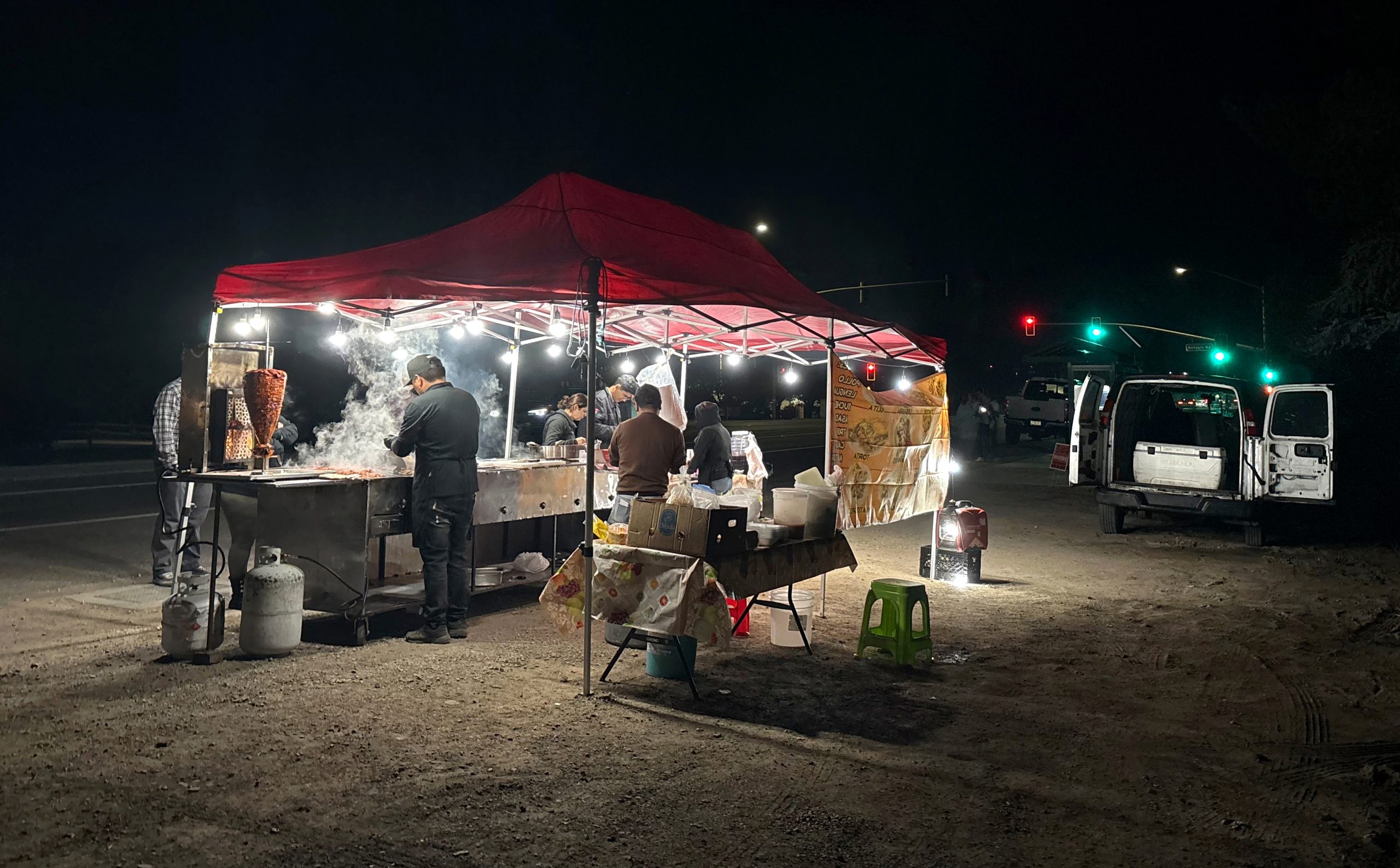
One freezer. Two steel storage containers. Six months of designated overtime. To improve and increase its enforcement efforts against unlawful food pop-ups across Santa Barbara County, Environmental and Health Services (EHS) recently asked the county Board of Supervisors for an extra $42,000.
More than 75 percent of the sum will fund overtime hours for up to four EHS inspectors between April and October, while the remaining $9,500 would be used to purchase one freezer chest to store impounded food and two seatrain containers for impounded cooking equipment.
Although 4th District Supervisor Bob Nelson was part of the 5-0 vote that approved the allocation, he said he wished that EHS would designate regular evening and weekend shifts rather than incur overtime.
“I know it’s not very convenient for some of our employees to work night shifts, but I think that’s something I’d like to see come back,” Nelson said at the supervisors’ Feb. 24 hearing. “We’re already paying and we already have enforcement staff. It’s just how we deploy them. They’re often sitting at a desk from 8 to noon. We really hope that from 5 to 9 they’re actually out on the street.”
County Health Deputy Director of Operations Lars Seifert told the board that EHS accrued more than 500 hours of overtime last year. He also said that enforcement logs show that EHS facilitated 58 “inspection events” since March 2024, “typically on afternoons and weekends,” Seifert added.
“… [58] enforcement actions or shifts in the last year is about one a week,” Nelson said. “I hope that whatever comes out of what we do today is that we hit them hard, we hit them early, and we hit them often. … with shock and awe if necessary.”
A set of code revisions, including clarified and expanded definitions of sidewalk vendors and what counts as a sidewalk as opposed to the side of a highway or road, was also on the table for the board to consider approving that evening.
‘I hope that whatever comes out of what we do today is that we hit them hard, we hit them early, and we hit them often. … with shock and awe if necessary.’
—4th District Supervisor Bob Nelson
While remaining compliant with state legislation that protects sidewalk vending, the ordinance places new time, place, and manner restrictions on vending directly related to public safety risks, staff explained.
For example, one part of the ordinance prohibits vending in street medians, “to protect the health and safety of vendors and their patrons, because they are at risk of being struck by vehicles and/or causing vehicular accidents,” the staff report states.
Another piece of the ordinance limits sidewalk vendors’ hours of operation within residential neighborhoods to specific daylight hours “to protect the safety of sidewalk vendors and residents who would be more vulnerable to criminal activities during evening hours,” staff wrote.
The ordinance also emphasizes some existing regulations with new or clearer definitions, which helps give EHS “more impetus for a coordinated response” with local law enforcement and city code enforcement agencies, Seifert told the board.
“But it’s been clear. I mean, this has been an issue for two years. … We’ve known it’s illegal for the last two years, and it’s not more illegal after this,” Nelson said. “I guess I’m just frustrated. … We’re at the same spot that we were a year ago. What’s difficult for people out there is this is a long-standing problem and we’ve known about it.”
“It’s hugely important that this stuff gets taken care of early and often,” Nelson continued, “[and] not have to add so much bureaucracy and conversation about it.”
Before the board voted, 3rd District Supervisor Joan Hartmann asked staff to amend one section of the code revision ordinance about operating near school campuses. A hot spot for unpermitted food pop-ups in her district, she explained, is on the side of Highway 246, directly across the street from Santa Ynez Valley Union High School.
“They’re not there so much during school hours, but they’re there during athletic events. They’re there for plays and musical concerts,” Hartmann said. “Any evening activity. They’re right across the street.”
Staff revised the ordinance to prohibit sidewalk vending within 500 feet of a school during school hours and school-sponsored events.
In October, EHS will return with an update on how the $42,000 allocation impacted its enforcement efforts, including the extra storage capacity for impounded food and cooking equipment.
“Have we confiscated any equipment at this time, or has it just been food product?” Nelson asked staff.
Over the past year, Seifert said that EHS impounded 4,200 pounds of meat from unlawful vendors. Apart from food, EHS only took away utensils and serving containers on occasion, he added.
Nelson also asked staff if any vendor has ever come forward to recoup their impounded food. EHS Director Jason Johnston responded.
“We’ve had one vendor that has requested a hearing to reclaim their adulterated meats,” Johnston said.
This article appears in March 5, 2026 – March 12, 2026.
Related
Because Truth Matters: Invest in Award-Winning Journalism
Dedicated reporters, in-depth investigations – real news costs. Donate to the Sun’s journalism fund and keep independent reporting alive.
Dining and Cooking