
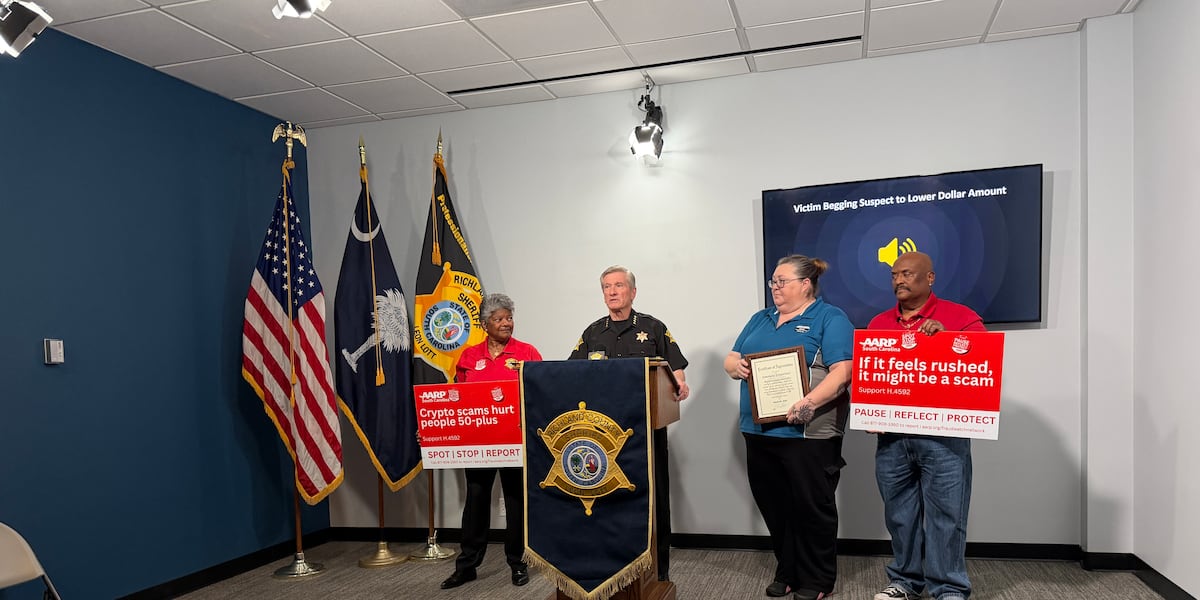
COLUMBIA, S.C. (WIS) – A Food Lion manager in Richland County was recognized by the county sheriff Thursday after she stopped a 76-year-old woman from sending $5,000 in bitcoin to a scammer last month.
Amanda Greenlaw, assistant customer service manager at the Food Lion on Fairfield Road, was honored by Richland County Sheriff Leon Lott for her intervention. According to the sheriff, the elderly woman had received a call from someone claiming to be a lawyer, who told her that her son had been in a crash and needed bail money.
As the woman was about to deposit the money, Greenlaw stepped in and convinced her to call law enforcement instead. The victim and her family later confirmed her son was safe and had not been involved in an accident.
Greenlaw said she considers protecting elderly customers a personal mission and that this was not the first time she has intervened in a scam targeting an older victim.
“I value the senior citizens in the community, because they show us where we’ve come from,” Greenlaw said. “They are most vulnerable, they sit at home alone and have a phone and can answer emails and they are able to be scammed because they don’t understand this. They don’t know what Bitcoin is. They don’t understand that once the money is gone, that’s it.”
Sheriff Lott said a majority of scam callers operate from outside the country, but noted a growing problem with calls being made from within prison walls.
“Just because a criminal gets locked up, doesn’t mean they stop being a criminal,” Lott said. “They have access to a phone; they’re going to continue doing what they did on the outside. These scam calls are probably the number one thing that they do.”
Under the Communications Act of 1934, enforced by the FCC, state prisons and local detention centers are prohibited from jamming cell service to prevent the calls. The Department of Corrections has lobbied the FCC and Congress to change the law. Sheriff Lott said Richland County has joined that effort and has the technology to enforce a signal block if the law were changed.
Imposter scams — in which callers pose as family members, local officials, or attorneys to pressure victims into sending money — are becoming more common as artificial intelligence technology advances.
Feel more informed, prepared, and connected with WIS. For more free content like this, subscribe to our email newsletter, and download our apps. Have feedback that can help us improve? Click here.
Copyright 2026 WIS. All rights reserved.
Dining and Cooking