
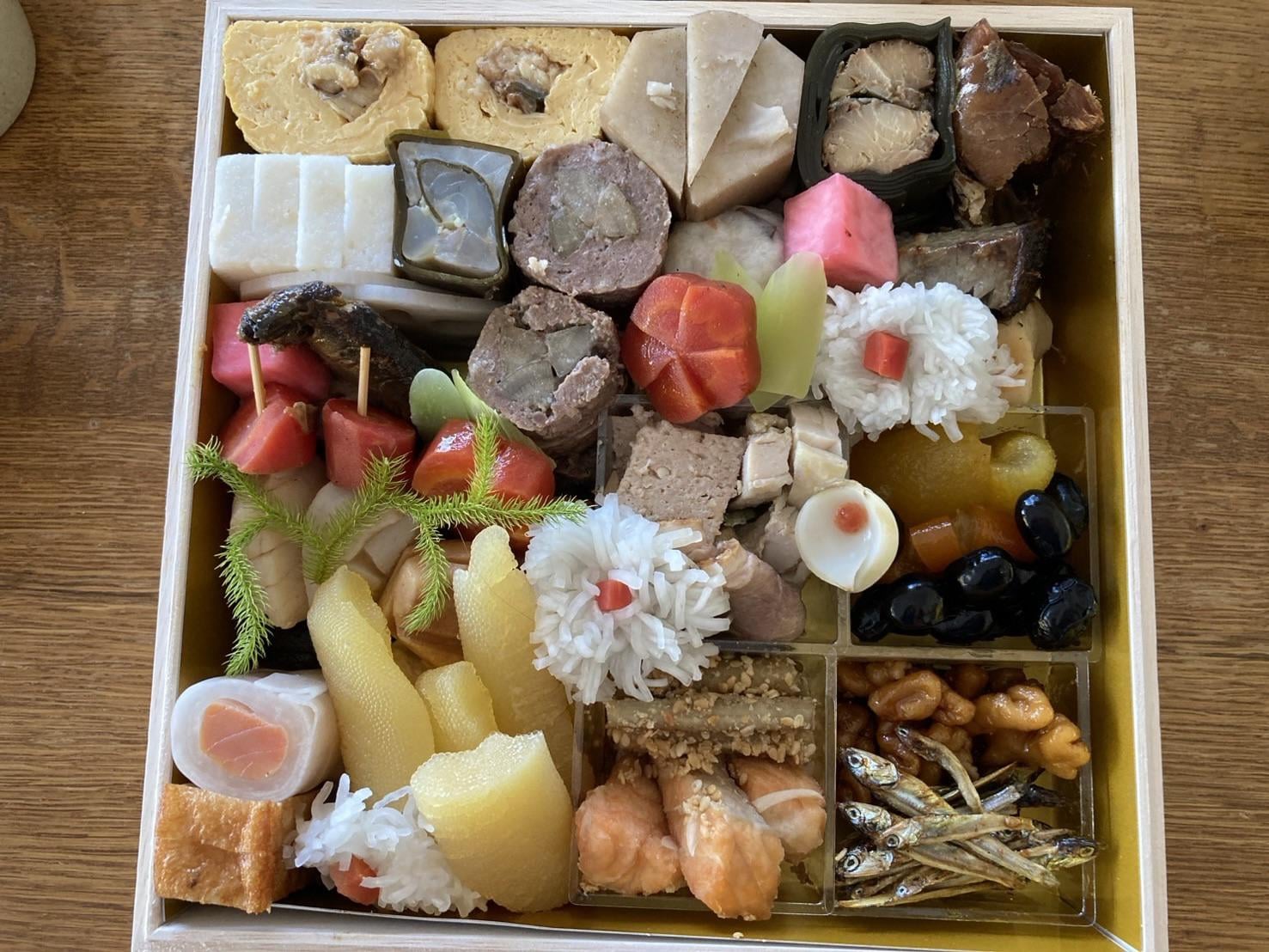
This is the osechi meal I’ve been eating every New Year in Japan for the past few years.
During the first three days of the New Year, many restaurants are closed, and traditionally people try not to cook much or use fire too often. Part of the idea is practical—osechi is made of foods that keep well and can be eaten right away—but it also has a cultural meaning. New Year is meant to feel different from ordinary life: a quiet, special time when even the people who usually do the cooking can rest.
What makes osechi interesting to me is that many of the foods are symbolic. For example, black soybeans represent health and diligence, herring roe symbolizes having many descendants, and sweet rolled omelet is associated with learning and knowledge. So it’s not just holiday food—it’s a box full of wishes for the coming year.
The downside is that it keeps getting more expensive because of inflation. This one now costs around 20,000 yen.
Do you have any New Year foods in your country that are symbolic like this?
by EarNo6260
9 Comments
Word, tasty?

It looks really sweet
I love traditions where food has meaning behind it. A whole box of symbolic dishes is actually a really beautiful concept. Do most families still buy osechi nowadays, or do some people make simpler versions at home because of the price?
I’m Japanese as well but in South Carolina where I grew up in, has a custom of making hoppin’ Johns (rice and beans) and collard greens for New Years. The beans and the greens symbolize wealth and good luck for the new year. It’s interesting to see similarities on the symbols even though they’re on opposite sides of the world!
Dehydrated food is so good! I’m glad you’re enjoying the New Year! Our culture is similar in every way. Everything has a meaning.
Japanese food always looks so clean and satisfying
In southern Germany (lower Frankonia) we have a kind of new year pastry: https://wuerzblog.de/2009/01/01/prost-neujahrsbrezeln/
It’s basically a croissant, but in this shape that is only for new year. It’s symbolic of connection/togetherness and good wishes for the new year (wealth, health, happiness). There is a saying where you wish someone happy new year and a Brezel as big as a barn door!
20000 yens for that? Well, I prefer to “cook” it, and do it for 3000 yens. But it’s probably just me.
20k? Source?