
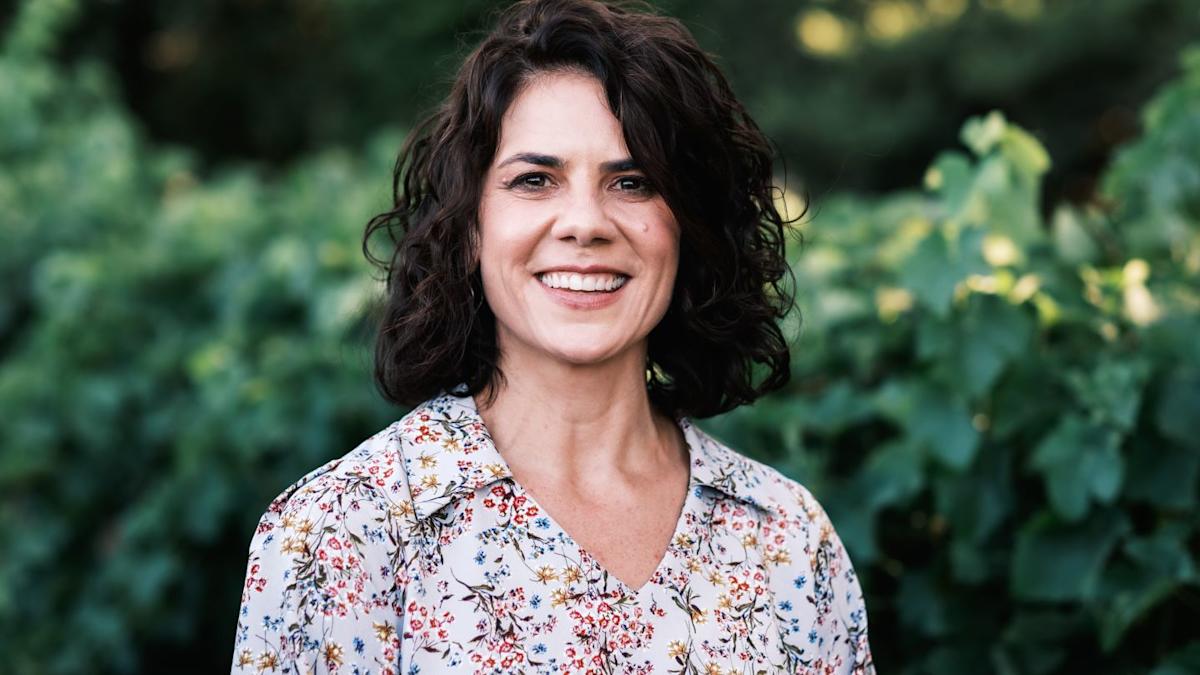
Late last year, Helen Kock started her role at South African winemaker Beck Family Estates as its first female chief executive.
The company’s portfolio includes still and sparkling wine brands Steenberg and Graham Beck, which it sells globally through key markets such as the UK, the US and Africa.
Beck Family Estates also owns the Abott Claim winery in Oregon in the US, though its focus is more on pushing sales of the South African brands, as well as its non-alc offering Allure, Kock tells Just Drinks.
The new CEO has two decades of experience in the wine and FMCG sectors. This has included over three years at Beck Family Estates as national sales manager, as well as more than four years as brand portfolio director at South African wine wholesaler Vinimark.
Just Drinks sat down with Kock to discuss her initial growth plans for the business and her broader outlook on the South African wine category.
Helen Kock (HK): No, it’s not our largest market but it is a key market that we’re going to intensify our focus on… We’re looking at getting more people on board and having more of a presence from a sales team perspective on the ground as well.
HK: It’s been a tricky one with the tariffs, and them going up and down. We were all very relieved when there was talk of the tariff relief for us, so we’re very optimistic. We’re fortunate that we’ve had a very strong brand presence in that market for more than 10 years now. It’s really [about] putting up a more focused strategy for that market, getting to understand the consumers, and understanding which other levers can we pull in that market so that we don’t rely so much on pricing.
It’s a market every South African brand probably tried to tap into over the last couple of years but it’s so diverse. We’re trying to approach it from [the aspect that] our brands are very much South African but how do we expand our own global mindset and really understand that market geographically [and] what consumers want?
HK: We’re fortunate, especially with our brands [like] Graham Beck. It seems in most countries the sparkling wine category is a little bit exempt of the other consumer trends that are taking place. There’s always an opportunity to celebrate, and the sparkling wine category has always been associated more often with celebration and consumer occasion. With the strength of the Graham Beck brand playing in the sparkling category, I almost want to say it is exempt just being seen as a South African wine brand.
It’s a little trickier with our Steenberg wine brand, because there we’ve got a couple of [products] in the sparkling category as well as still wines. Then it becomes a totally different ballgame competing in a still wine category. With our diverse portfolio, having Graham Beck being a market leader in sparkling wines, Steenberg having still and sparkling, and then our third wine brand being Allure, the non-alcoholic, we’ve got something that can play almost to each occasion and trend. We just need to really understand how do we unlock that potential in the US or the consumer environment with all three of our brands?
 Steenberg 1682 Chardonnay Cap Classique sparkling wine. Credit: Beck Family Estates
HK: The split between domestic South Africa and the international market fluctuates. With the last couple of months, [and] uncertainty in the US, we have been very much reliant on our domestic South African market. But we’re very fortunate that our UK market has been an extremely strong foothold for the Graham Beck brand. Then Africa has got some exciting growth that we’ve seen the last couple of years as well.
But like with any brand, you always should get nervous if you’ve got all your eggs in one basket. We’ve actively looked at growing and expanding our global footprint in the Asian market as well as the rest of Europe. But if I had to choose where we are putting our focus, it will be South Africa, US, UK and Africa.
HK: We’ve got a couple of strong footholds in the Africa market but there’s more and more opportunity coming through. The likes of Nigeria, for example. It’s just extremely difficult and resource-intensive to tap into those markets if you don’t already have a team on the ground that can consistently build customer relationships.
HK: The traditional ones. It will be Namibia, Botswana, which is still the closest to South Africa. But we will actively look at Tanzania, Nigeria, to expand our footprints there as well.
HK: It’s definitely a market where most South African wine brands have been trying to get into and some are more successful than others. Like I said, with the sparkling category, it’s almost as if we are exempt of the traditional wine trends. Champagne still has the strongest footprint and brand presence in Africa, and as people are getting used to that, there’s other alternatives to the Champagne brands. Our Graham Beck brand specifically fits really nicely into that gap, into almost the accessible luxury alternative to Champagne for celebrations and other occasions.
Graham Beck Bland de Blancs sparkling wine. Credit: Beck Family Estate
HK: Up until now, our export market has been heavily reliant on off-trade but it’s something we’re consciously looking at now changing. We’ve appointed somebody on the ground in the UK as well, to specifically help us with expanding our footprint into the on-trade. It’s tricky because that’s outlet by outlet. It’s not as easy as a listing on a group retailer perspective.
It’s very small volumes still. But I do believe that’s the right thing to do to entrench your brand in the consumer’s mind space. Then you’re also not as reliant on pricing as the only lever. The on-trade has always had that little bit more of a halo, brand equity and ‘premiumness’ for any brand.
HK: Not yet, no. It’s too early days. A core focus for me over the next 12 to 18 months is just to stabilise and build a very solid foundation for Beck Family Estates, so that there is a possibility to scale later. That could be joint ventures, that could be brand creation, that could be mergers and acquisitions, I don’t know yet. But I’ve worked with this family before, and that is the privilege of working for a family like the Beck’s, is there’s always a bigger vision. There are always more opportunities.
HK: Our portfolio when it comes to still wines on the Steenberg side, because we’re based in Constantia, is Sauvignon Blanc and Merlot-driven. We’ve seen that trend even in the South African market, specifically with cultivars like Shiraz declining. Sauvignon Blanc seems to be still holding its ground globally.
I do believe that our portfolio on the Steenberg side is geared towards white wine. But once again, the Sauvignon Blanc cultivar category globally, is an extremely competitive category, especially against countries like New Zealand, for example, that has really claimed that Sauvignon Blanc space in the consumers’ mind space.
There are still gaps in our portfolio, and that’s why we will definitely, going forward, look at what are those gaps? Is it something that we want to go after through joint ventures or acquisitions or brand creation? But at this stage, from a Steenberg perspective, we are still geared for the trends of having a good balance between red and white wines.
HK: It is sad to see but then I always believe that the devil is in the detail. The latest stats we’ve seen is I think exports declined by 13%. But what is declining? Is it bulk wine sales? Then maybe it’s not too bad a thing for us.
We’ve been our own worst enemy over the last couple of decades, where we’ve very much relied on pricing as a lever for the South African category
I do believe from a broader wine perspective South Africa is in a good space. We’ve managed to prove on a global platform that we do make exceptional quality wine, we’ve got exceptional winemakers. It is just now how do we really translate that into a sustained premium positioning internationally?
I’ve just come back from the UK two weeks ago, and it’s sad to see if you go into some of the retailers that the South African wines are merchandised on the bottom shelf, for example.
We’ve been our own worst enemy over the last couple of decades, where we’ve very much relied on pricing as a lever for the South African category. It’s now time to find how do we stand together as a category and position ourselves as more of a premium category? There’s still a lot of work to be done but we are going to need our global partners’ support in this matter as well.
We should get aware of we’re great value for money; we’re great quality, we’ve got authentic stories. We’ve got some exceptional wine brands [and] that’s proven over decades we can compete on the international market. In our stable, Graham Beck is one of them, if I look at our international accolades. But then there’s other great examples, like a Kanonkop… or Hamilton Russell that’s proven we can hold our own on a global stage as well.
Steenberg Merlot. Credit: Beck Family Estates
HK: It’s still very much where it started. It was an exclusive made for Woolworths, which is a premium off-trade retailer in the South African market. After that exclusivity agreement was done, it started filtering into the rest of the South African market. SA is still our largest one but we’ve managed to break into Australia, of all places. It’s doing exceptionally well.
I do believe it’s the right thing to have. I don’t think no- or low-alc will ever be as big as the rest of the wine category but it is driven by consumer needs for moderation, health and wellness.
There’s still a lot of potential in our Allure brand. It’s just finding a way of how do we treat something so different with the same level of respect, almost the way we treat full alcoholic wine brands and experiences?
HK: Yes, wherever we travel now, we do take it as part of our portfolio as a no-alc offering, because I do honestly believe there’s a need for more premium low-alc, no-alc or de-alcoholised wines and sparkling.
HK: The UK and US will be our two next ones. We’ve already, on our latest UK trip, started introducing our distributors and our customers to Allure.
FH: I’ve been fortunate to be in this industry for so many years, and my relationships have been extremely helpful for me in this role in my first four/five months.
Yes, I’m the first female CEO now for the Beck Family Estates but I want to get to a stage where that’s not a thing of being the first.
I haven’t faced any major challenges as yet, and I do want to believe almost I’m not going to just because I’m a woman CEO. Yes, I’m the first female CEO now for the Beck Family Estates but I want to get to a stage where that’s not a thing of being the first. I want to get to a stage where it’s almost a little bit more normalised, and for anybody, irrespective of who you are, to be able to be in a senior leadership role within the industry.
It was a lot harder, I want to say, 20 years ago. Times are changing, and there are more and more opportunities becoming available, not just for women but for other marginalised groups as well.
“Beck Family Estates on need to build “sustained premium positioning” for South African wine” was originally created and published by Just Drinks, a GlobalData owned brand.
The information on this site has been included in good faith for general informational purposes only. It is not intended to amount to advice on which you should rely, and we give no representation, warranty or guarantee, whether express or implied as to its accuracy or completeness. You must obtain professional or specialist advice before taking, or refraining from, any action on the basis of the content on our site.
Dining and Cooking