
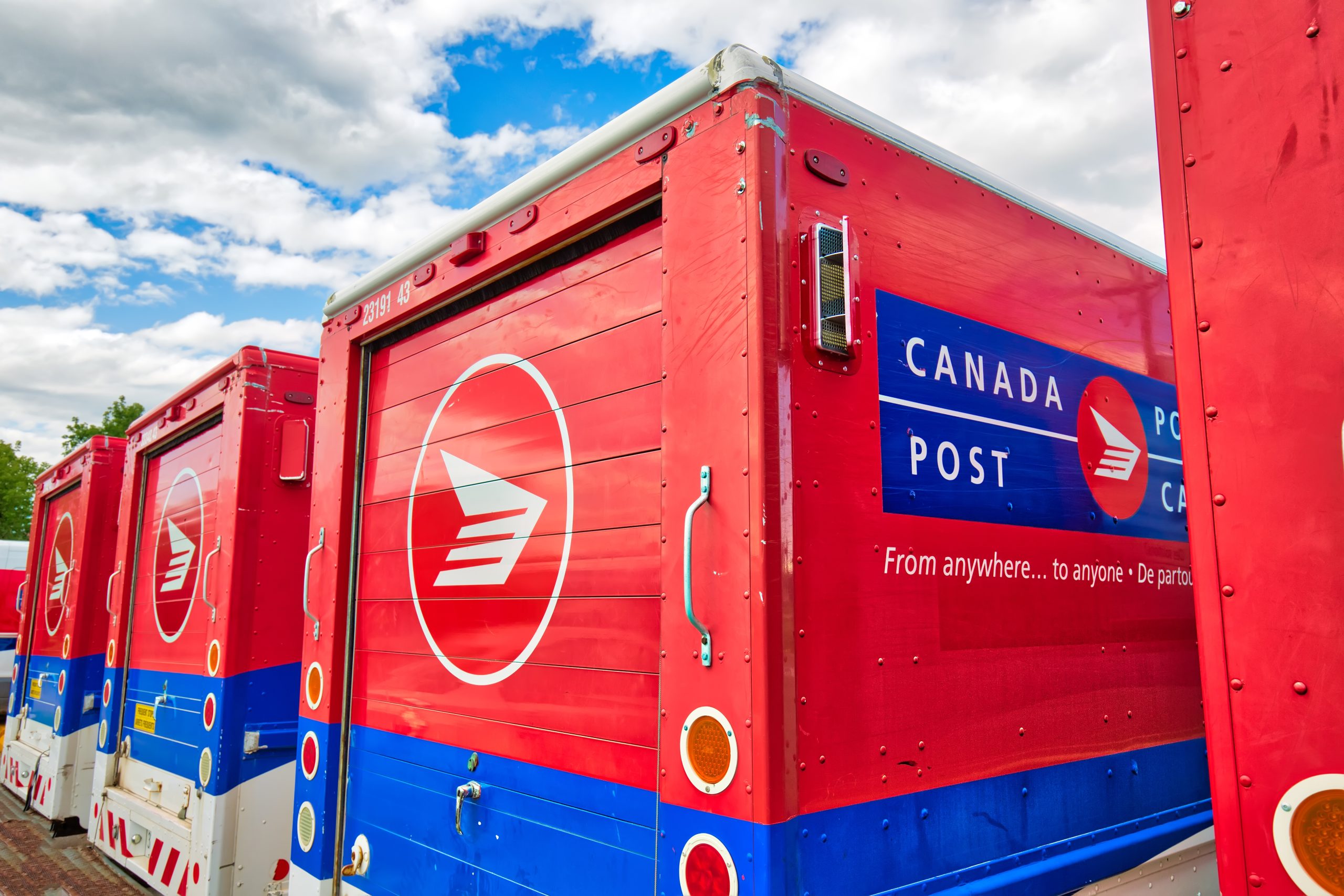
An MP in Okanagan, Canada, has introduced a private member’s bill to amend the Canada Post Corporation Act in a bid to remove federal restrictions on DTC alcohol shipments between provinces. If successful the move will open up sales throughout the country.
British Columbia winegrowers are backing MP Dan Albas as he attempts to change a law curbing direct-to-consumer shipments of alcohol between provinces. As the Okanagan Valley wine region falls under Albas’ constituency, he has good reason to push the bill forward. Okanagan is home to more than 200 wineries, and accounts for more than 86% (4,419ha) of British Columbia’s total vineyard hectarage.
Painting a picture of Canada becoming more self-reliant on domestic wine sales than relying on export sales in international markets, Albas said: “We need to be our own best customers. This is a valid way to do that.”
The bill – C-262 – was filed in Canada’s House of Commons on Monday 9 March, with Albas saying at a press conference that the bill would “allow Canada Post and other designated trusted carriers to be able to send anywhere with national consistent application from one province to another, full stop.”
He added: “This means that small producers would get a chance to compete for your business, and that your loved ones, when they go to an artisan distillery, craft brewery or small family winery, can send some of that wonderful product back home. And at a time when we say we should be focusing on things we can control, well, Parliament, this is something that is under our control. The Canada Post Act is a federal piece of law and we can get behind that.”
Canada Post roadblock
Conservative party leader Pierre Poilievre reiterated that the obstacle lies not with the individual provinces but with the Canada Post legislation itself. “It is currently against the law for Canada Post to deliver Canadian alcohol to Canadian consumers in six of 10 provinces. That is a federal law that Mark Carney [Prime Minister of Canada] refuses, so far, to change,” he said.
Currently, Canada Post only allows DTC shipments of beer, wine and spirits in four provinces: BC, Saskatchewan, Manitoba and Nova Scotia. It means that presently, BC producers are able to sell their wines direct to American consumers, but not to a Canadian consumer in, for example, Ontario.
Speaking exclusively to the drinks business this week, Jeff Guignard, CEO and president, Wines of British Columbia, said he is “optimistic” that the bill will be passed. “I spoke with Dan Albas directly before he tabled the bill and offered him our full support. He also has the backing of wineries across the country and many Canadian consumers. There is real momentum behind buying Canadian right now, and allowing direct-to-consumer wine shipments simply supports our farmers and small businesses.
“At the end of the day, it’s a straightforward idea whose time has come. Canadian wineries should be able to ship their wines to Canadian consumers.”
In terms of an expected timeframe for a decision to be reached on Bill C-262, Guignard flagged that “provinces are working toward a May 2026 timeline to establish a national direct-to-consumer framework.”
He added that there are “several tracks moving forward in parallel” and insisted that he is seeing “positive signals along the way.”
What will it mean for BC producers if the bill is passed?
“While it won’t resolve the complicated landscape of mark-ups or taxes, this bill would be a foundational step – opening the door for BC producers to get their products in the hands of Canadians across the country,” he told db. “Greater access would allow consumers to discover just how exceptional Canadian wine is. It could also inspire them to visit wine regions across their own country, supporting tourism and local economies while enjoying a great product. For producers, it simply opens access to the home market, which makes sense.”
Guignard explained that Wines of British Columbia has been advocating to reduce interprovincial trade barriers for years “and has been working closely with partners across the country to keep the pressure on and move toward a national framework for direct-to-consumer wine shipments.”
Summing up next steps if C-262 is approved, he added: “The bill proposes an amendment to the Canada Post Corporation Act that would prevent the postal service from refusing to ship wine directly to consumers across provincial borders. If the bill moves forward with the support of Parliament, Canada Post would be required to comply with the legislation.”
Not always neighbourly
Despite the cooperation between provinces to achieve this end goal, neighbouring Canadian provinces have not always been friendly with one another when it comes to wine sales. In 2024, BC winegrowers were left reeling after Alberta threatened to stop selling BC wines in its stores and restaurants unless BC immediately ceased its direct-to-consumer sales to Alberta residents. The Alberta Gaming and Liquor Commission believed it was missing out on collecting tax on bottles sold directly to consumers, despite the DTC category accounting for less than 3% of BC’s total sales.
“It is disheartening for our local growers and producers, who have already suffered great financial hardships over this past year,” said Wines of British Columbia at the time.
Local opportunity
Canadian producers have been keen to capitalise on the rising demand for Canadian wines since Canada ruled in February 2025 that US wines must be removed from retail shelves in the wake of President Trump’s 25% import tariff. Consequently, according to data from the American Association of Wine Economists (AAWE), the value of US wine exports to Canada plummeted US$342.8 million between 2024 and 2025.
It’s good news for Canada producers in that consumers are being actively encouraged to “buy Canadian”. However, the downside is that Canada has found itself stuck with millions of bottles of unsold US alcohol, with the government struggling to decide out what to do with the stock. In December 2025, Ontario was reported to be sitting on CN$80million (£43.3m) of US alcohol it had withdrawn from public sale.
Related news
US wine exports slashed by a third on back of Canada trade spat
Canada stuck with millions in unsold US alcohol
Vagabond opens London’s largest urban winery at Canada Water
Dining and Cooking