
When is a Caesar salad not a Caesar salad? When it’s topped with a chicken chicharrón crumble and a scoop of caviar by a chef in a MICHELIN Guide restaurant.
From Tijuana, the home of the stalwart salad, to the streets of Mexico City, where esquites are the favorite snack, restaurants are innovating around some of the country’s gastronomic go-tos.
Below, six inventive dishes are becoming classics of their own.
EsquitesJowong, Mexico City
Esquites are an essential Mexico City street food, a warm, soupy muddle of corn kernels and cheese ladled out after dark into styrofoam cups. Jowong, in the fashionable Condesa neighborhood, brings the classic dish indoors and reimagines it in line with its Korean cousin.
“The inspiration traces back to corn cheese, the molten, mayonnaise-laced anju (drinking snack) that rose to popularity in South Korea in the 1980s and ’90s, shaped by post-Korean War Western influence and the growing availability of corn and dairy,” the restaurant explains.
The kitchen starts by blanching fresh sweet corn to bring out its milky flavor, then shocking it in water to keep its snap and color intact. The kernels are then lightly tossed in starch and crisped to provide a “gentle crack against their tender interior,” the restaurant says.
The seasonings come from the Asian roots of the recipe: gochugaru, a Korean chile, for a smoky heat and Sichuan pepper for citrusy notes and a subtle tingle. Stracciatella and cotija, the salty, crumbly Mexican cow’s cheese, form a creamy mound in the center. Fragrant epazote leaves scattered on top bring the cross-cultural dish full circle.
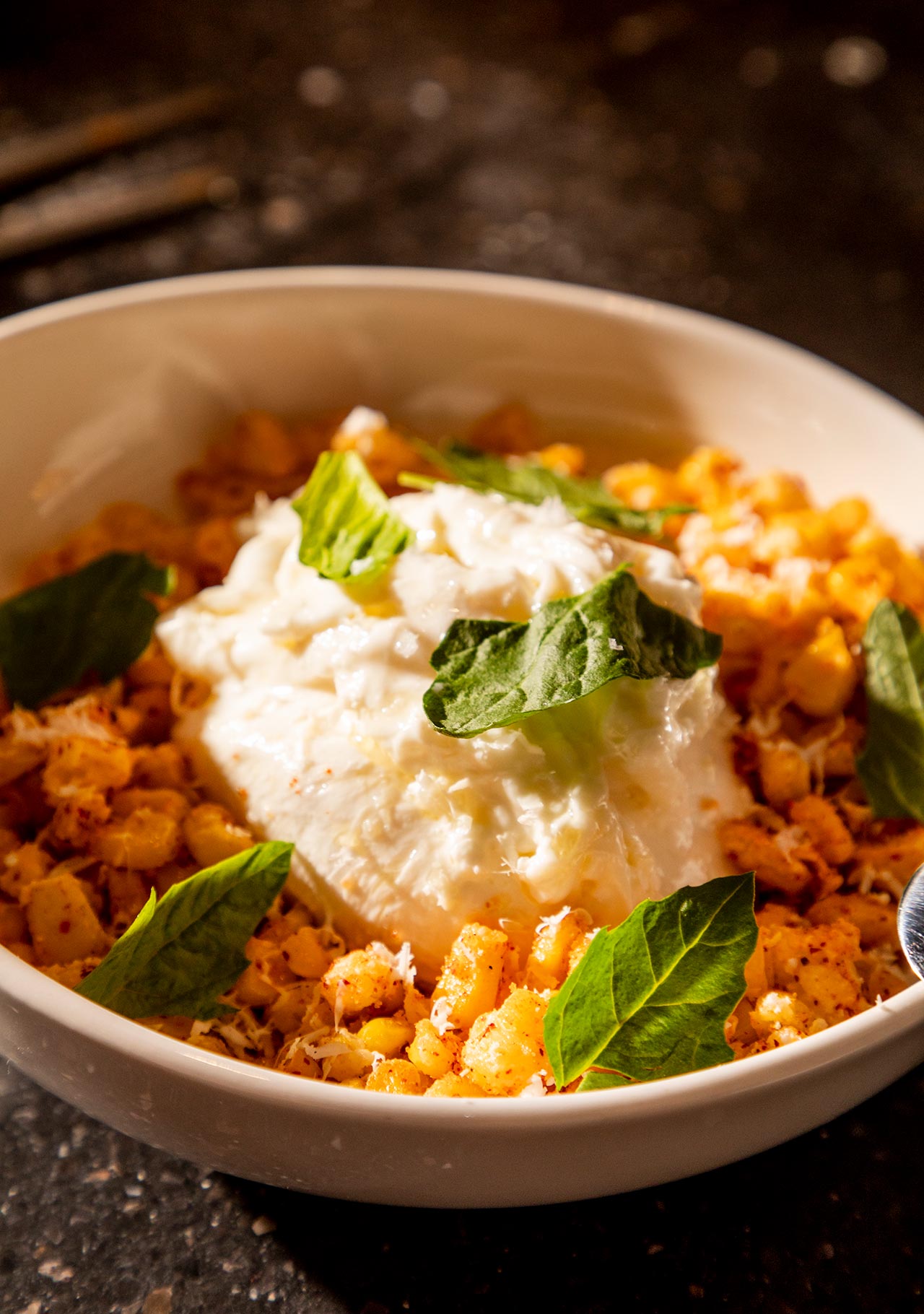
Esquites from Jowong. © Jowong
DzikilpakArca, Tulum
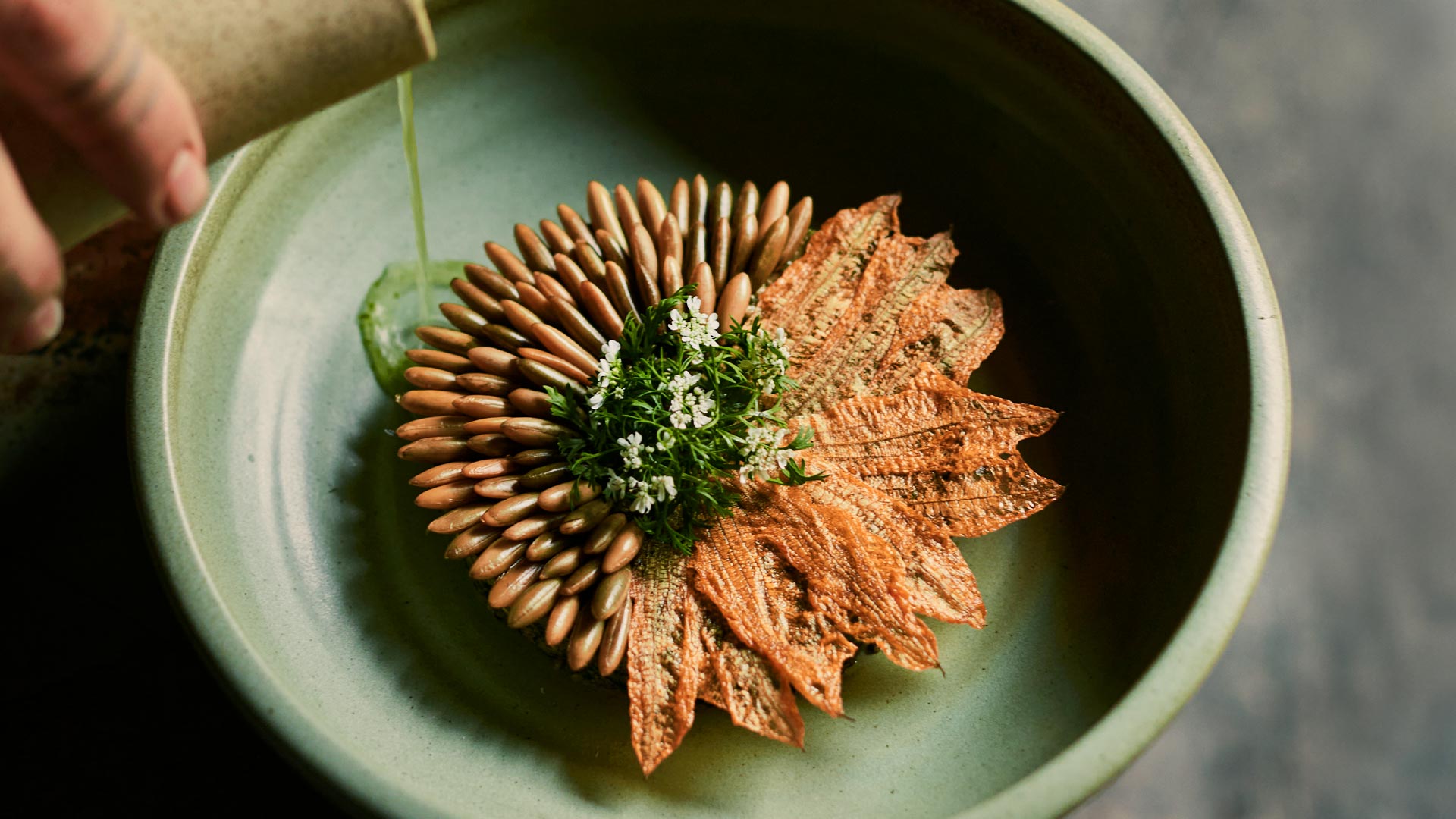
Dzikilpak, an earthy dip made from toasted pumpkin seeds, is an ancient mainstay of the Mayan people of Mexico’s Yucatan Peninsula.
“In every Mayan home that has welcomed me over the past decade in Tulum, there has been a bowl of dzikilpak placed at the center, offered before the meal begins. It represents sharing, gathering and hospitality,” says Jose Luis Hinostroza, the chef and co-owner of Arca, a fine dining favorite in Tulum.
At his restaurant, set in the beach town’s thick jungle, Jose Luis Hinostroza echoes indigenous cooking with interpretations that move fresh, local ingredients to the fore. (Hinostroza is an alum of noma, the Copenhagen institution known for its locavore orthodoxy.)
For the dzikilpak, that means grilling green tomatoes to add brightness to the umami the dish gets from the ground seeds. The standard recipe’s onions and garlic get a turn over live fire – like most things at Arca – and Hinostroza adds cilantro, basil and chaya to honor “both tradition and the biodiversity of the region.”
A layer of smoked pumpkin seeds radiate out like petals on top, and a drizzle of cilantro oil and smoked green tomato water reinforce the dish’s “vegetal and smoky character while preserving its purity,” Hinostroza says.
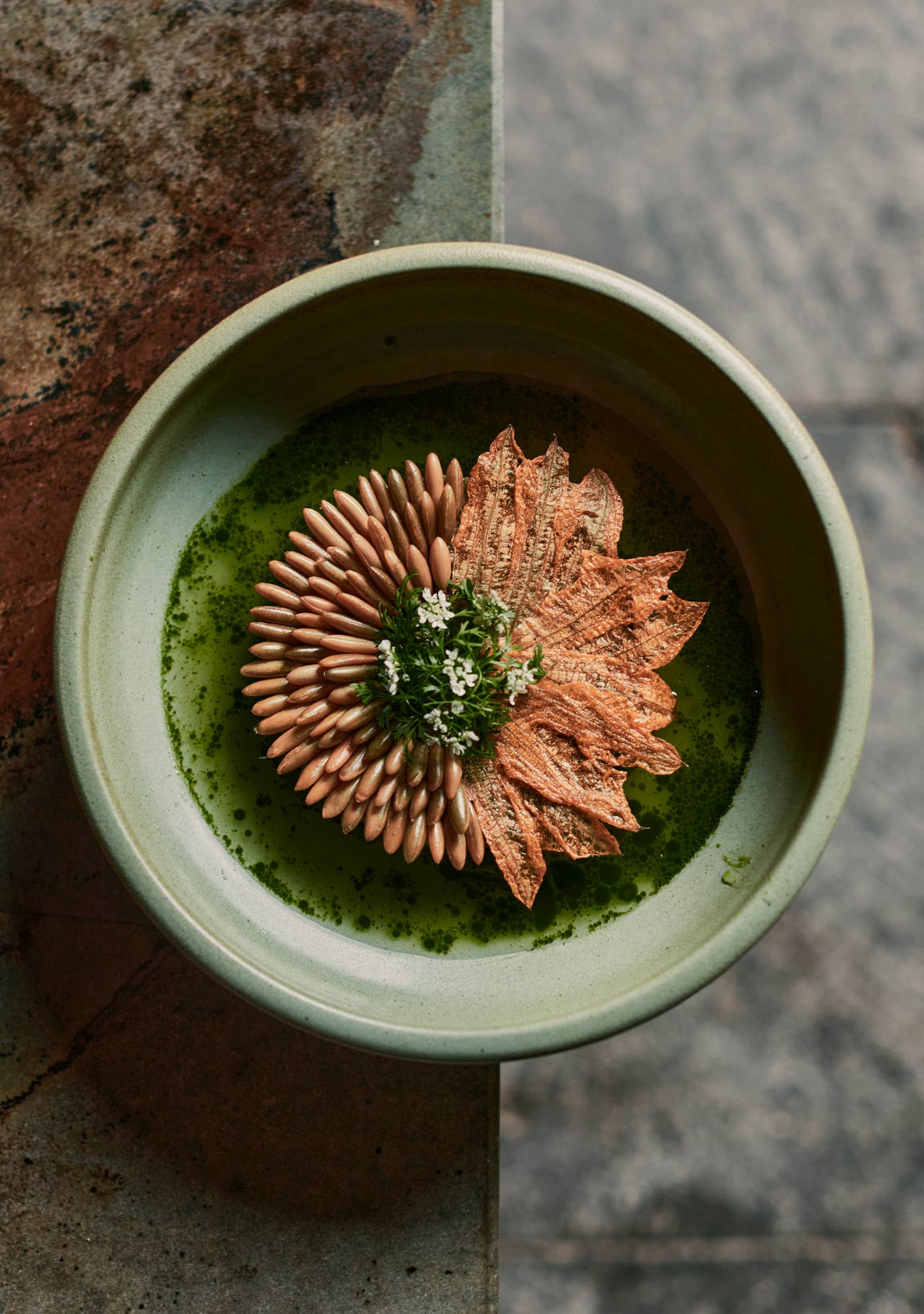
Dzikilpak from Arca. © Pepe Molina
Caesar SaladOryx, Tijuana
One hundred and two years ago, well before it became one of the world’s most de rigueur salads, the Caesar made its debut in Tijuana, Mexico. The leafy legend is a point of pride in this border city, and for its centennial, tributes abounded. Oryx might have crafted the most lavish example.
“We dared to make a Caesar salad in the city of the Caesar salad, which we hadn’t done in eight years,” Chef Ruffo Ibarra says.
Ibarra starts by passing little gem lettuce doused in smoked oil over the grill for just a few seconds, “so that it gets a little bit juicy but still stays crisp.” The wedge is dressed traditionally, if luxuriously, with two-year aged Parmigiano Reggiano, pickled mustard seeds and California Ossetra caviar.
On top, Ibarra grates more parm and a cured egg yolk that’s been treated with soy sauce, sugar and salt. Last on is a crumble, Ibarra’s cheffy evolution of the humble crouton. “I have a thing against croutons because I think they’re one of those things that are difficult to pick up with a fork,” he says. His solution: a dusting of blitzed-up rye bread, garlic, herbs and crispy chicken chicharrón.
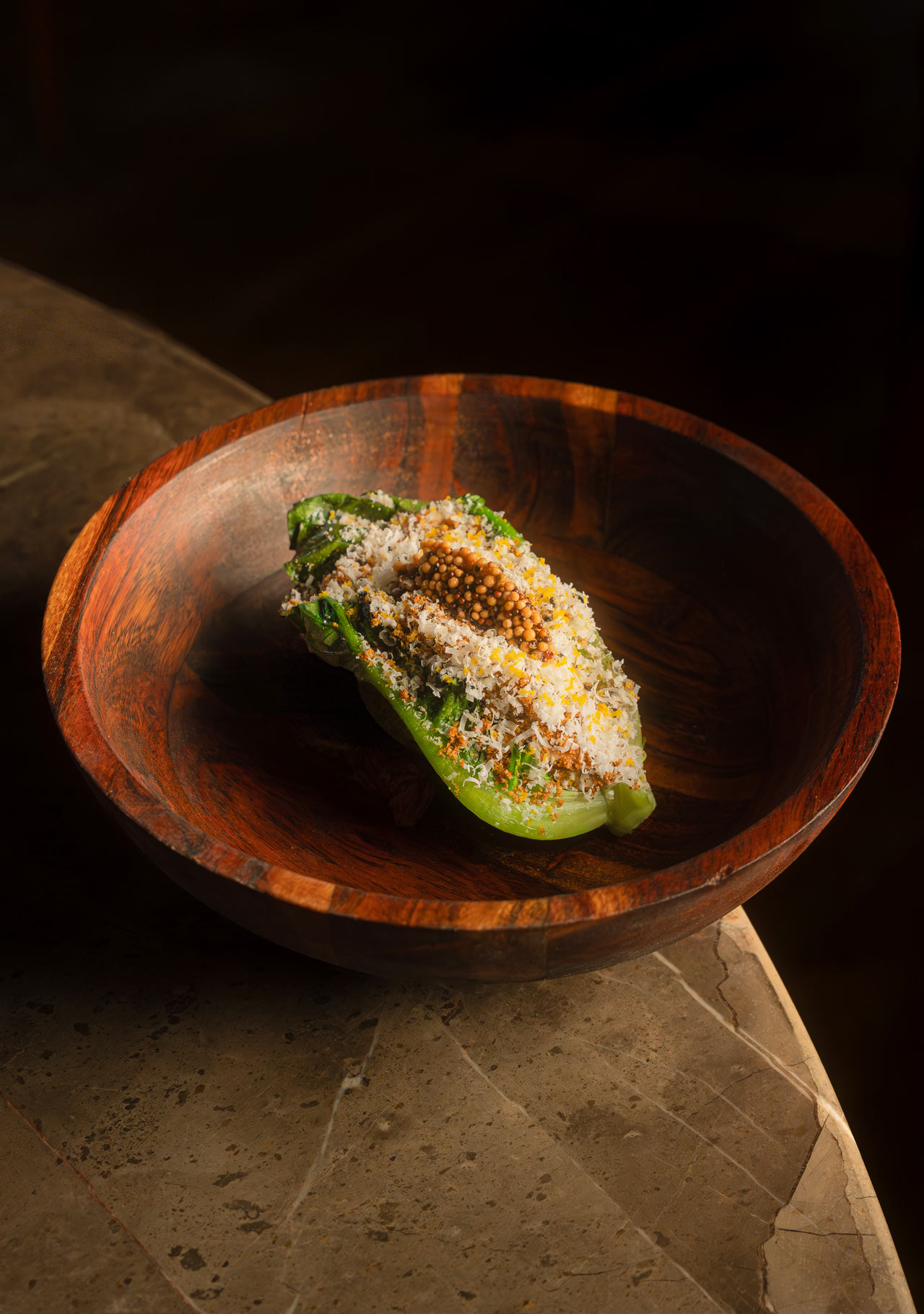
Oryx Caesar Salad. © Transversal
Carne asadaKoli, Monterrey
In Mexico’s cattle-rich north, grilling is part of the definition of daily life. Meat, cooked simply over a flame, is the star of the carne asada, the region’s sacrosanct family meal.
Monterrey’s MICHELIN-Starred Koli knows how to cook a good piece of steak. But they’re also one of the country’s most innovative restaurants, with a devotion to the environment and the future of food. That’s why last year, they magicked beets into beef in a state-of-the-art lab.
“Duality,” as the dish is known, is “an exploration of new ways of understanding meat from a sustainable perspective,” the restaurant says. To make it, biomedical experts at Tec de Monterrey, a top technical university based nearby, used a 3D printer loaded with a trio of plant-based pastes that simulate the core elements of meat: its protein, fat and connective tissue.
As the pastes are pushed through a specially designed extraction head, they’re woven together, creating a hunk of food with the same chew as a prime cut.
“This structure gives us the texture and the organoleptic experience that we enjoy so much in meat products,” says Dr. Grissel Trujillo de Santiago, a biomanufacturing specialist at the university, using a Ph.D.-level term that means sensory qualities.
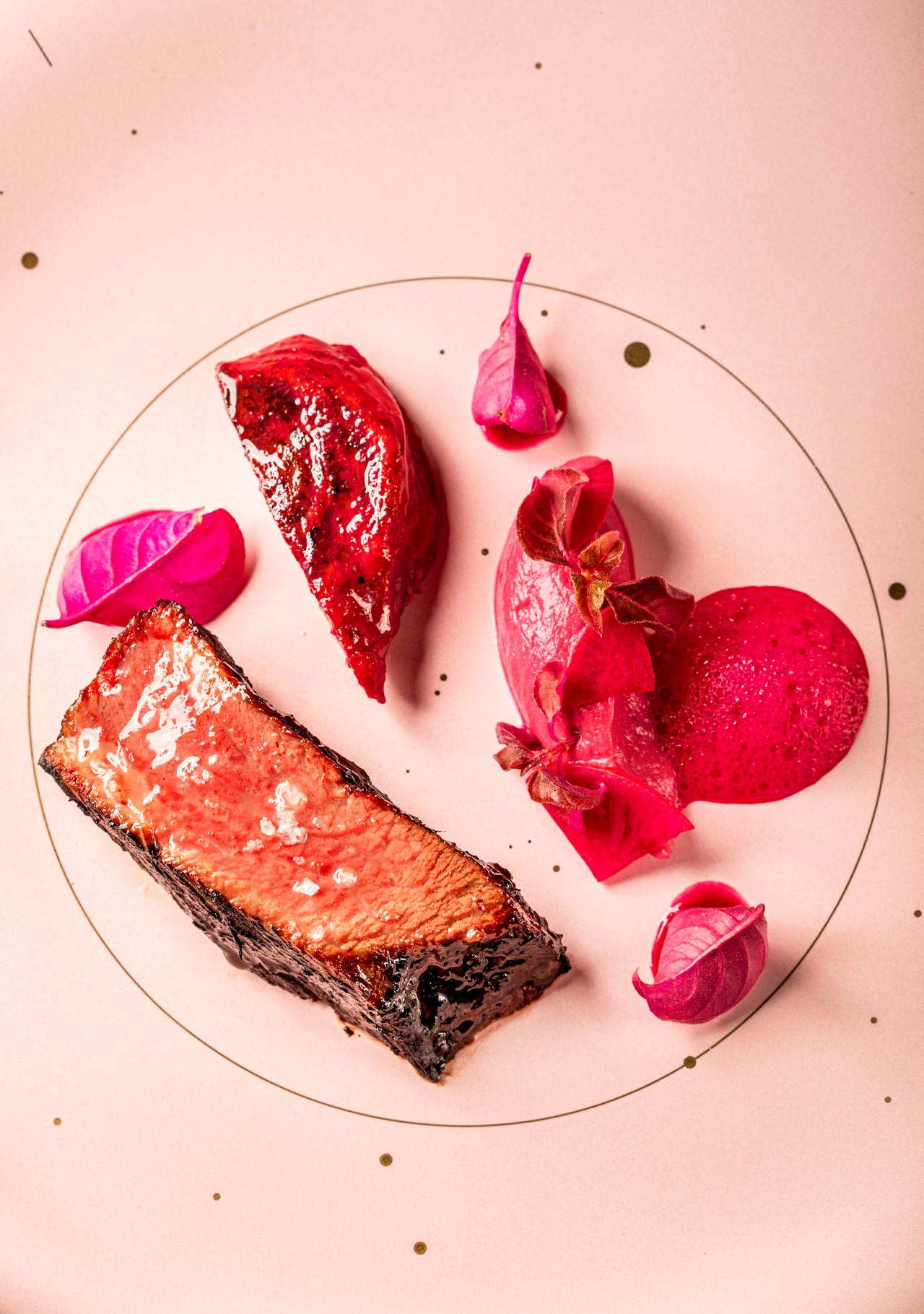
Koli Carne Asada. © Hane Garza
MoleLos Danzantes, Mexico City
Mole comes in myriad forms, with variations of ingredients that can number in the dozens. Los Danzantes, with locations in the Oaxacan heartland of the dish and in Mexico City, makes some of this country’s most celebrated offerings.
“For us, mole is a living art. It’s born from ritual, from cultural fusion and from a profound connection with the land; not as a fixed recipe, but as a language that evolves without losing its meaning,” says Alejandra Aguirre Toledo, assistant director of the Los Danzantes Group in Mexico City.
For their mole chinampero, the restaurant uses vegetables grown in the chinampas, Mexico City’s pre-Hispanic island farms, including chicory, chard and kale, as the base of the velvety chartreuse-hued sauce. Herbs like cilantro, epazote and hoja santa add springiness and aroma, while traditional vegetables like chilacayote (a kind of squash), ayocotes (large beans) and tomatillo balance the dish with clean and acidic notes.
“These moles are not just served, they are told: they are born from a process of research and observation of the land, taking advantage of the ingredients that the earth offers in its season and context,” Chef Sergio Camacho Ibarra says.
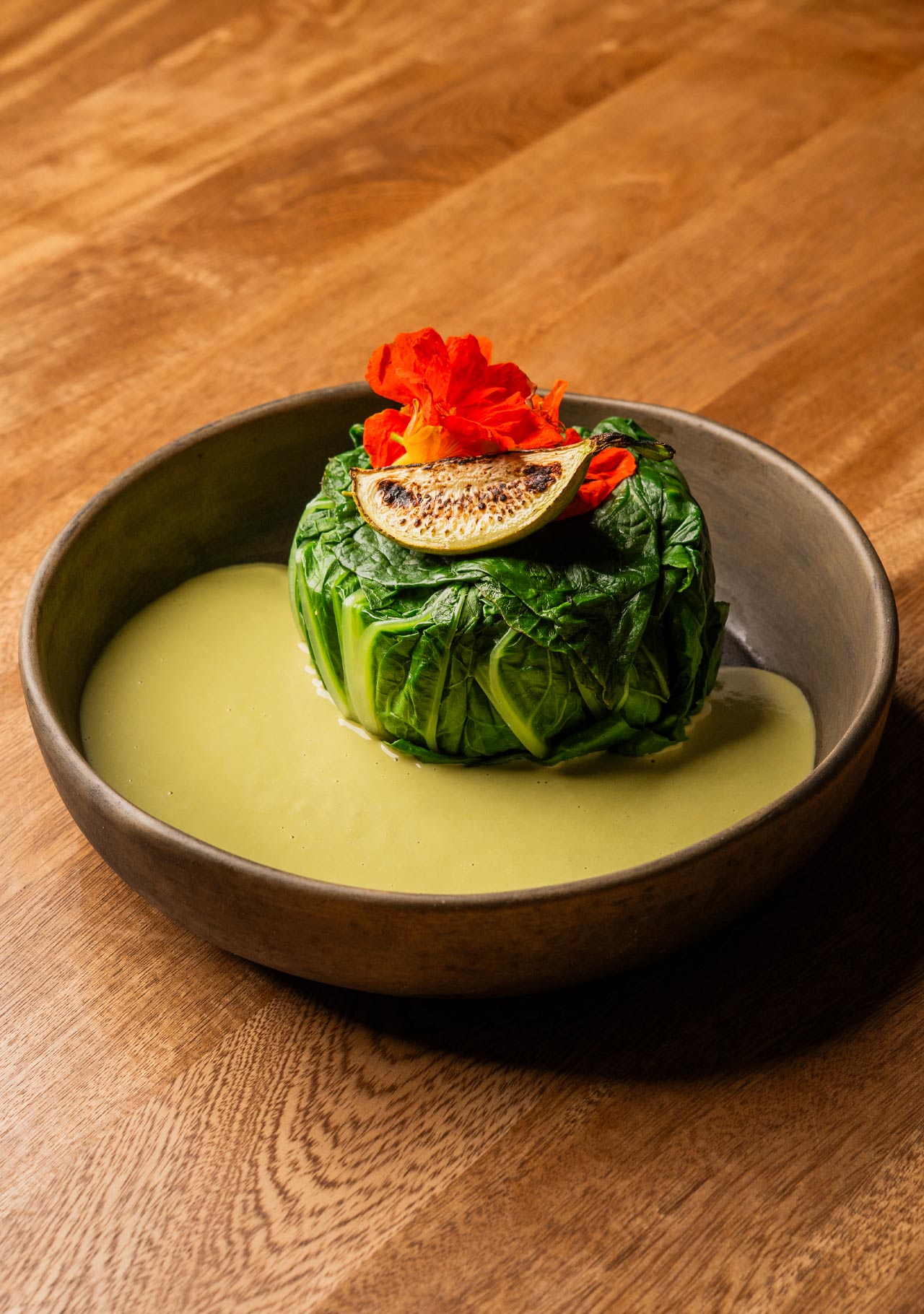
Mole Verde with Chinampa and Vegetables from Los Danzantes. © Isaac Salas
Kampachi crudoDŪM, Todos Santos
Kampachi, a mild white fish, makes its home in the warm waters off the coast of the Baja Peninsula, where sustainable farms have grown the species into a Mexican staple. On menus nationwide, it’s often served raw, dressed in sauces heavy on chile and lime.
At DŪM in Todos Santos, the buzzy beach town up the coast from Los Cabos, Chef Aurelien Legeay gives the dish a fun zag, in the form of a scoop of avocado sorbet.
First, the fish is thinly sliced and marinated in a shiitake vinaigrette. Pickled seaweed from a nearby regenerative red algae farm, radishes and mustard leaves make a small salad on top. And a gomashio condiment of sesame seeds and local sea salt adds a Japanese crunch.
For the sorbet, creamy avocados are spun with serrano pepper for heat and formed to look like a characteristic half-moon slice. “A total surprise to the palate,” the restaurant says.
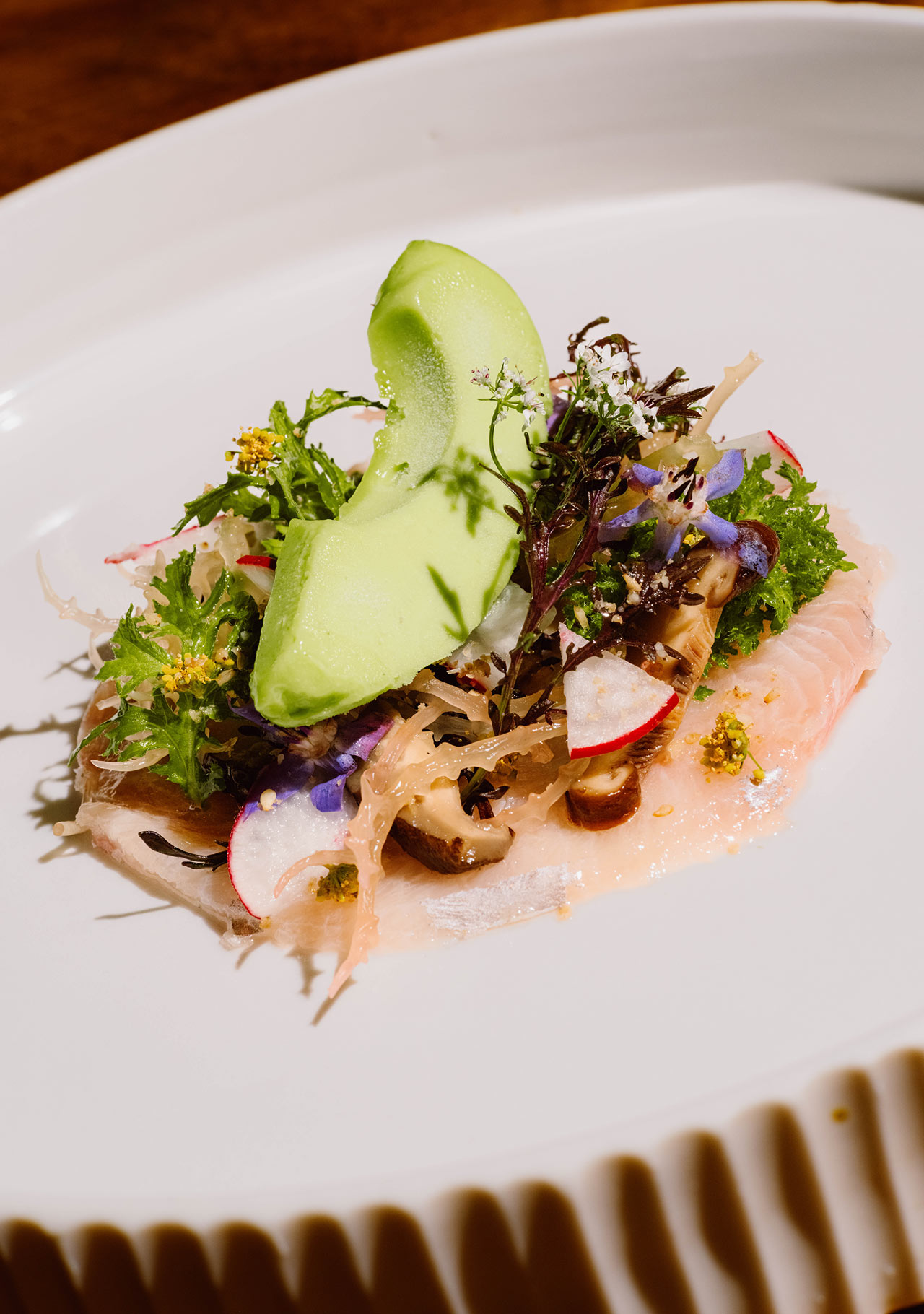
Kampachi crudo from DŪM. © Oscar Garcia

Hero image: Dzikilpak from Arca. © Pepe Molina
Thumb image: Mole Verde with Chinampa and Vegetables from Los Danzantes. © Isaac Salas

Written by
David Shortell
David Shortell is a Contributing Writer for The MICHELIN Guide, based in Mexico City. His news and travel reporting has appeared in publications including The New York Times, CNN, and Travel+Leisure.
Dining and Cooking