
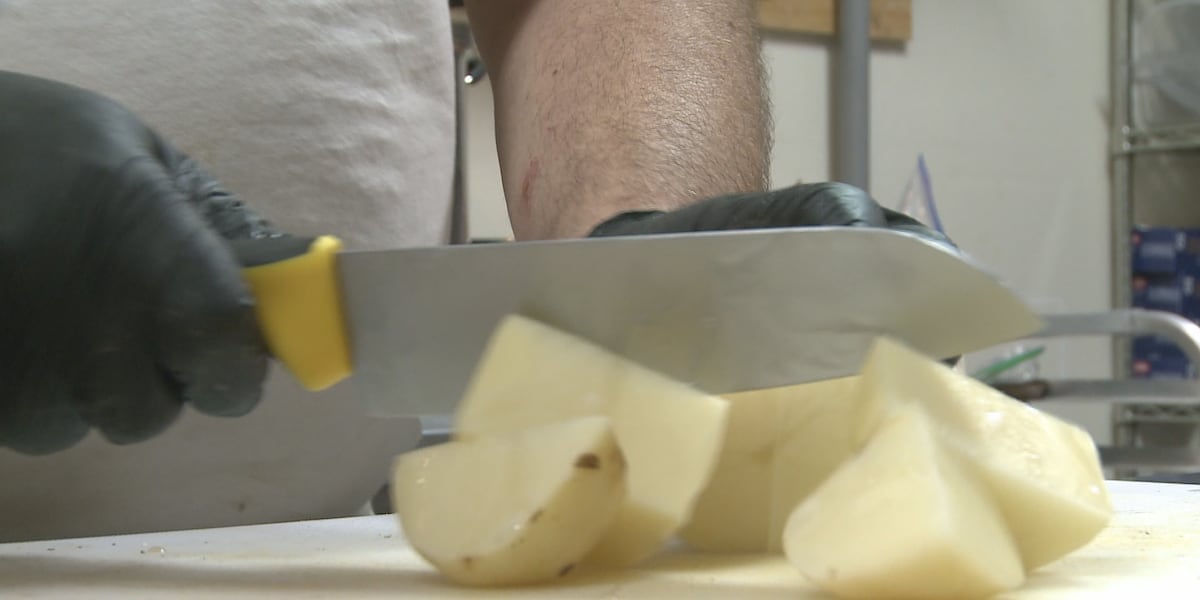
MCGRATH, Alaska (KTUU) – Keeping the Iditarod Trail Sled Dog Race on go takes a village – in fact, it takes several.
At each of the many stops along the nearly 1,000-mile journey through the heart of Alaska, small communities rally together to welcome, feed, and house mushers as they pass through, an undertaking that requires dozens of both local and visiting volunteers at each stop.
But if the village feeds the mushers, who feeds the village?
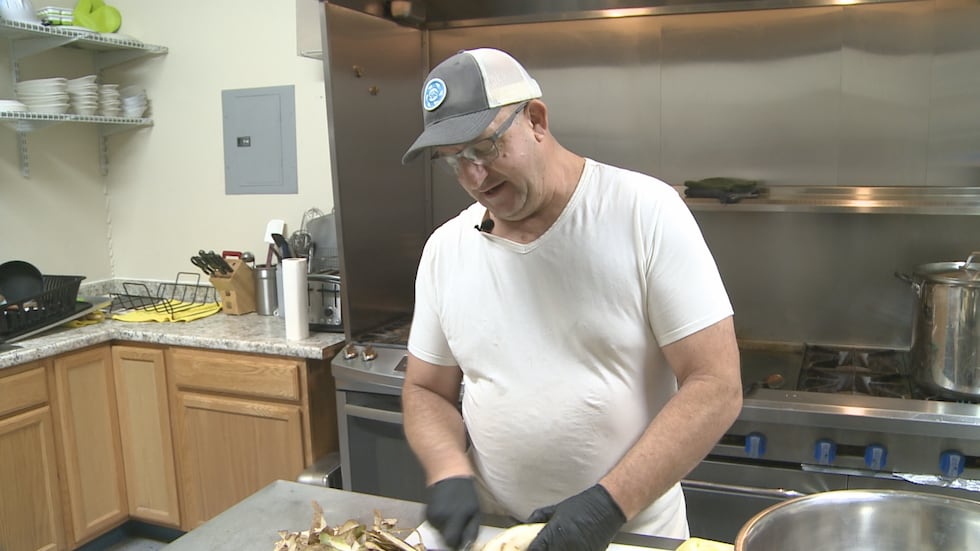 Tony Bove works long and tiring hours to ensure the volunteers staying at the Innoko Lodge in McGrath are fed.(KTUU)
Tony Bove, like many Iditarod volunteers, puts his normal life on pause each winter to travel to rural Alaska.
A cook and glassworker in Oregon by trade, Bove assumes a different title when he arrives in McGrath, his Alaska kitchen for the last seven years.
“They call me the chef because I make a bunch of different stuff,” he said. “But I’m not formally schooled.”
Despite that, he knows feeding a lodge full of hungry volunteers in the middle of winter in a tiny community cut off from the main North American road system is a difficult job – and that he is up to the challenge.
“I’ve cooked a lot in restaurants and lodges and at many events, but this is one of the biggest animals I’ve ever handled,” Bove explained. “You’re managing the food, the fridge, the freezers, properly putting things away.”
The food in particular can be a challenge, due to the inherent logistical problems with sourcing ingredients in a community only accessible in the winter by plane or world-class dog team.
“Alaska sometimes just doesn’t have ingredients,” he said. “I like to bring all my own fresh ginger root. You know, it’s great for Asian meals, teriyaki sauce, rice, you name it.
“Sometimes, the state of Alaska doesn’t have any. They’re sold out.”
Bove arrived in Anchorage from Oregon on February 19 and promptly went, in his words, “mad shopping”.
“Anyone that knows will tell you it’s a hoot,” he attested.
Four days later, he brought his ingredients to McGrath and began to prepare – with a little help from the brutal tundra cold.
“You’ve got to store it properly,” Bove explained. “I have an outdoor freezer right now in totes because it doesn’t get above zero much.”
Once the Iditarod circus finally arrives, Bove has to truly kick into gear.
“That was a little over a 17-hour day,” he recalled of the night of March 10, when the first few mushers arrived. “And that’s straight through. There’s no nap or break or sitting down or anything like that, just go, go, go.”
And in spite of all of that, Bove keeps coming back.
“It feels good,” he said of the feeling of providing for the volunteers. “I know I’m working hard and they’re working hard doing what they’re supposed to do. I just want to make sure they go to bed happy and full.
“Nobody’s going hungry. Absolutely not.”
While Tony mans his kitchen in McGrath, dozens of other cooks do the same job in villages up and down the Iditarod Trail, many with far fewer resources than McGrath affords.
“You’ve got to work with what you’ve got in Alaska,” Bove observed.
Those chefs and cooks do just that, two degrees of separation removed from the mushers and dogs that star in the Iditarod show – nevertheless ensuring with gusto that the volunteers stay fueled to do their jobs and keep the race on track.
See a spelling or grammar error? Report it to web@ktuu.com
Copyright 2026 KTUU. All rights reserved.
Dining and Cooking