
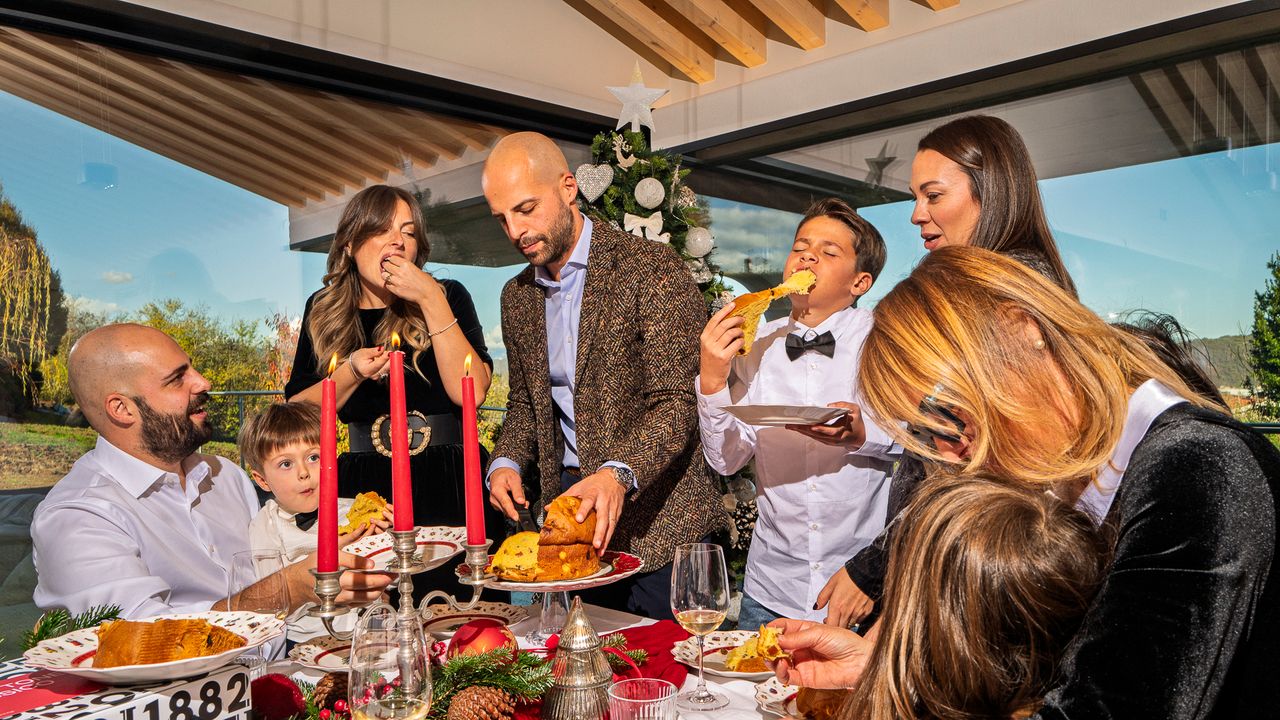
Panettone in the US has somewhat of an unfortunate reputation. The traditional Italian sweet bread popular during Christmas and New Year is considered here a dry, rather stodgy baked good with tasteless specks of dried fruit. It’s often sidestepped on the dessert spread—or prone to endless regifting.
But what it should be is tall, fluffy, and dome-shaped, with a light, airy texture. Typically made with enriched dough (flour, eggs, butter, sugar), studded with raisins and candied orange and citron, and naturally leavened with sourdough starter, the taste is soft and buttery, with mild sweetness, citrus notes, and bursts of fruit.
Olivieri 1882 does it properly—and has impressed dubious Americans since it began shipping fresh panettoni Stateside from its base in Italy’s northeastern Veneto region in 2020. (Italy has a rich tradition of Christmas desserts; each region has its own specialties, many centuries old and still tied to local ingredients and customs.) Brothers Nicola and Andrea Olivieri, now the fifth-generation scions of a baking dynasty that dates back 143 years, are well aware of the perception challenges facing panettone in the US. Andrea derisively calls industrial panettone—which Americans are probably most familiar with—“a bread with raisins.” Olivieri 1882’s artisanal, small-batch panettone, by contrast, is crafted by hand over four days using natural sourdough and top-quality ingredients, without artificial aromas or additives.
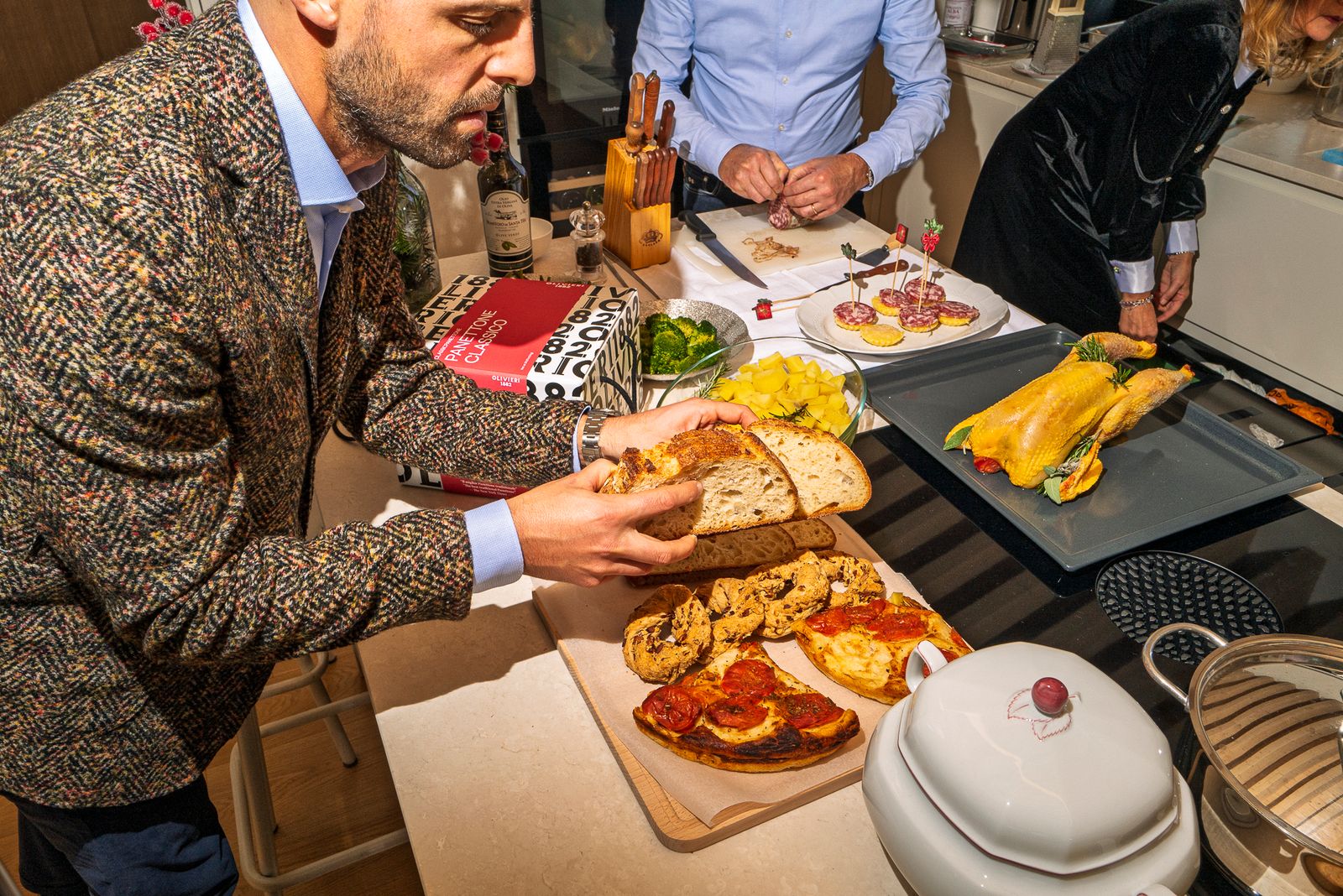
Nicola Olivieri assembles a board of homemade sourdough bread, taralli (circular wheat-based crackers similar in texture to breadsticks) with pepper, and focaccia with tomato, while Oliviero Olivieri prepares sopressa, a Vicenza-specialty salami, atop polenta rounds. The bread is important for scarpetta—sopping up any leftover sauce on the plate.
Photo: Ey Studio
Nothing is rushed, Andrea explains. “The dough rises multiple times, slowly and naturally, which creates an incredibly light, silky texture and a deep flavor that industrial panettoni simply don’t have.” And once you taste great panettone, Nicola promises, “it’s like drinking good wine—you never go back.”
Their parents, Oliviero Olivieri and Patrizia Scalzolaro, ran the bakery from 1980 until about 2015, when Nicola (who had been working at a bakery and surfing in Australia) and Andrea (then working for an American corporation in Milan) decided to take over. In Arzignano, an industrial town an hour west of Venice, they unveiled a shiny facility 10 times the size of the previous shop, with an airy, sprawling café and retail space out front that entices with marvelous displays of baked goods.
Nicola, the elder, is a tattooed marathoner who often posts about his trail runs through the surrounding hills (“the fit baker,” teases Andrea, who oversees the business side while Nicola heads the baking day-to-day). He’s learning Brazilian with an eye toward expanding the brand’s presence in that country, now reportedly the world’s largest producer and exporter of panettone. (Millions of Italians immigrated there around the turn of the 20th century; today, Brazilians eat panettone year-round.) Japan is another market on the radar; this year’s offering includes a green tea, yuzu, and white chocolate panettone. (The German Christmas treat stollen, also a fruit bread, is popular in Japan, they point out.) As Nicola puts it, “We want to be ambassadors of panettone around the world.” They deliver to 76 countries and counting.
Dining and Cooking