
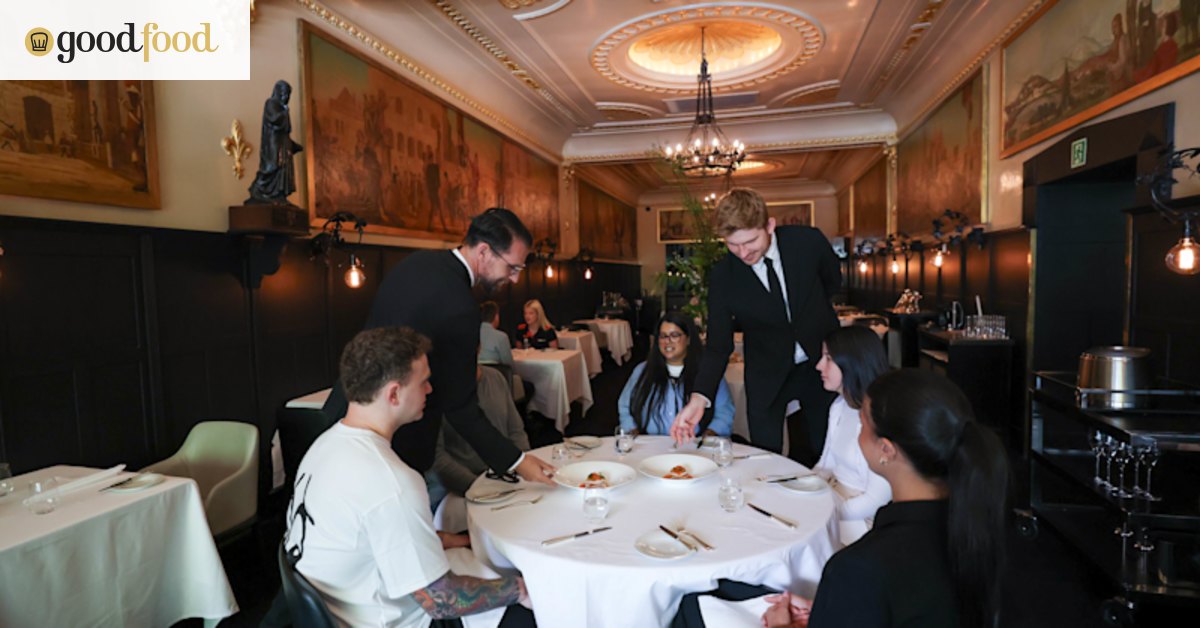
Nearing a century, the Italian restaurant is a precious commodity, a piece of living history. Its new stewards are leaning into its Old World spirit, but can they meet the expectations of modern diners, asks Besha Rodell.
Save
You have reached your maximum number of saved items.
Remove items from your saved list to add more.
Save this article for later
Add articles to your saved list and come back to them anytime.
Got it
AAA
Good Food hatGood Food hat16/20Critics’ PickHow we score
Italian$$$$
“The Florentino remains crowded day after day, year after year, because of its particular style,” wrote Rita Erlich in a 1985 review for this masthead. “People do not come here for exciting or innovative food; they come here because they know exactly what the food will taste like, and can rely on the same dishes tasting the same year after year.”
For a restaurant that had, at the time of that review, been open for nearly six decades, tasting the same year after year was quite a feat. As was remaining crowded. In the intervening four decades, a lot has changed, and many things have remained the same.
It would probably make more sense to wait until 2028, the 100th anniversary of the restaurant, to re-examine it in full, but for the fact that Florentino and its sibling restaurants have recently undergone regime change after 26 years as part of the Guy Grossi empire.
In December, without even a pause for the switchover, Edition Group (formerly Nomad Group and owners of, among other things, Reine and La Rue, led by Rebecca Yazbek) took the keys to the entire operation: Cellar Bar, Florentino Cafe (previously Florentino Grill), and the grande dame on the top floor, Florentino Dining Room. Earlier in 2025, The Age revealed a history of sexual harassment allegations raised by female staff and industry leaders against Guy Grossi and his staff. Grossi has denied the allegations.
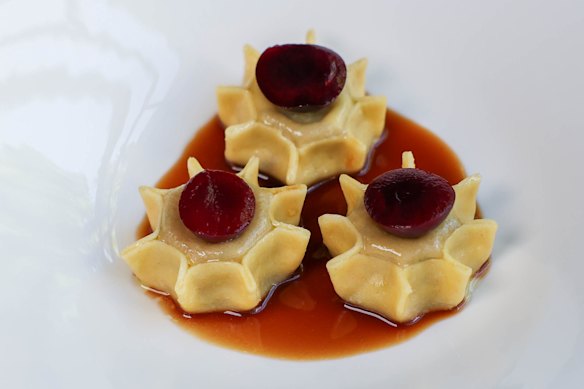 Pasta, such as sun-shaped duck ravioli, each topped with a pickled cherry, remains a strong suit.Joe Armao
Restaurant reviews, news and the hottest openings served to your inbox.
Sign up
Aside from some expansions and refreshes, the upstairs space has remained basically unchanged since the early 1930s. But for those who have not had the pleasure, let me tell you: this is one of Melbourne’s best rooms, its wood panelling (now painted dark, adding to the moodiness) and Italianate murals and grapevine wrought-iron light fixtures evocative of a clubbier, grander time when dinner was an event, not a casual pastime.
It would be ridiculous to say it feels outdated, but it does not feel of this era in any sense, and it’s probably because of this that Florentino is no longer crowded, at least not any time I’ve been there recently.
It’s smart, I think, to lean into this Old World spirit, with a champagne cart that arrives by your table and the type of service that requires proper training and formal attire. Again, not modern, but to attempt modernity in this room would be futile. History rules here.
This is one of Melbourne’s best rooms … evocative of a clubbier, grander time when dinner was an event, not a casual pastime.
In that spirit, new executive chef Brendan Katich, along with Michael Greenlaw, have focused on historical menus, pulling from them to inspire this era of Florentino. That doesn’t mean a menu of throwbacks, exactly, but more an appropriate homage to what has come before. Eating here is now more accessible financially, with options for $95, $130 and $260 menus, for two or three courses, or for a seven-course degustation.
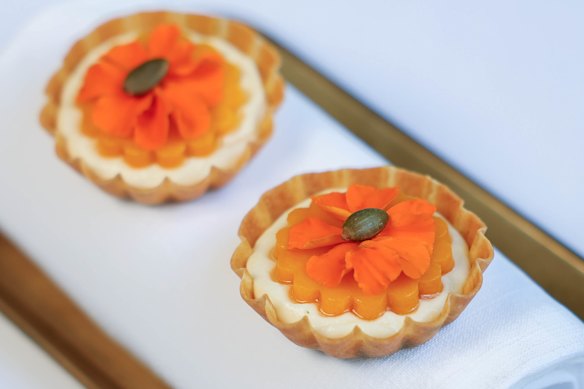 Tartella de zucca, a tartlet holding parmesan custard, confit pumpkin and pumpkin seed praline.Joe Armao
Little bites of antipasti (add-ons for anything but the full deg) are delightfully fussy: a tiny cannoli filled with duck liver parfait and porcini mushroom, topped with a juicy blackberry; a tartlet holding silken parmesan custard and confit pumpkin is ramped up with a nutty pumpkin seed praline.
Pastas are still a strong suit, in particular beautiful sun-shaped duck ravioli sitting in an elegant broth and topped with pickled cherry. There’s a truffle and hen of the woods mushroom risotto that is as rich and classic as they come, and a silky, saffron-rich spaghetti with Moreton Bay bug. In many ways these are familiar flavours, but there’s a level of care and technique here that’s rare.
In fact, the few missteps I encountered coincided with dishes about which I got the sense that someone wasn’t quite able to stick to the brief and too much newness had snuck in. A “lasagne” of lightly poached scallops, sliced thin, layered and interspersed with ’nduja and king prawn sugo finds the delicate sweetness of the shellfish overwhelmed by the spicy sausage.
I’m not sure I need another tuna crudo in this room, pretty as it is – I can get (too many) crudos anywhere, everywhere. What I can’t get is a proper chocolate souffle, a Florentino classic that still claims its place as king of the dessert menu, but is now made with local chocolate and spiked with Fernet Branca.
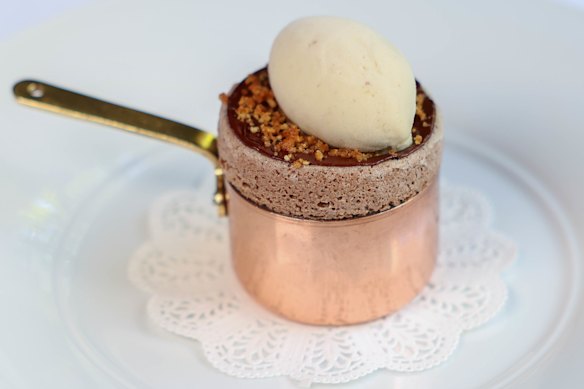 The signature chocolate souffle, now spiked with Fernet Branca.Joe Armao
Sommelier Steve Senturk has conjured a list that rightly focuses on Italy, but that had me tempted to veer wildly towards Hungary or America, thanks to the intriguing bottles he’s included from all over the world. (I stuck with Sicily, and was not sad about it.) This is a fun list that goes beyond the ordinary and is full of gems, both expected and otherwise.
Florentino is a precious commodity, a literal piece of living history, and its stewardship should not be taken lightly. With their focus on balancing that history with the tastes and expectations of modern diners, Edition Group is proving worthy of that stewardship. The dishes may not be the same, year after year, but it seems as though the quality will be.
The low-down
Atmosphere: Clubby, grand, old-school elegance
Go-to dishes: Tartelletta di zucca ($13); duck ravioli; chocolate souffle (part of the set menu)
Drinks: Classic cocktails, including a truly fantastic take on the French 75, and creative spritzes; wide-ranging wine list full of gems
Cost: $95, $130 or $260 per person, excluding drinks
Good Food reviews are booked anonymously and paid independently. A restaurant can’t pay for a review or inclusion in the Good Food Guide.
Related Article Save
Save
You have reached your maximum number of saved items.
Remove items from your saved list to add more.
Default avatarBesha Rodell is the chief restaurant critic for The Age and Good Weekend.From our partners
Dining and Cooking