
Chilean wine group Concha y Toro has reported modest revenue growth in 2025 while accelerating its move upmarket. Meanwhile, the acquisition of a Provence rosé producer reflects a broader push into higher value categories and regenerative viticulture.
Viña Concha y Toro delivered a measured increase in revenues during 2025, with total sales rising 1.7%, or 2.8% when considering wine alone. As per the company’s results, value sales of its premium and above portfolio advanced 4.3%, maintaining momentum despite a subdued global drinks market.
The business has now recorded top-line growth for a second consecutive year, setting it apart from wider industry conditions. Eduardo Guilisasti, chief executive officer, said that “during 2025, Viña Concha y Toro demonstrated the strength of its business strategy”. He attributed this to a broad brand portfolio, a vertically integrated model and an extensive international distribution network, which together supported value sales growth in what he described as an uncertain and volatile economic setting.
Premium brands take the lead
Growth was led by the group’s better-positioned labels. Casillero del Diablo and its extensions rose 2.5%, while Diablo increased 15%. Don Melchor, the company’s flagship luxury wine, recorded a sharp rise of 84.6%.
Elsewhere, Argentina’s Trivento portfolio grew 4.1% and California-based Bonterra increased 3.7%. Premium and above wines now represent 57.4% of total wine sales, an increase of 90 basis points.
Shareholder returns and financial discipline
The board has proposed a dividend equivalent to 50% of profits, above its usual 40% payout policy. Alongside this, a share buyback programme covering 3.93% of outstanding shares has been approved, based on authorisation granted at the 2021 shareholders’ meeting.
Guilisasti said both measures are intended to communicate “the strength of our results, our financial discipline, and the confidence we have in the company’s future prospects”.
Efficiency measures to deliver savings
During the year, the group implemented an operational efficiency and simplification plan, which included rationalising the portfolio, optimising inputs and adjusting vineyard lease contracts.
According to the company, these steps led to extraordinary write-offs without affecting EBITDA and are expected to generate savings of CLP 28 billion between 2026 and 2027.
Provence acquisition broadens the portfolio
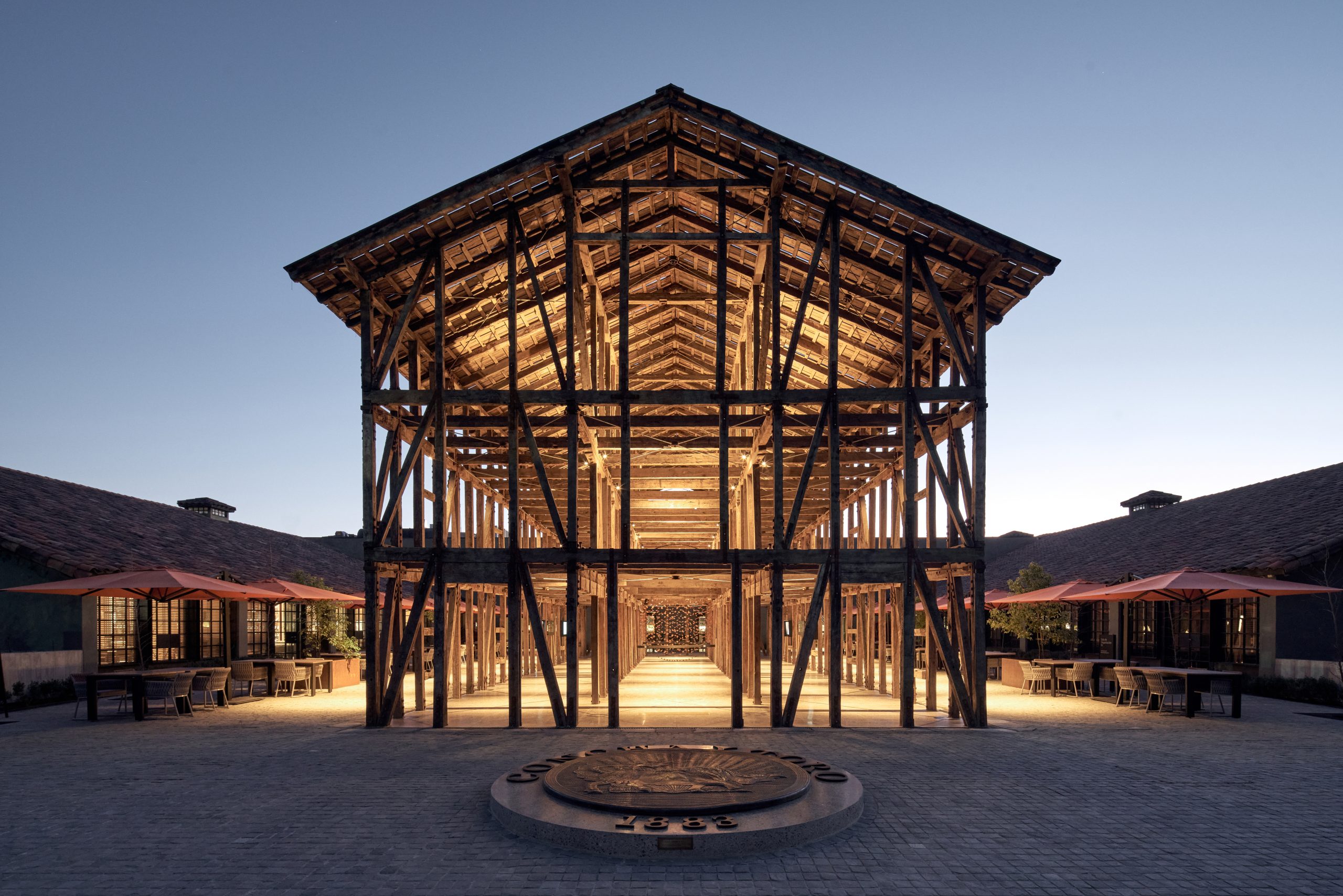
Looking ahead, Concha y Toro is placing further weight on premiumisation, innovation and wine tourism, with particular attention on the renovated Centro del Vino in Santiago (pictured).
Another key recent development is its acquisition of Maison Mirabeau in Provence, as reported by the drinks business. The move addresses a longstanding gap in the group’s portfolio. Simon Doyle, general manager of VCT Europe, told db that “in rosé, we have never had a particularly authentic offering, particularly relevant to key markets, especially the UK and other mature markets”.
Mirabeau, founded in 2010 by Stephen and Jeany Cronk, operates in more than 40 international markets and has built a strong presence in the UK on-trade. Doyle said that “the closer we looked at Mirabeau, the more it met that base criteria”, adding that shared values became increasingly apparent as discussions progressed.
Autonomy and distribution
Under the new structure, Mirabeau will retain its identity, with Stephen Cronk continuing as chief executive officer and joining a newly formed board alongside Doyle and Andrea Mirone, finance and operations director at VCT Europe.
A shared interest in regenerative viticulture appears central to the partnership. Mirabeau holds Regenerative Organic Certified status in France, while Bonterra in California is widely recognised for its regenerative practices.
Stephen Cronk described his visit to Bonterra as transformative, telling the drinks business: “It blew my mind that this could be a working winery and still be so full of nature and life.” He added that aligning the two businesses represents “a phenomenal play”.
Concha y Toro also pointed to the financial strength of Trivento, which carries no debt, as offering further opportunity in Argentina.
Related news
Cono Sur: ‘we aim to put Chilean Pinot Noir at the highest level’
Foreign investors turn to Chilean Pisco as premium spirits interest grows
Why Chile’s ‘forgotten’ ancestral grape is due a second renaissance
Dining and Cooking