
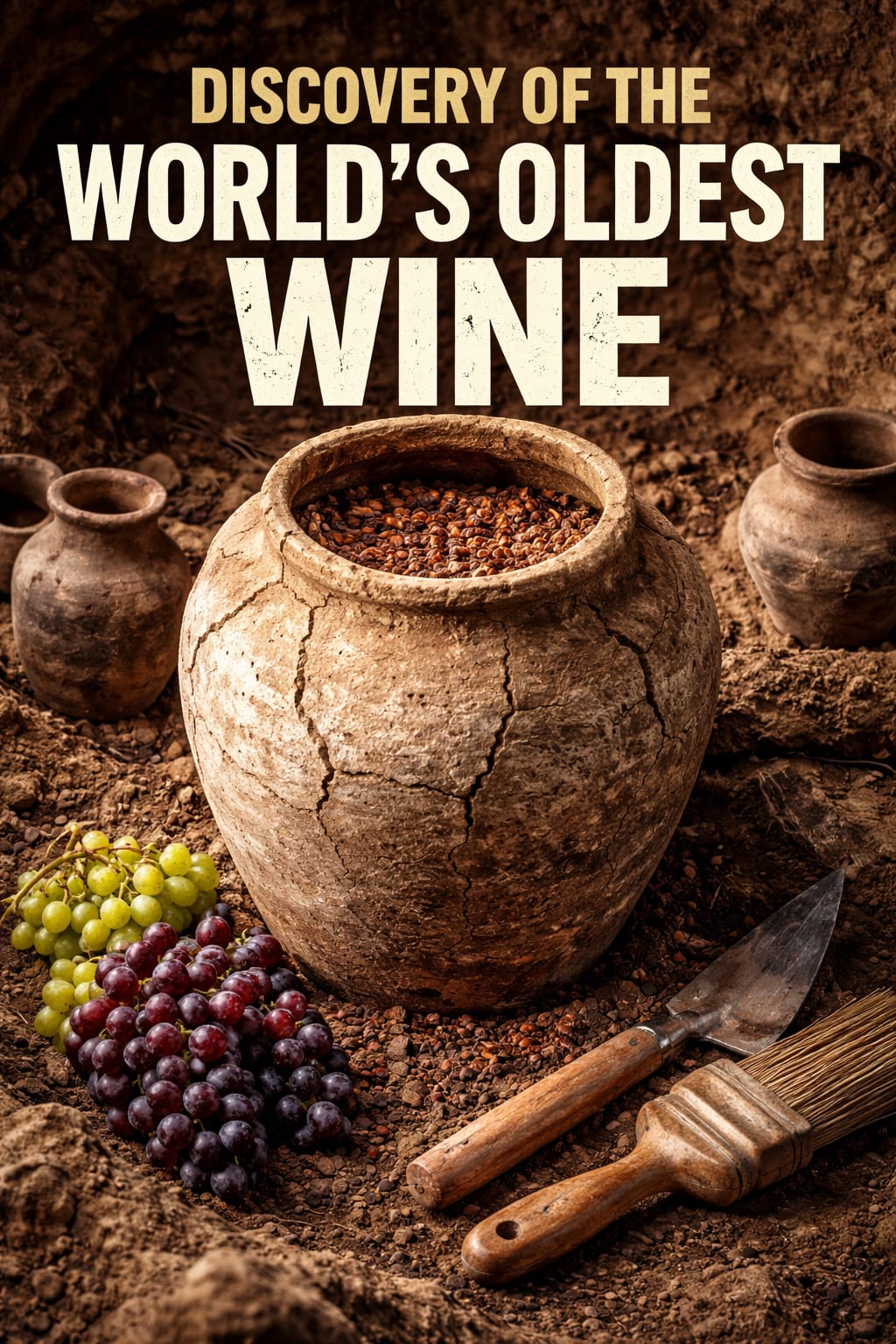
In a discovery that reshapes our understanding of early human civilization, archaeologists have uncovered what is believed to be the world’s oldest known wine—preserved inside an 8,000-year-old clay jar. This remarkable find not only highlights the ingenuity of ancient societies but also provides fascinating insight into the origins of winemaking, a tradition that continues to thrive today.
The discovery was made in the South Caucasus region, an area widely regarded as one of the cradles of early agriculture and human settlement. Inside the ancient pottery vessels, researchers identified chemical traces consistent with fermented grape juice, effectively confirming that early humans were producing wine as far back as 6,000 BCE. This predates previous estimates of winemaking by nearly a millennium, pushing the origins of this beloved beverage even deeper into history.
What makes this discovery particularly significant is the level of sophistication demonstrated by these early winemakers. The clay jars, often buried underground, were used not just for storage but also for fermentation. This method helped maintain a stable temperature, allowing the natural sugars in grapes to ferment into alcohol. The technique bears striking similarities to traditional winemaking methods still practiced in parts of the world today, suggesting a remarkable continuity of knowledge across thousands of years.
Chemical analysis played a crucial role in identifying the contents of these ancient vessels. Scientists examined residue left behind in the jars and detected tartaric acid—a key indicator of grapes—along with other organic compounds associated with wine. The presence of these substances leaves little doubt that the jars once contained a fermented grape beverage. In some cases, traces of herbs and tree resins were also found, suggesting that ancient winemakers may have experimented with flavoring or preservation techniques.
Beyond the scientific significance, this discovery offers a glimpse into the social and cultural lives of early humans. Wine was likely more than just a drink; it may have played an important role in rituals, celebrations, and communal gatherings. The effort required to cultivate grapes, produce wine, and store it properly indicates that these early societies had developed a degree of organization and specialization. It also hints at the symbolic or spiritual importance that wine might have held in their communities.
The location of the find further strengthens the argument that this region was a key center for the domestication of grapevines. Archaeobotanical evidence suggests that wild grapes were abundant in the area, providing the raw material necessary for early experimentation with fermentation. Over time, these wild varieties were likely cultivated and refined, eventually leading to the diverse grape species used in modern winemaking.
Interestingly, the discovery also sheds light on the evolution of human taste and dietary habits. The intentional production of wine suggests that people were not merely consuming food and drink for survival but were also seeking pleasure and social connection. This marks an important step in the development of culture, where food and beverages became intertwined with identity, tradition, and expression.
Modern winemakers and historians alike have shown great interest in this finding. It provides a tangible link to the distant past, reminding us that the enjoyment of wine is a shared human experience that transcends time and geography. Some researchers have even attempted to recreate ancient wine recipes based on the chemical evidence, offering a unique opportunity to taste history.
However, the discovery also raises new questions. How widespread was winemaking during this period? Were similar techniques used in other regions independently, or did the knowledge spread through migration and trade? And what role did wine play in the development of early economies and social hierarchies? These questions continue to drive ongoing research and exploration.
In conclusion, the unearthing of an 8,000-year-old jar containing traces of wine is far more than an archaeological curiosity. It is a window into the lives, innovations, and aspirations of our ancestors. It reveals that even in the earliest chapters of human history, people were experimenting, creating, and finding ways to enrich their lives. The story of wine, it seems, is as old as civilization itself—rooted in the same curiosity and creativity that continue to define humanity today.
Dining and Cooking