
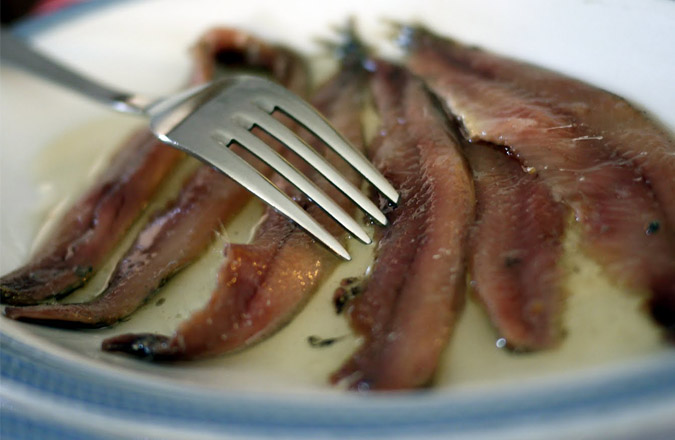
Le anchovies in oilA staple in Italian pantries, they are a blend of canning techniques and nutritional benefits. In an increasingly crowded global market, distinguishing authentic Made in Italy products—based on slow ripening and quality oil—is essential for the discerning consumer. This guide explores the value of the “ruby of the Mediterranean,” including food safety, health benefits, and the strategic role of umami flavor in salt reduction.
Market Analysis: The Value of Canned Fish in Italy
Le anchovies in oil represent one of the most consolidated segments of the Italian sector canned fishThe national market is characterized by stable and transversal demand, involving both domestic consumption and quality catering.
According to ANCIT 2024 data, the sector canned fish Other than tuna (mackerel, anchovies in oil and salt, sardines, canned salmon, seafood appetizers, fish compositions, clams) stands at around €400 million, helping to push the overall turnover of the fish canning sector to over €2 billion. Anchovies performed particularly well in this area, both in value (+4% compared to the previous year) and in volume (+2,7%).
Italy stands out in the European panorama for the integration between the supply of raw materials – mainly Engraulis encrasicolus of the Mediterranean – and artisan skills in salting and preservation in oil. The sector is seeing growing attention towards quality certification, traceability, and sustainability of fishing.
From antiquity to modern preservation: the evolution of an art
Le anchovies – or anchovies, as they are most commonly known along the Italian coast – have been present in the Mediterranean diet since ancient times. Greeks and Romans They used it extensively, both as a salted fish and as a base for fermented sauces, ancestors of the modern anchovy sauce.
Starting from Middle Ages, the salting the anchovies It became an essential practice for ensuring preservation and trade along inland routes. Its spread throughout the Po Valley hinterland is also linked to the figure of the Piedmontese “anchovy sellers,” itinerant traders who transported the preserved fish over the Apennines, contributing to the birth of a true gastronomic culture based on this ingredient.
La processing in oil, developed starting in the 19th century with the industrialization of canning techniques, has made it possible to obtain a ready-to-eat product, stable and of high gastronomic value, democratizing access to a food until then mainly reserved for coastal areas.
The production process: from salting to enzymatic maturation
Le anchovies in oil they are obtained from the processing of Engraulis encrasicolus, a pelagic species characteristic of the Mediterranean. The traditional process, codified by the best artisanal and industrial practices, includes:
Selection and cleaning of fresh fish, immediately after fishing, with removal of the head and entrails,
Salting and maturation, in alternating layers of fish and sea salt, for a period ranging from 3 to 12 months, during which enzymatic and fermentative processes take place which develop the characteristic aromatic profile,
Deboning and trimming manual or mechanized, with separation of the threads and removal of the central pin and the smooth ones;
Jarring in oil, usually extra virgin olive oil or olive or sunflower oil, to protect the anchovies from oxidation and promote aromatic maturation.
The timeliness of the processing and the rigorous maintenance of the cold chain These are essential requirements for organoleptic quality but also for food safety, in particular for the control of histamine levels.
La salting It performs a dual function: conservative, thanks to the antimicrobial effect of salt, and development of the sensory profile through the proteolysis Partial protein extraction. Oil completes the process, ensuring microbiological stability and organoleptic enhancement.
Nutritional profile: proteins, Omega-3 and essential micronutrients
According to the CREA food composition tables (updated 2019), the anchovies in oil They present, per 100 g of edible product, indicative average values:
carbohydrates: 0,2 g, of which sugars 0,2 g;
It is therefore a high-quality food. protein density, rich in fatty acids typical of the blue fish (EPA and DHA) and unsaturated fats from vegetable oil. As regards the micronutrients, anchovies in oil are characterised by:
wealth in Potassium, 700 mg per 100 g, equal to 35% of the Nutritional Reference Value, 2000 mg, established in Annex XIII of Regulation (EU) No. 1169/11;
presence of Phosphorus, 196 mg, equal to 28% of the VNR (700 mg);
wealth in niacin (vitamin B3), 6,5 mg, equal to 40,6% of the NRV (16 mg).
The use of extra virgin olive oil (EVOO) represents an added value from a nutraceutical point of view. The synergy between the Omega-3 polyunsaturated fatty acids (EPA and DHA) of blue fish and polyphenols EVOO’s antioxidants help protect lipids from oxidation, improving the stability and overall nutritional quality of the preserve.
Nutritional analysis: anchovies in oil (100g)
Protein
25,9 g
~ 52%
High biological value
Potassium
700 mg
35%
Electrolyte balance
Niacin (B3)
6,5 mg
40,6%
Energy metabolism
Phosphorus and Potassium
196 mg
28%
Bone and cellular health
Energy
206 Kcal
10,3%
Moderate caloric density
Sale
1,2 g
20%
To be managed in the diet plan
Gastronomic versatility and the ‘power’ of umami
Le anchovies in oil They play a central role in Italian gastronomy, both as the main ingredient and as an aromatic element capable of imparting depth of flavor. Among the most well-known preparations:
bread, butter and anchovies, a timeless appetizer or savoury snack, popular throughout Italy;
spaghetti alla puttanesca, Neapolitan dish with olives, capers and tomato;
seasoning for pizzas (marinara, courgette flowers and anchovies) and Ligurian focaccia;
salad dressings, vegetables, and sauces, such as the classic ‘salsa verde’.
The profile umami Using anchovies in oil allows you to intensify the flavour of dishes with moderate quantities of product, contributing to the complexity of the taste by reducing the overall use of salt (Dongo, 2025).
Quality and traceability: how to recognize true Made in Italy products
Le Italian anchovies in oil they stand out on the international scene for:
prevalent use of Engraulis encrasicolus of the Mediterranean, characterised by firmer and more aromatic meat than the Atlantic species;
techniques of traditional salting, often with manual processing and prolonged maturation times (up to 12 months);
use of extra virgin olive oil or olive oil as a qualifying element, unlike Northern European or extra-European productions which favour seed oils;
forte territorial identity, in some cases also related to the fishing area;
presence of certified products and recognized local specialties, such as the PGI Ligurian Sea Salted Anchovy.
Compared to preserves from non-European countries (Morocco, Peru, Argentina), the Italian product is characterised by a balance between the flavour and sweetness of the meat, compact consistency but tender and greater attention to the quality of the covering oil, which thus complements the taste experience.
FAQ – Frequently asked questions about anchovies and their benefits
In this section, we answer the most common questions about the properties, safety, and uses of anchovies in oil, using an evidence-based approach based on nutritional and technical data.
What is the difference between anchovies and sardines?
From a scientific point of view, they both refer to the species Engraulis encrasicolusCommercially, the term ‘anchovies’ for fresh or marinated product, while ‘anchovies’ identifies fish subjected to maturation in salt and subsequent preservation in oil.
Why are anchovies in oil good for your health?
They are an excellent source of proteins with high biological value and fatty acids Omega-3 (EPA and DHA). Thanks to their maturation, they boast a high bioavailability of minerals such as calcium, phosphorus, and potassium, as well as a significant supply of niacin (Vitamin B3).
How does the umami in anchovies help reduce salt intake?
During processing (salting and enzymatic maturation), the anchovy proteins are partially degraded (proteolysis), releasing natural free glutamate, responsible for taste umamiThis flavor enhances the savory flavor of dishes, allowing for a reduction in the need for added salt (sodium chloride) and thus promoting a more balanced diet.
How do you recognize the superior quality of a fillet?
The quality is assessed by the compactness and colour of the fillet (pink-brown, never grey or faded), by the absence of bones and by the choice of oil: theextra virgin olive oil It is the best natural preservative to preserve aromas and antioxidants.
Conclusions
Le anchovies in oil They represent an excellence of the Italian canning tradition, a synthesis of maritime culture, artisanal skills, and technological innovation. A nutritious and versatile food, they are a symbol of Mediterranean cuisine, continue to occupy a prominent place both in domestic gastronomy and in international haute cuisine.
Their valorization today passes through the transparency of the supply chain, the sustainability of fishing – with particular attention to Mediterranean fish stocks – and the protection of traditional techniques, elements that strengthen the international reputation of the Made in Italy in the fishing sector and ensure its competitiveness on global markets.
GIFT (Great Italian Food Trade) Editorial Team
References

Dining and Cooking